ARTIST INTERVIEW: FLORENCE CHAMP
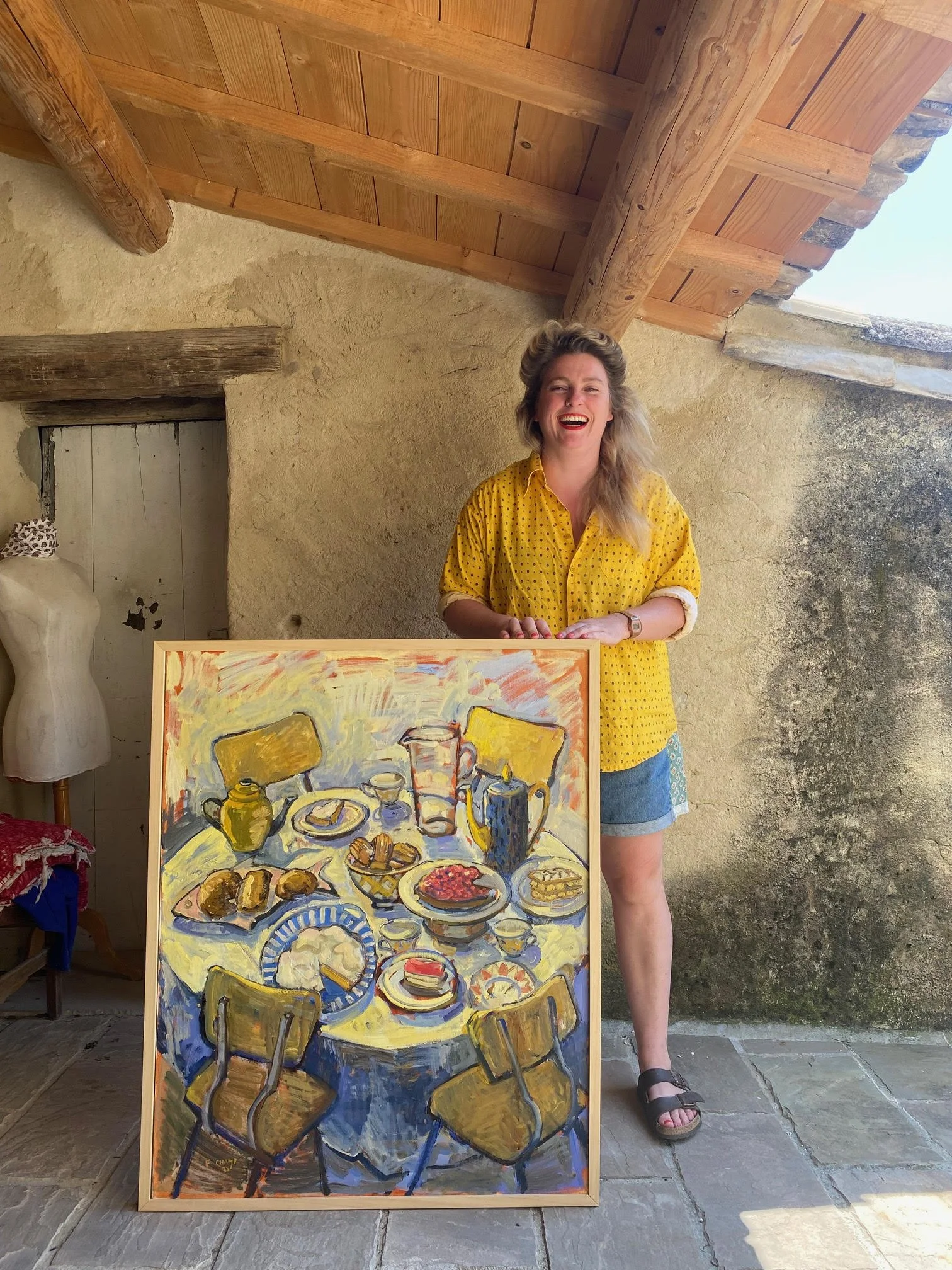
Florence Champ
When you were just five years old, you were given a box of paints by one of your neighbours. Did this spark a desire to become an artist, or did that happen later on in life? Were you brought up in a creative environment?
I always enjoyed art when I was young, and started saying very early on I hoped to become an artist. My parents never forced me to go in an artistic direction but nurtured me onto that path, enrolling my twin and I in classes every year, art supplies as birthday presents, and then championed us going to fine art degrees later on. My sister is now also an artist, albeit with a less classical route, so I think their soft power influence worked!
I remember going on a holiday to Italy when we were really young, maybe 7, and as the biggest treat Dad taking us to an art shop and bought us a watercolour paint box. It felt like the most precious treasure, and I still have it today.
My parents were creative in different ways, my mum a fantastic cook, always working with fabrics and dealing in textiles. These days she has an indigo plant vat she dyes with, and spends a lot of time in her garden thinking about plant combinations.
My dad has always bought and restored vintage cars, as well as enjoying designing and making things. So I suppose not artists in the classical sense but definitely an inspiration, and I’ve always wanted my mum to try painting as she has a great eye for colour.
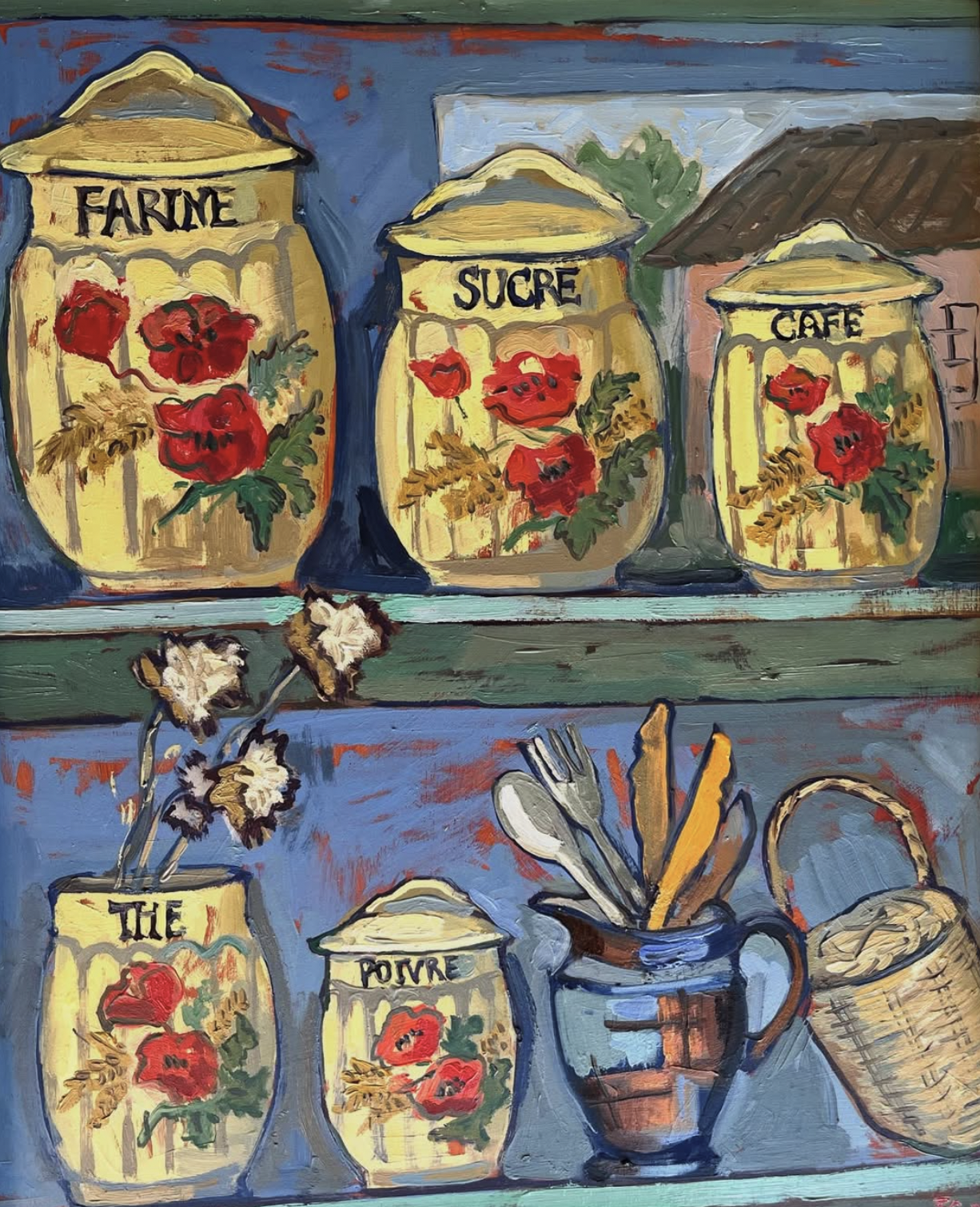
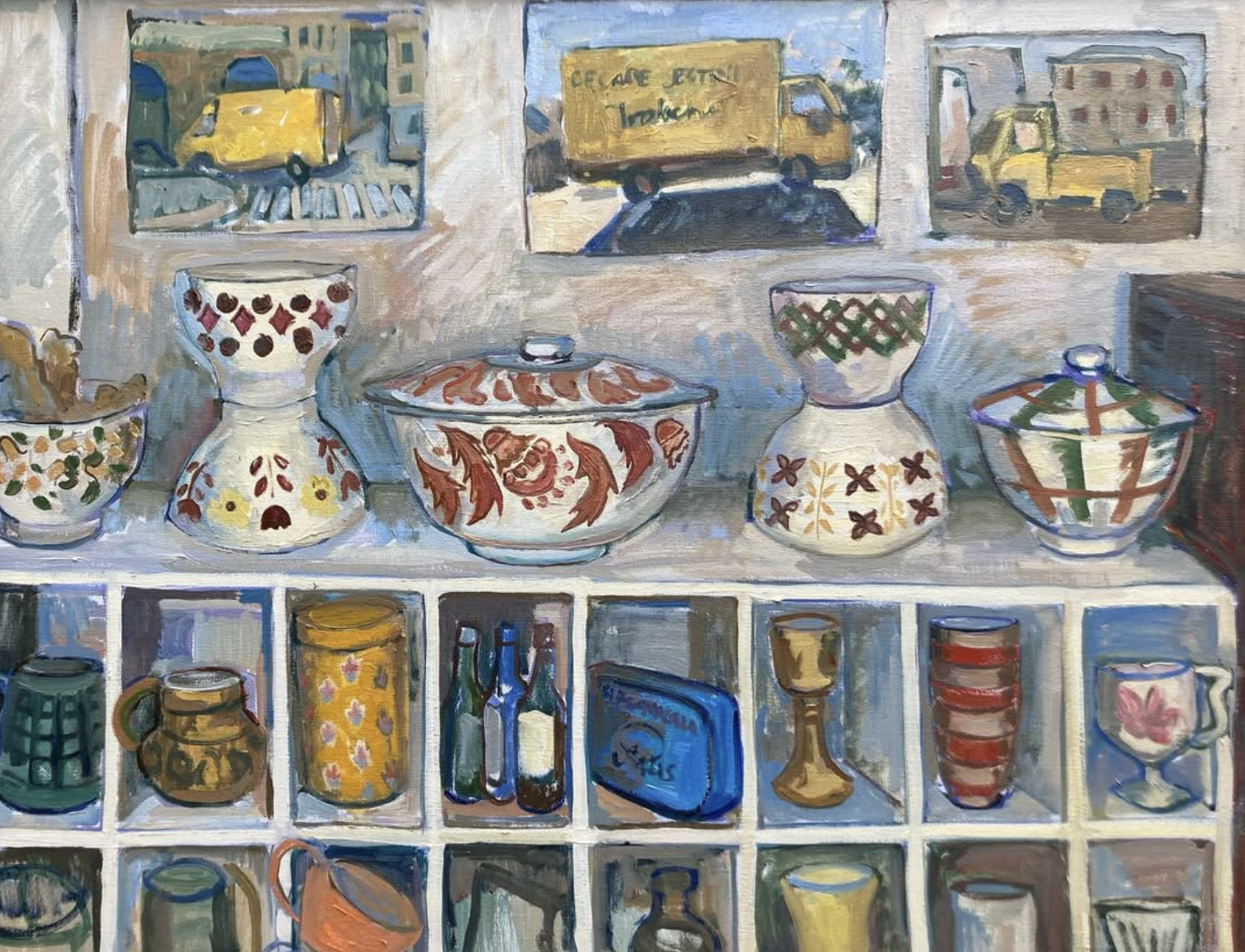
Your work mostly depicts home interiors; whether that be a dining table or a shelving unit with unique objects on it. Do you think growing up with antique dealers as parents has been influential to both you and your work?
My parents instilled in me a strong love of beautiful, old, rare, and at times battered objects.
The appreciation of skill going into the making of something, and the value of keeping an object your whole life, have been an antithesis to acquiring any mass produced cheap items.
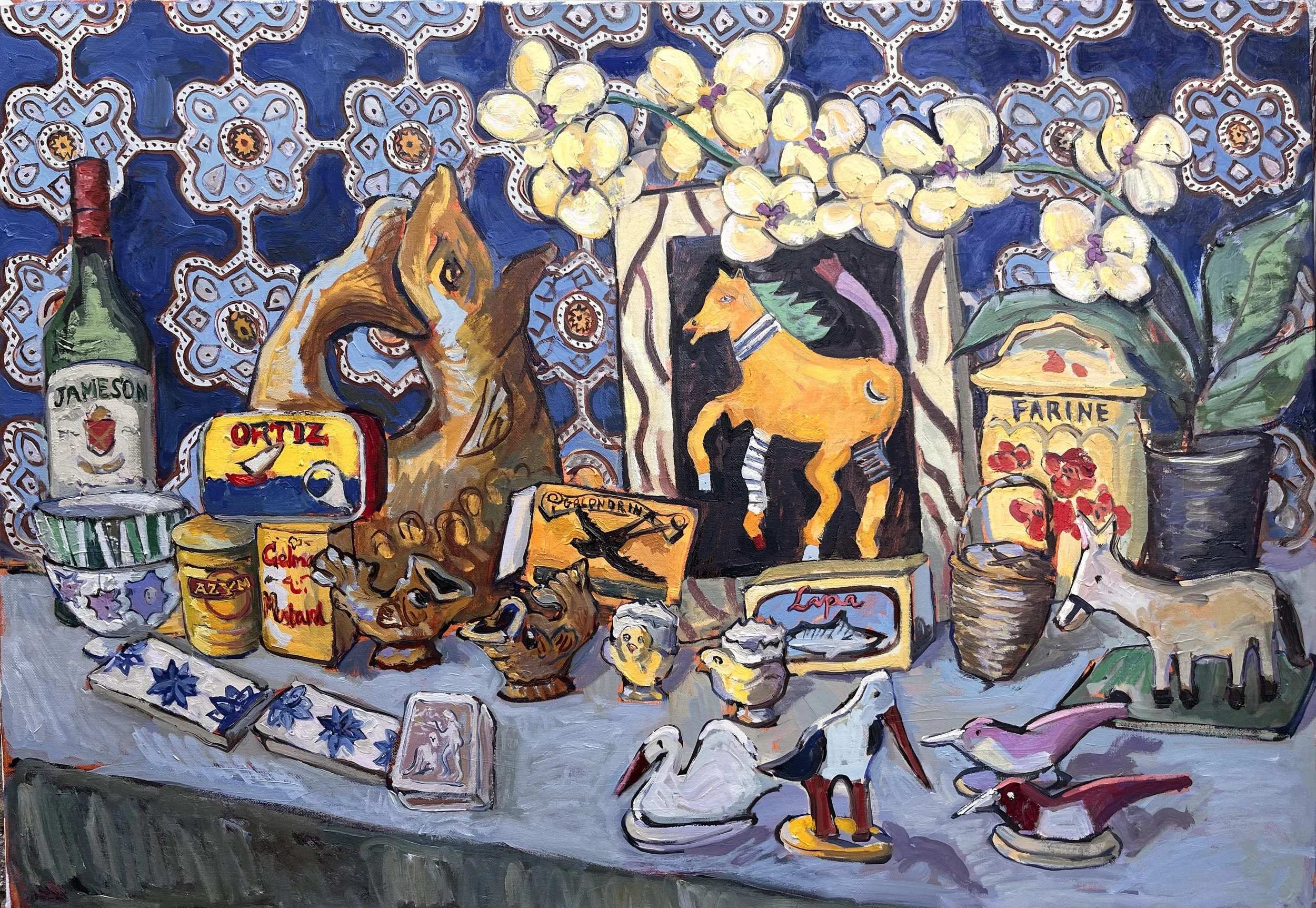
If a burglar broke into our house I think they´d be quite disappointed, and would not recognise any of the precious objects I adore and collect, which seemingly have little value.
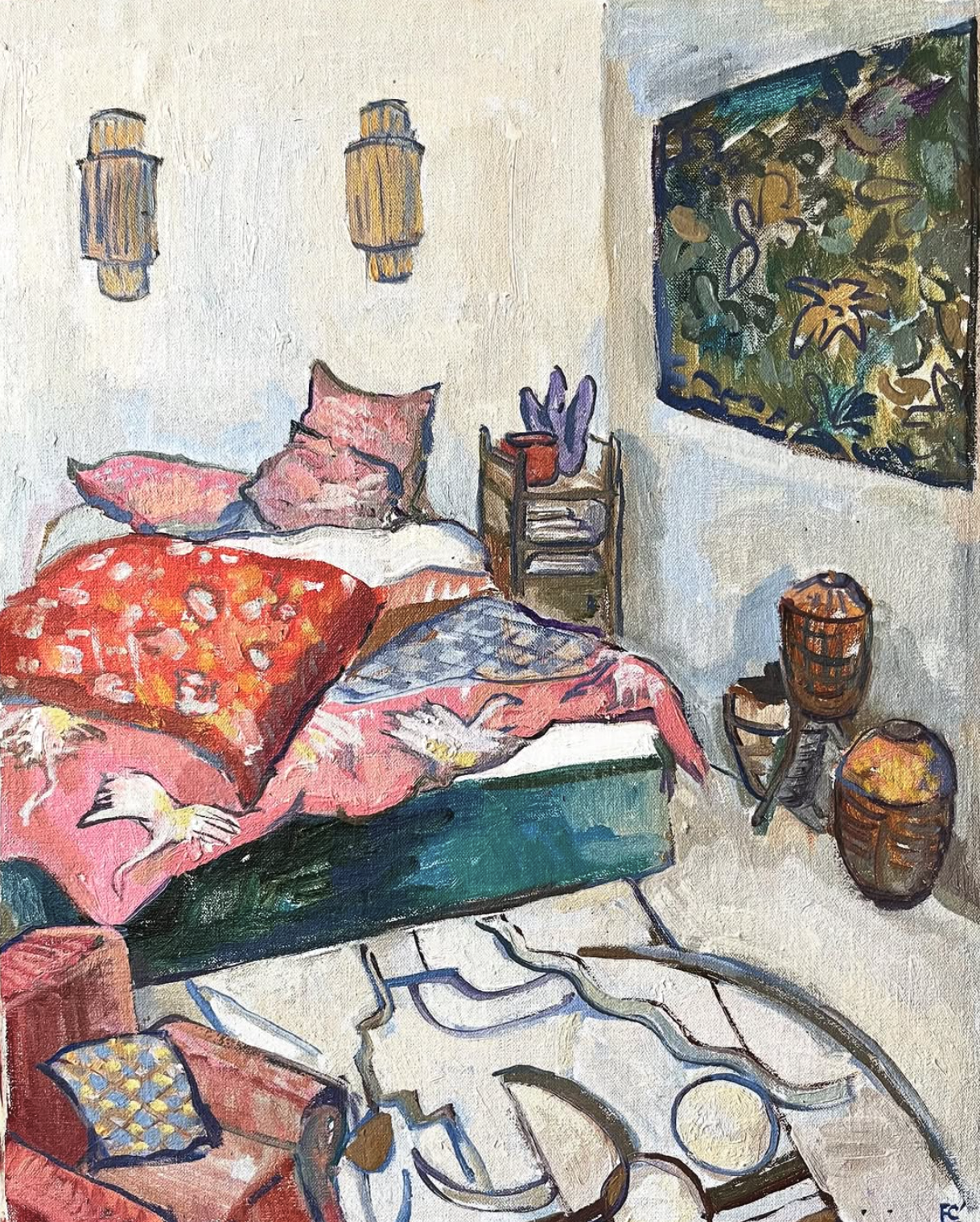
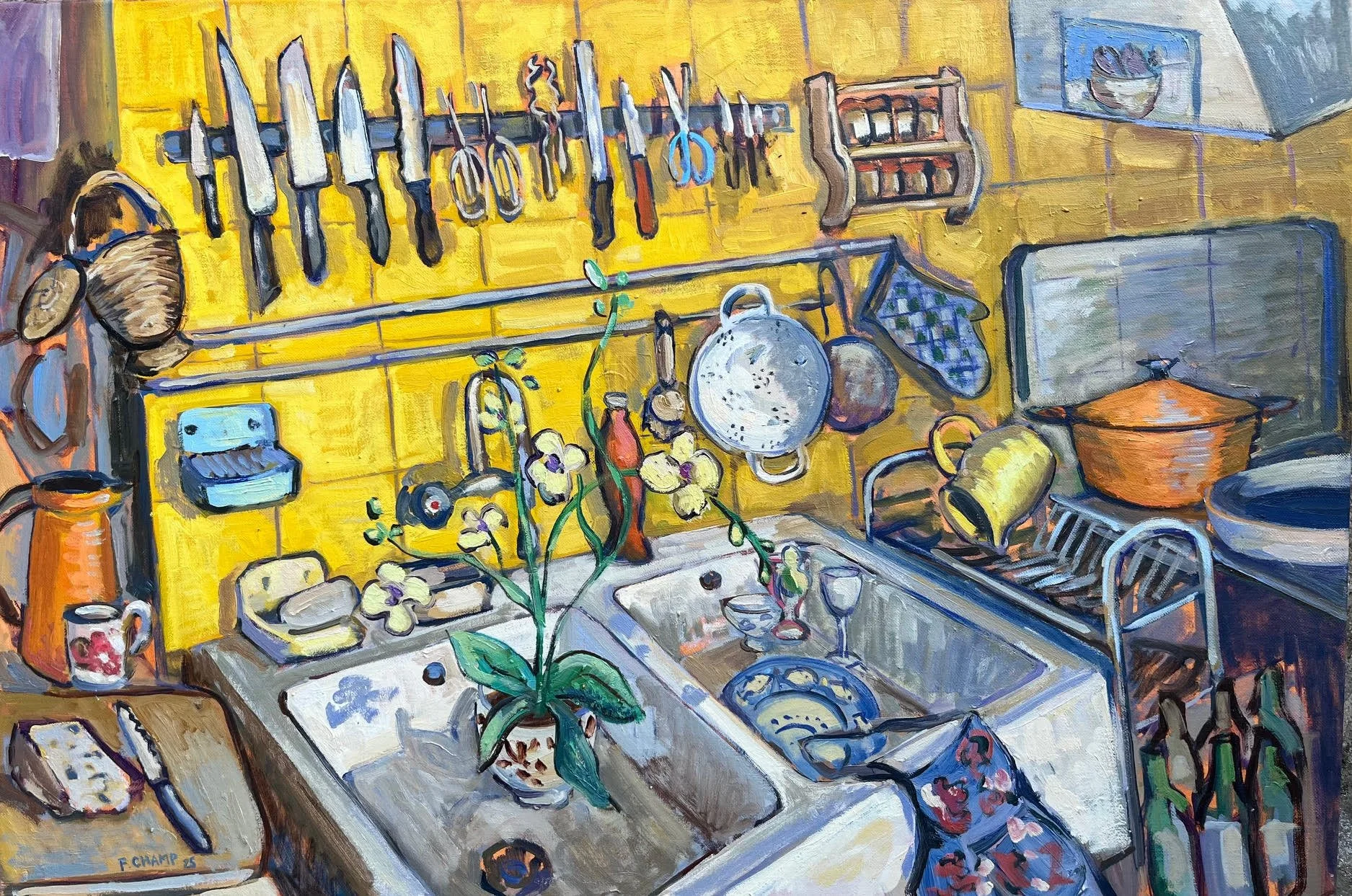
In my work I am instantly drawn to spaces or scenes with a strong and unique identity, where beauty and quirkiness are valued above pure functionality. When looking at my paintings many people say they feel like they can plunge into a scene, or that it awakens feelings of nostalgia and comfort in them. An unmade bed allows them to imagine someone has just climbed out it leaving the sheets rumpled, a messy kitchen reminds them of their own after a delicious spread has been prepared.
In an effort to curb the overcrowding of my flat and studio, I have a new rule now, anything that can’t feature in a still life doesn’t come home with me. It’s still a minimalists nightmare but hopefully a little less quantity over quality.
What are the characteristics of an interesting composition to capture?
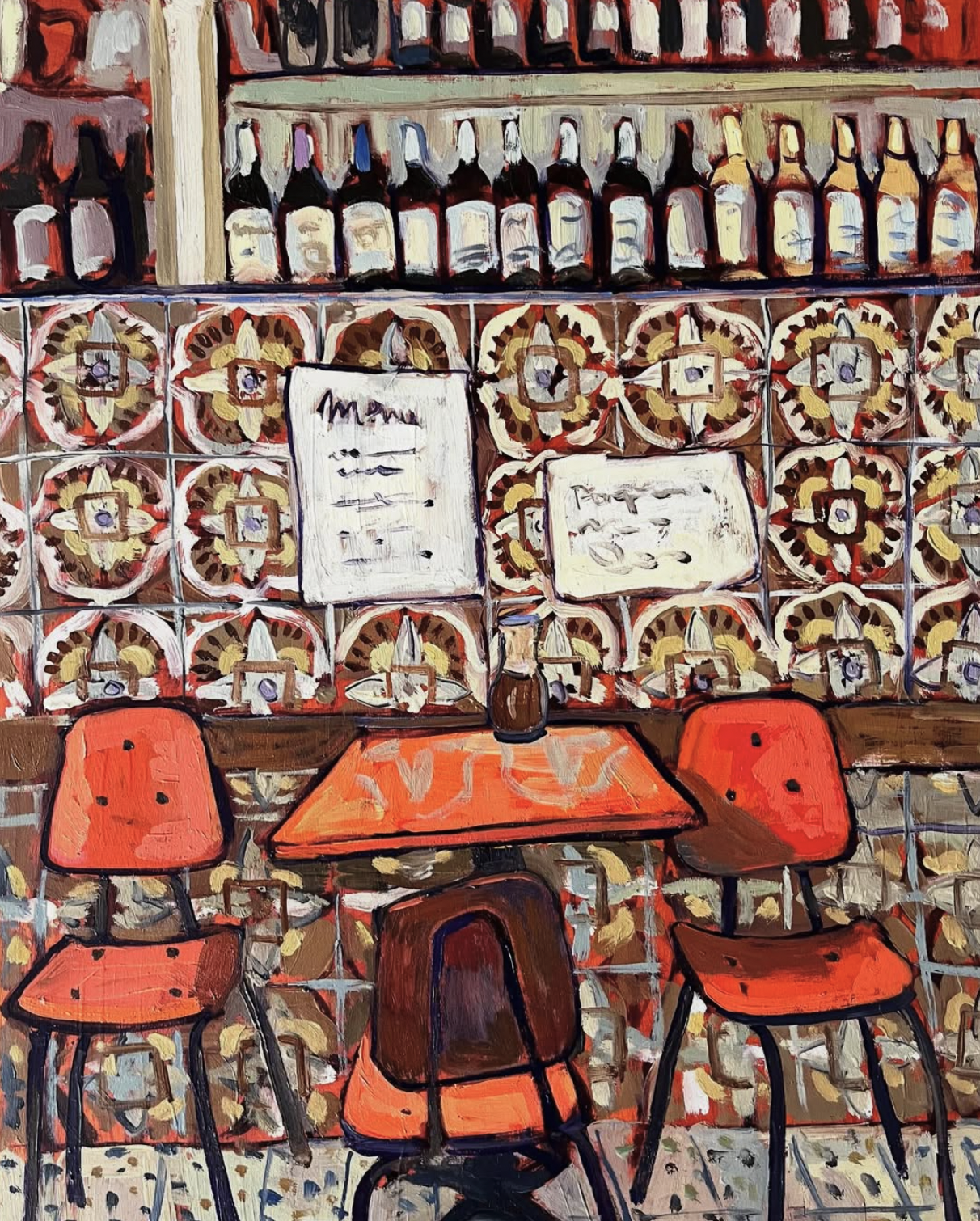
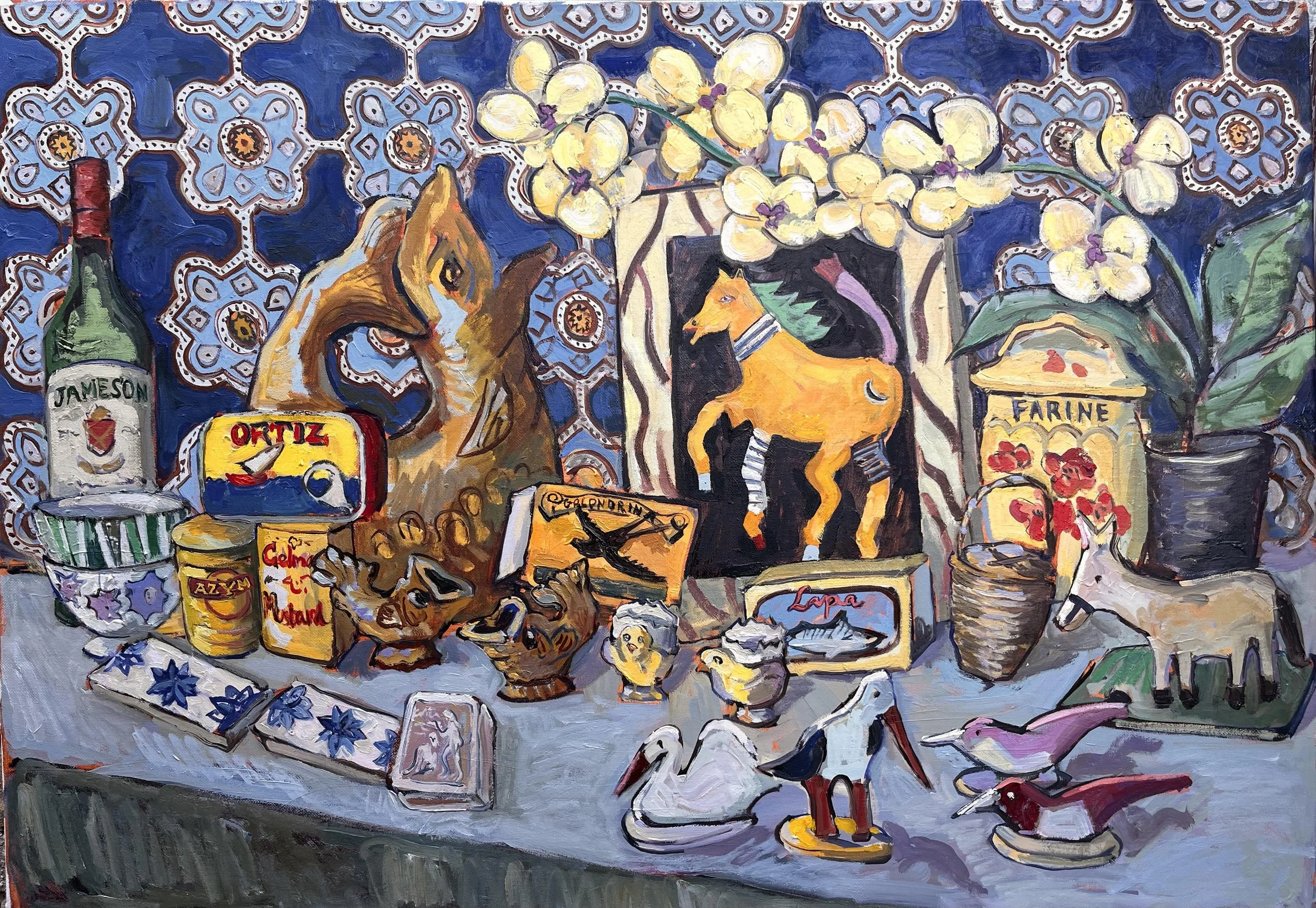
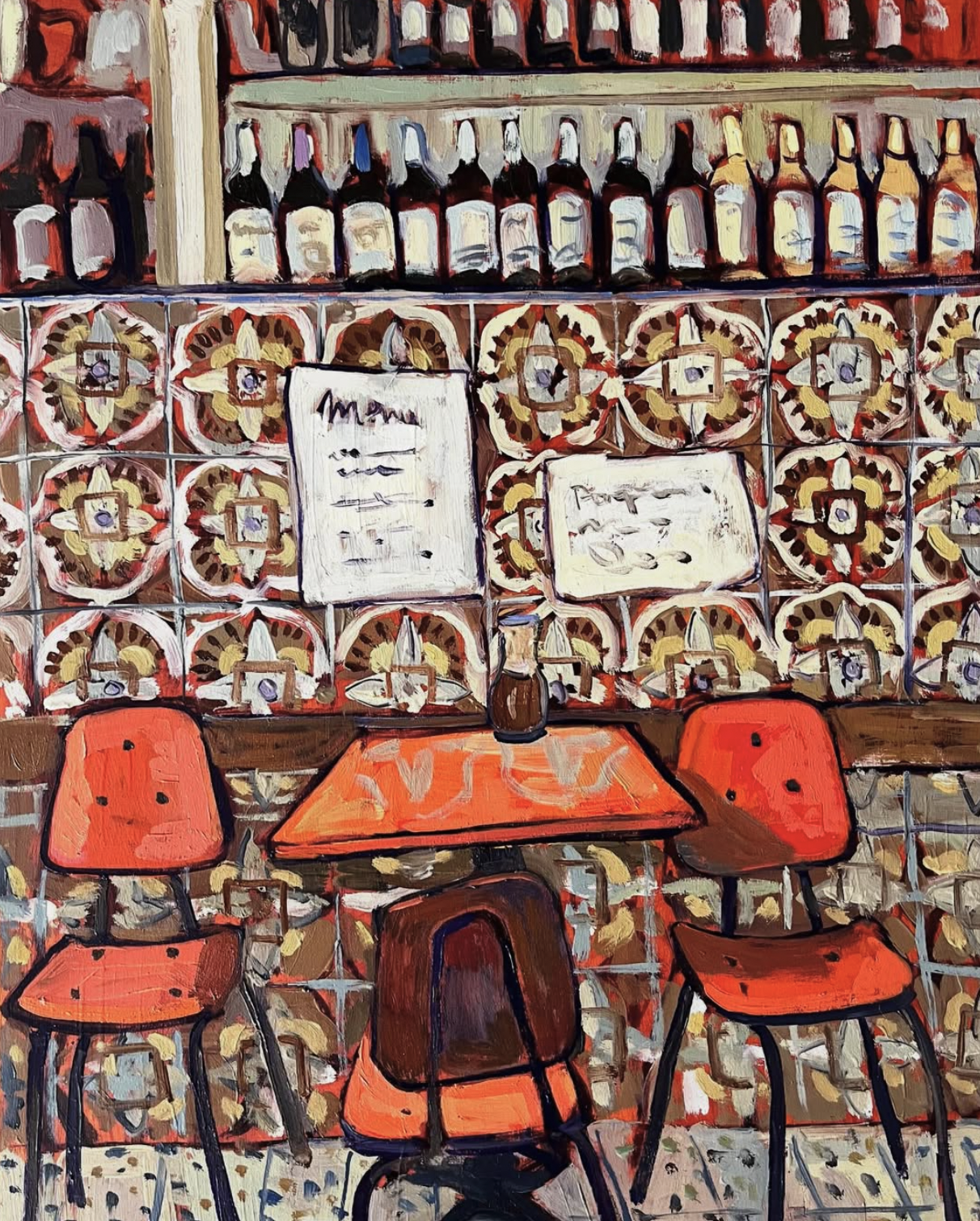
My eye is always drawn to colour, and the light and shadow that affects it. I also love repetitive patterns like azulejos or floor tiles, and often pop some old logos or writing (on old tins or signs for example) in my compositions.
Some scenes only have one possible angle and others you need to work through different combinations to alight on the right one. At times I do several simultaneously, slightly different, and only realise very close to the end which will really work.
There’s also the logistics of space, when a kitchen is so small you can only do small sketches from a box, then gallop off to the studio and hope to manage to reproduce the freshness.
The biggest piece I’ve ever done, of my mothers bedroom, I actually had to paint in the room behind it, because the canvas was so big I couldn’t see both the scene and the canvas at once in the same room. It also involved quite a strenuous neck twist which left some twinges for a while afterwards!
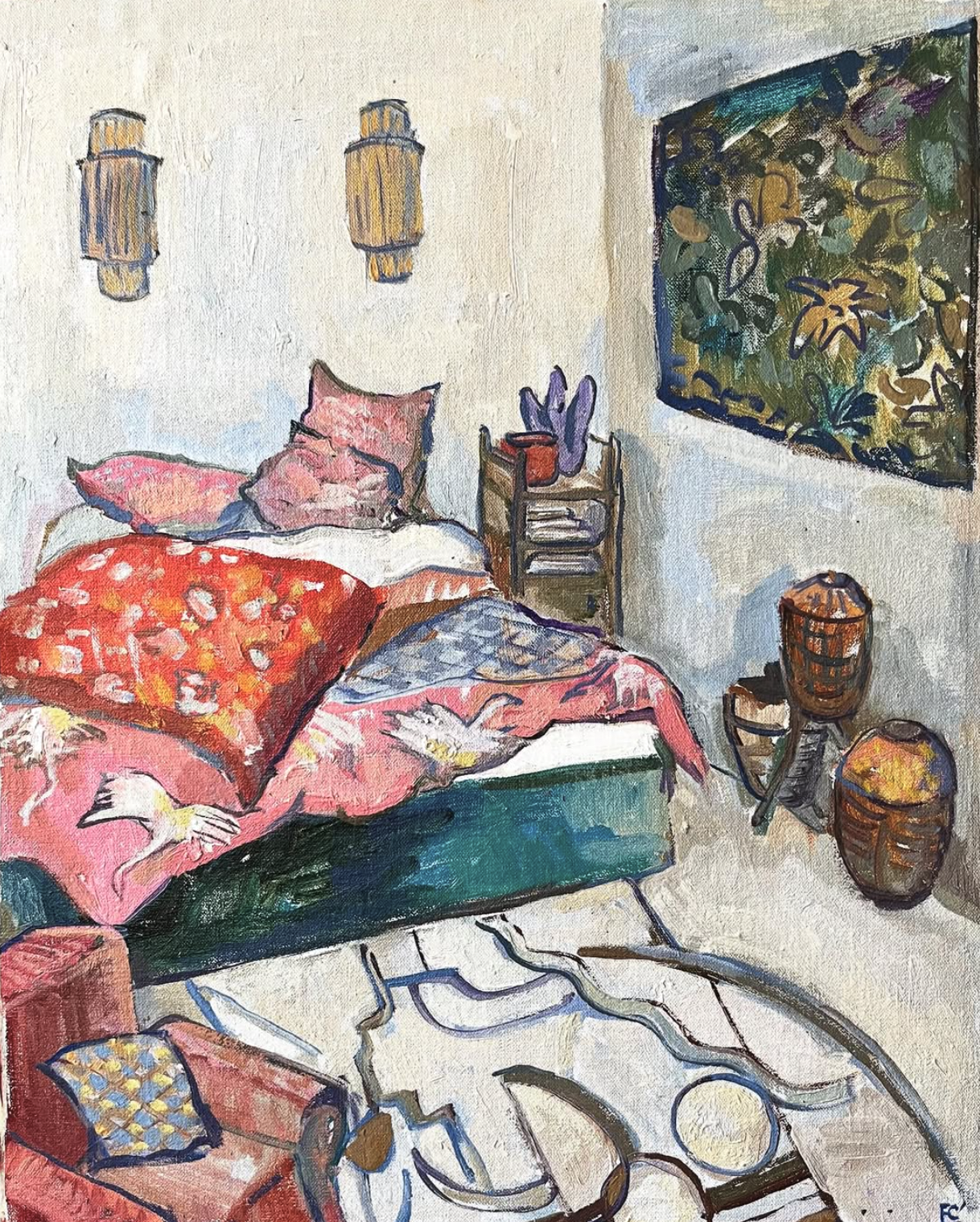
The colour yellow is used throughout your work. Why is this? What is the significance of this colour?
I am extremely sensitive to colour at every level: in my everyday surroundings, the rooms I inhabit, but also down to my clothes, and the city I live in. All black, white and beige have been banished from my wardrobe, as has the possibility of living somewhere with little sun or light. My mood is instantly depleted and I feel utterly despondent.
Yellow epitomises happiness, energy and sunshine for me. If the weather doesn’t match, I’ll wear it and instantly feel better.
With my eyes closed when I think of a strong cadmium I am immediately transported to somewhere sun drenched like the south of france. It’s not a coincidence Van Gogh used so much in his work!
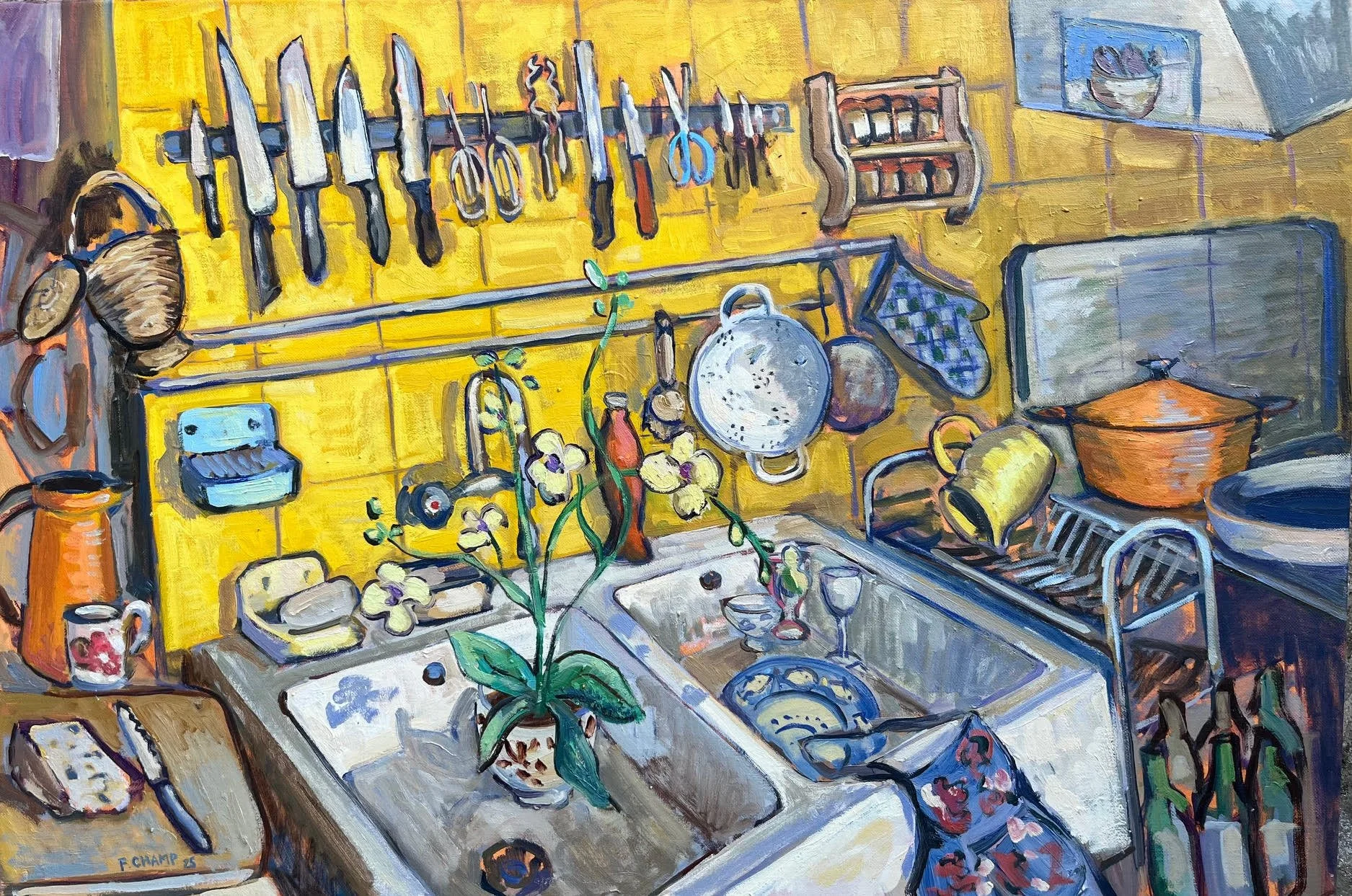
Thinking about your last piece, what ignited your imagination to create it?
This piece was a commission, a birthday present for someone who is a foodie and lives in Ireland.
As the weather can be quite inclement there during winter months, and daylight hours get short, I wanted to create a scene exhuming warmth, and the feeling when observing it of a blast of summer.
I tried to combined that with a visual feast: a cornucopia of French delicacies which I miss terribly when away.
The ritual of tea, which is an Irish and British tradition, combined with the French one of an afternoon sweet snack, also seemed a nice nod to my combined upbringing.
From a young age, you have lived in multiple different countries and also learnt various languages. Has your insight into different cultures inspired your work?
Travelling, and living somewhere new and unknown, is an aspect I find very inspiring and exciting for painting. The delight in capturing new behaviours and traditions ignites an effervescence of creative energy.
Learning the specificities of a place, as well as discovering local artists and arts & crafts, is fascinating. Freeze framing the characteristics of somewhere and realising human behaviour all over has many things in common, a universal connection, is delightful.
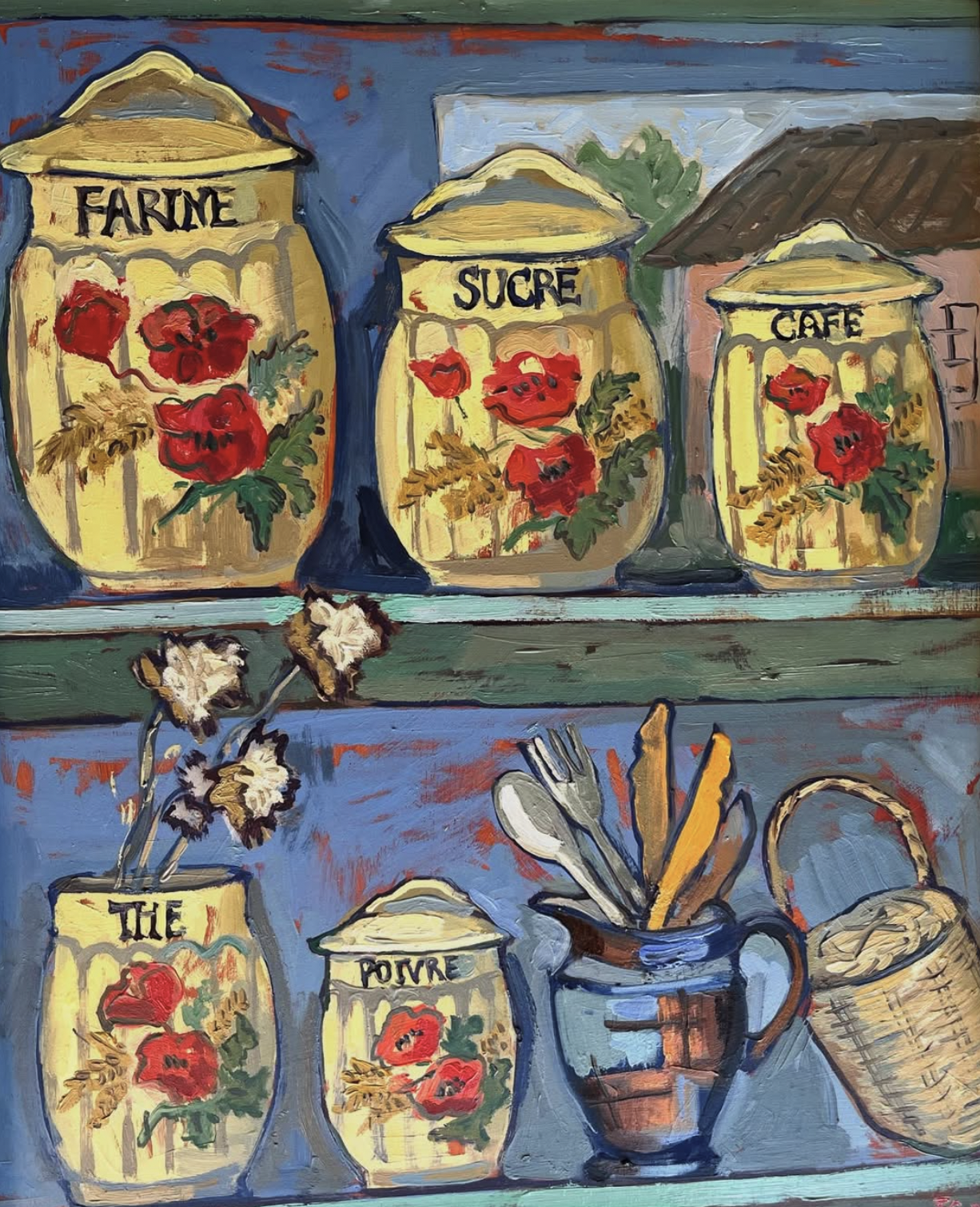
Describe your process from start to finish of a painting. What is your favourite part of the process, and why?
I stretch my canvas myself, or cut and prep my board. This is a big chunk of time but worth the effort.
A tutor once said “to paint one must think very hard before hand and after, and try not to at all in the middle ” which I think was quite spot on.
I begin in a great flurry of excitement, quite messily, with plenty of enthusiasm. It’s the easiest and most fun part, when the idea tends to be quite clear and within realisation.
After the first coat has dried a few days later it’s time for the second stage, where things are vaguely starting to come together. This is the biggest segment and it’s quite a battle of will to not become doubting or dejected. At this stage I try and turn my thoughts off, and pop a good audiobook on, to leave my eyes and hands work in peace. It can be quite slow and feel uphill, but I think the trick is just to keep at it while avoiding an existential meltdown.
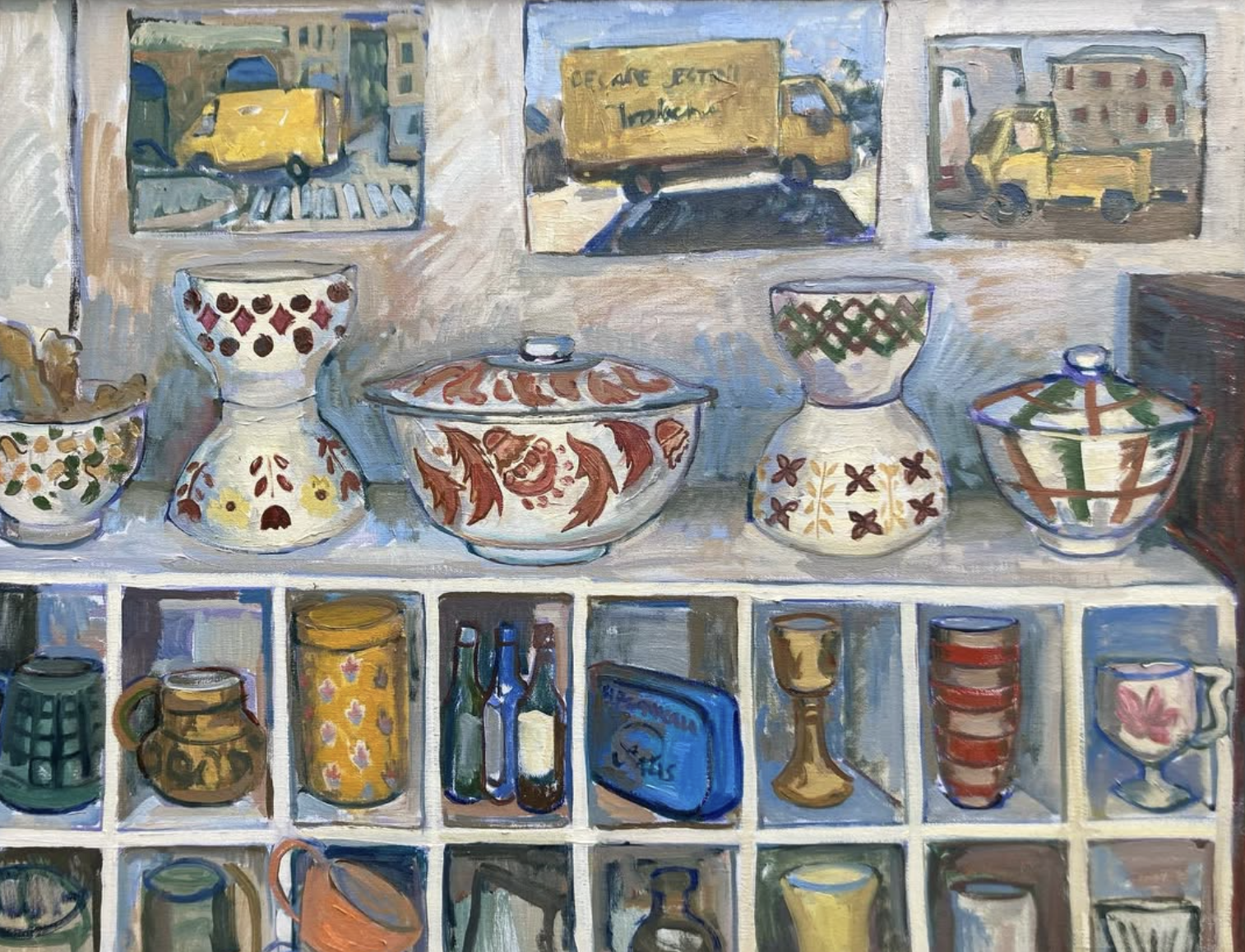
The last part is finishing and is slightly excruciating, slow and confusing. The finishing line is still a bit of a mystery for me, and occurs at times due to lack of time and patience rather than actual satisfaction.
After a few days I look at the work again and usually am quite chuffed with having gotten the idea down, and hopefully feel satisfied. Some paintings I find very hard to separate with, others less, but I like having them around for a while as I tend to add bits and bobs even weeks or months after finishing them once the eyes have some times to refresh.
If you could spend a day with any artist; dead or alive, who would it be, and why?
It’s hard not to mention great heroes like Van Gogh, Cezanne or Sorolla. I am also a huge fan of the french Nabis, like Bonnard and Vuillard, who are the kings of patterns and interiors.
However, I am currently dreaming of Mexico, its explosion of colours and tastes. I’m assuming that someone who is as sensitive to colour as to paint their house such an incredible blue, and constantly adorned with beautiful flowers in her hair would be right up my street.
Frida Kahlo seemed not only a fascinating artist but also a great person to have a wander with, a good meal and a laugh, so for a whole day meeting I think I’ll pick her.
Why do you think art is important in society?
Art has so many functions for society so its hard to pinpoint just one. It shows all the beauty in the every day, and gives great comfort and feelings to us visual animals. But it can also shock, educate, and question which is why it should be more of a priority in schools.
A painter I love called Ben Fenske, did a scene of washing up which I always go back to, and find very poignant, reminding us of such richness in the seemingly mundane.
Art can be a comfort and an inspiration, without it life is just mechanical functionality, and we need more than that to be happy and fulfilled.
The exponential digitalisation of the modern world makes me feel like everything is incredibly fleeting, and confusing. Looking at Art can immobilise the moment, and allow us a window of thought in our increasingly frenetic lives.