ARTIST INTERVIEW: JENNA WALDREN
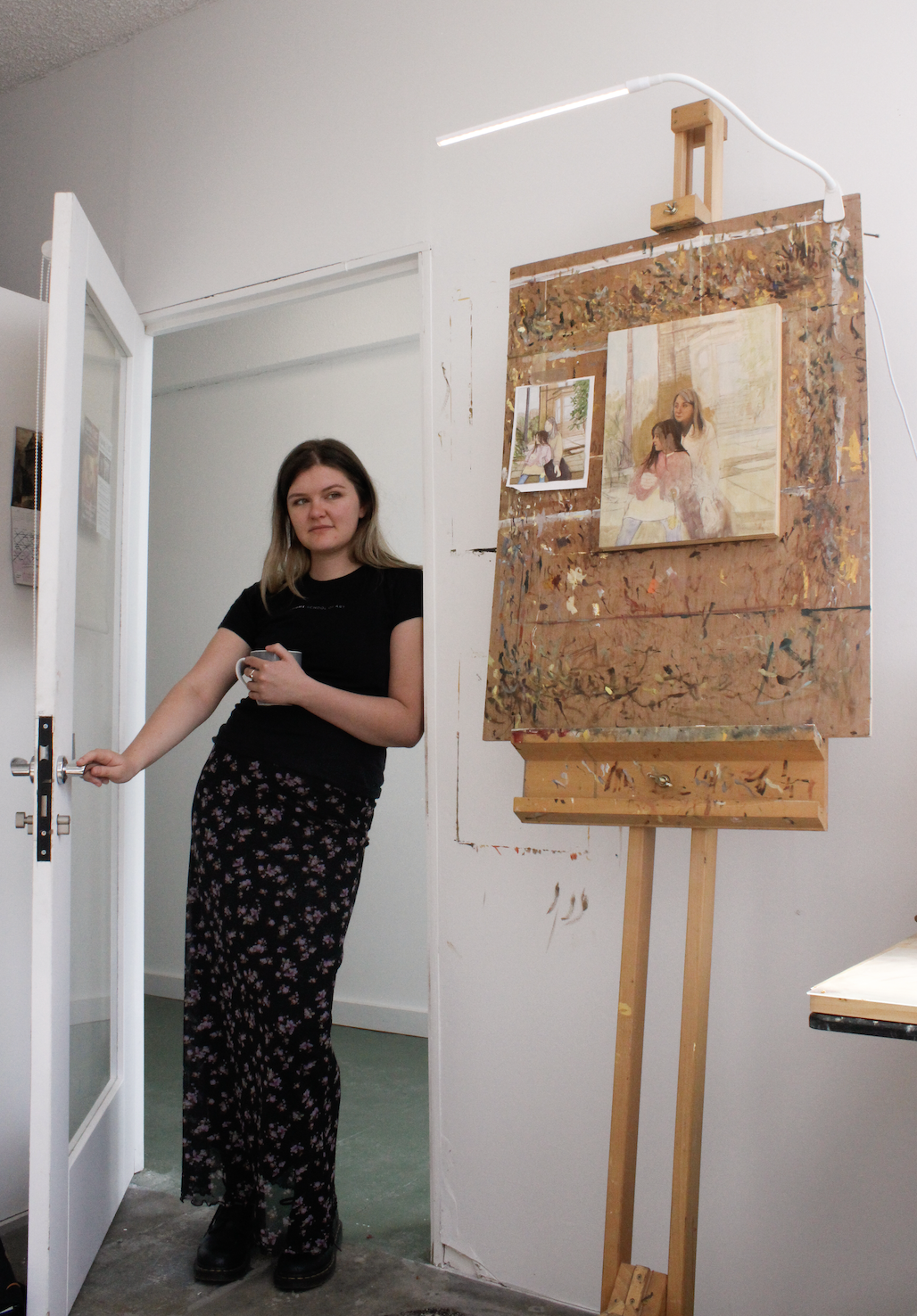
Jenna Waldren
Growing up your father was a professional picture framer, meaning you were exposed to artwork from a young age. Why do you think this perhaps ignited your passion for art?
According to my parents, I’ve always had a love for art. My mum recalls me constantly wanting to get the paints out, spending hours at the table making away. Apparently, when I found out what my dad did for a living, I gave him a big pile of paintings to frame. That being said, I wouldn’t necessarily say that his job as a picture framer exposed me to much artwork as a child, as it was always quite separate from our daily lives. The framing shop is about a 30-40 minute drive away from where we grew up, so we didn’t spend much time there. It’s only now, as I’ve gotten older and begun to work alongside him, that I have been lucky enough to see such an array of incredible artwork so up close and personal.
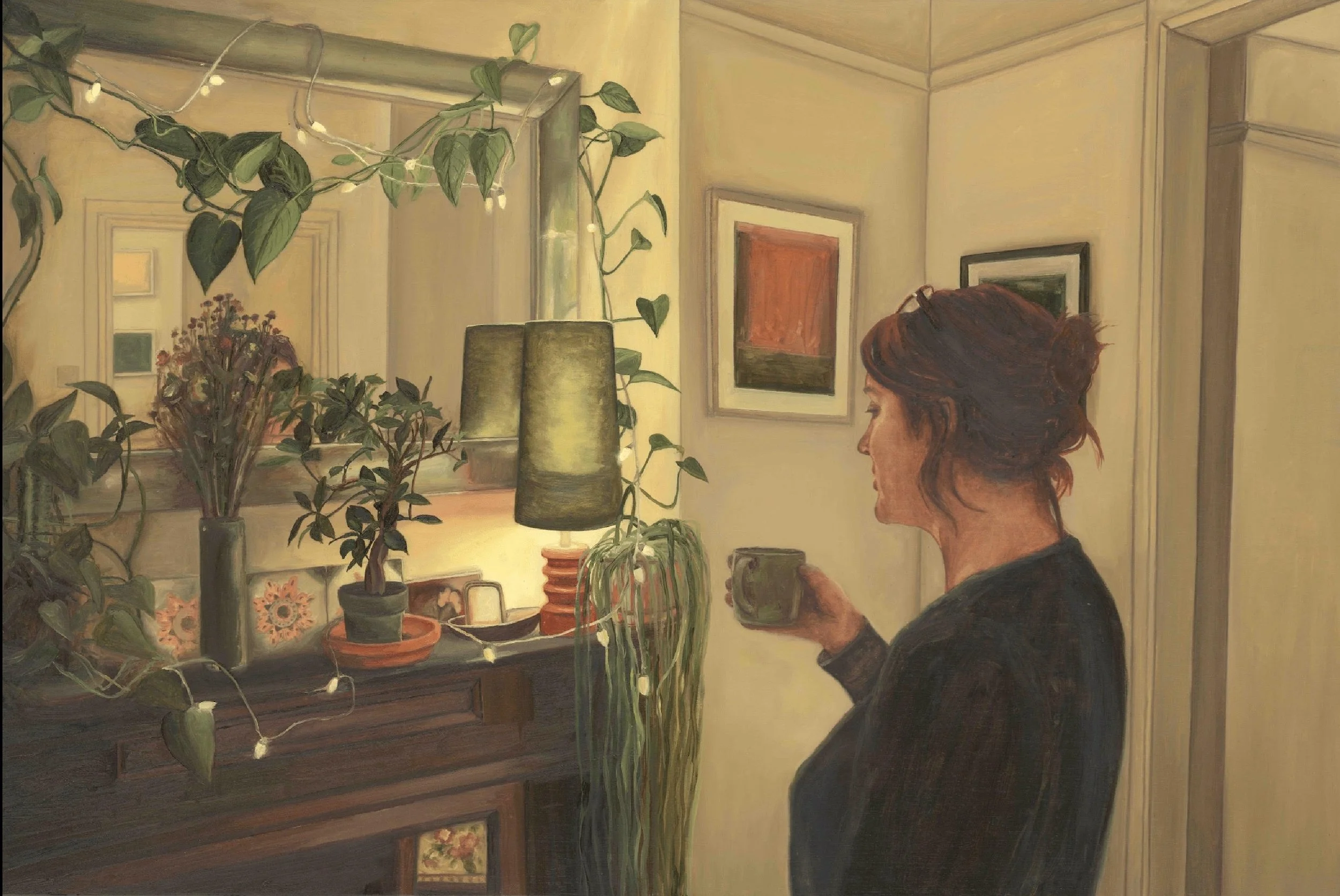
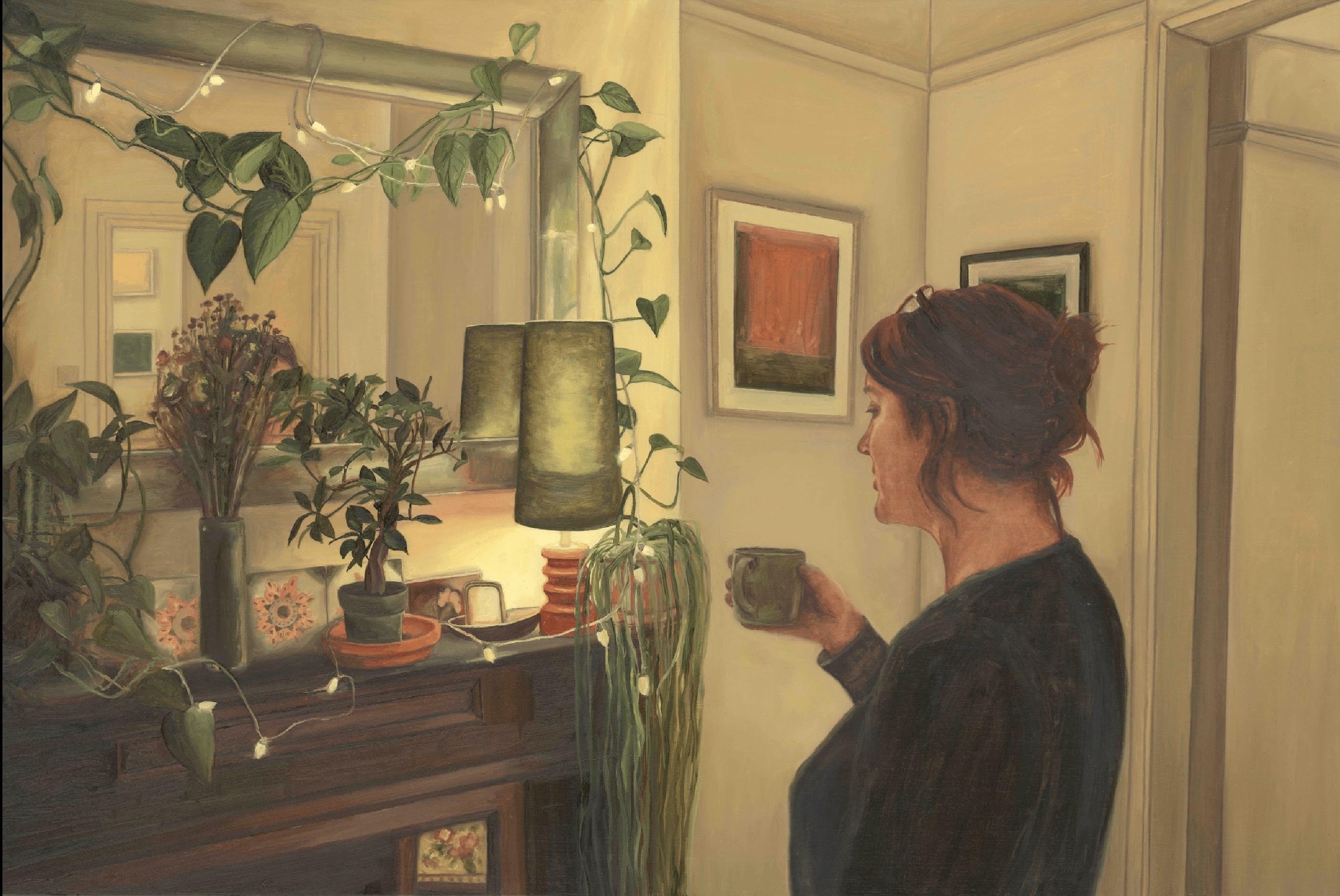
Wintering
A pinnacle point for you on your journey as an artist has been discovering the late artist; Paula Modersohn-Becker - One of the great female artists from the 19th century. Why do you think this artist resonated with you so much? How has Modersohn-Becker been influential to your own artwork?
I first discovered the work of Paula Modersohn-Becker when I was in my second year of art school. I had reached a crossroads with my artistic practice and wasn’t quite sure of which direction to take my work. I sat in the library one afternoon and looked through a plethora of artist books, picking out images and themes I particularly resonated with. Modersohn-Becker’s way of depicting herself and the women around her drew me in. I loved how she had inadvertently recorded her life through simple yet symbolic imagery. I was also in awe of her confidence and boldness, likely being the first female artist to have painted herself naked and also pregnant. Her work made me reflect on the point at which I found myself, and I began to record the moments around me.
How has your University experience and sharing accommodation with other women influenced your work?
When I begun recording the moments around me, I was studying Painting at Edinburgh College of Art and lived with four women- two other art students, an anthropology student and a politics student. We lived in a flat in Edinburgh with no living room and a small kitchen, where we spent our evenings chatting about all manner of things. I began to photograph and sketch small moments from these evenings, in particular the unique ways students live together, such as repotting plants on the kitchen floor or doing their make-up together before a night out. I think there was something universal yet individual about this experience.
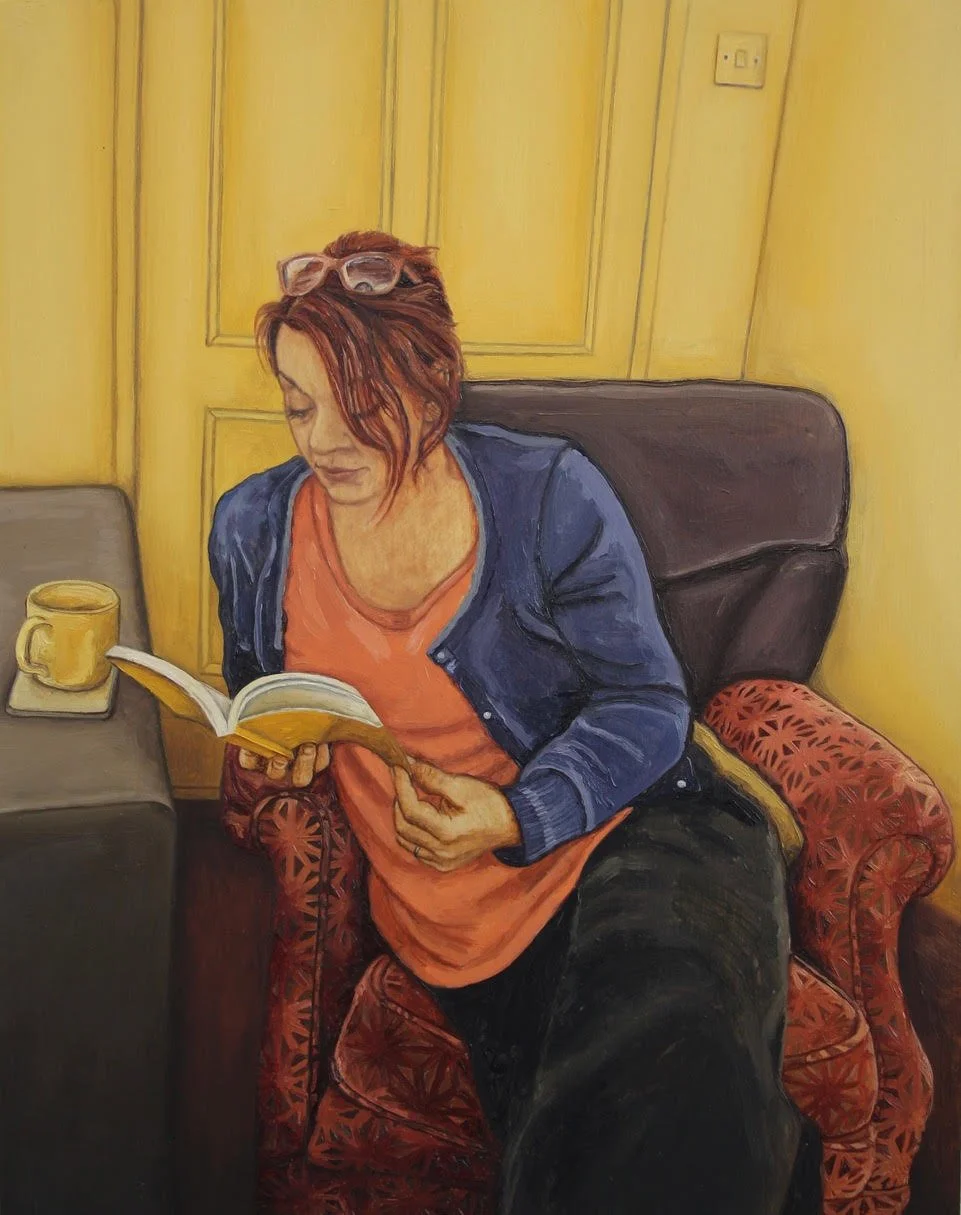
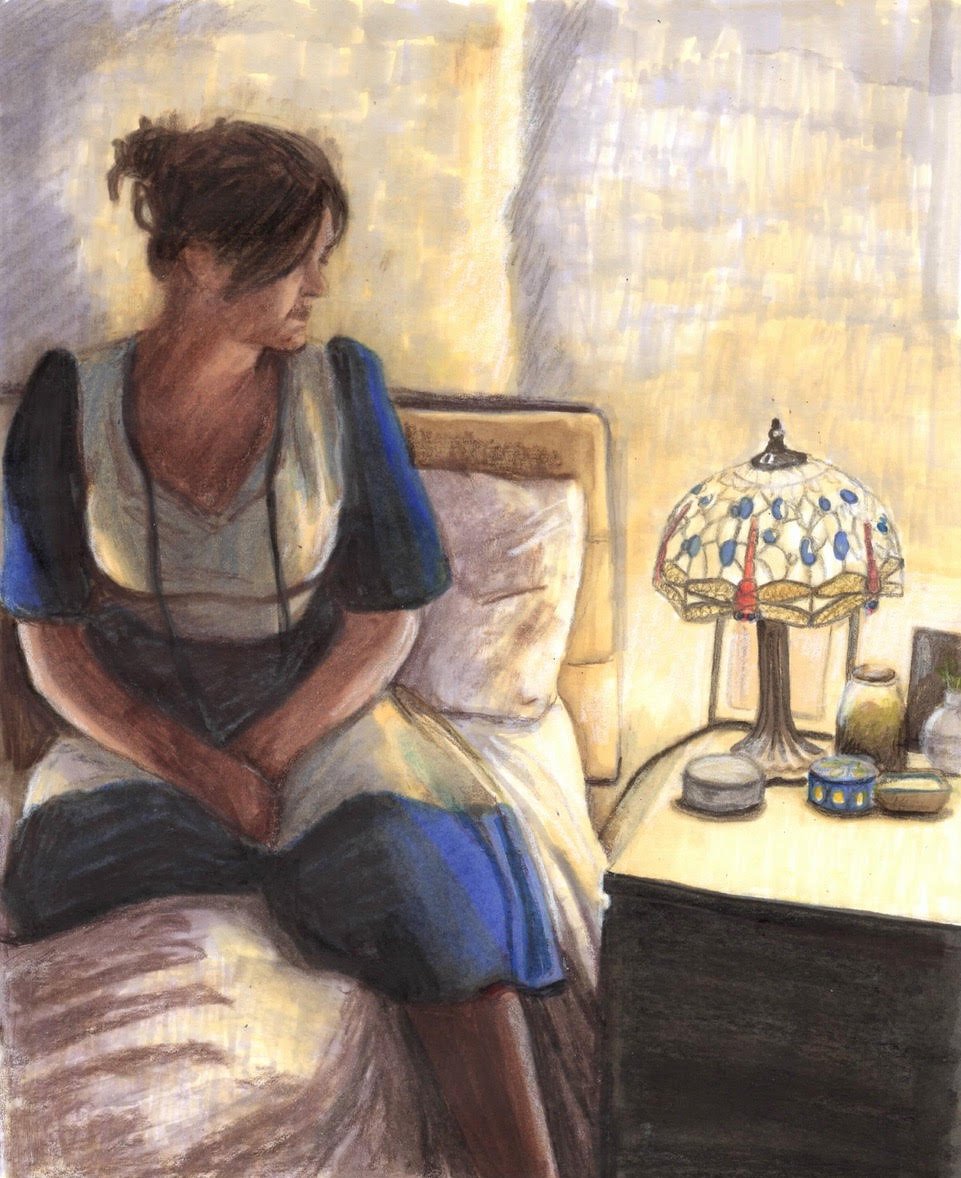
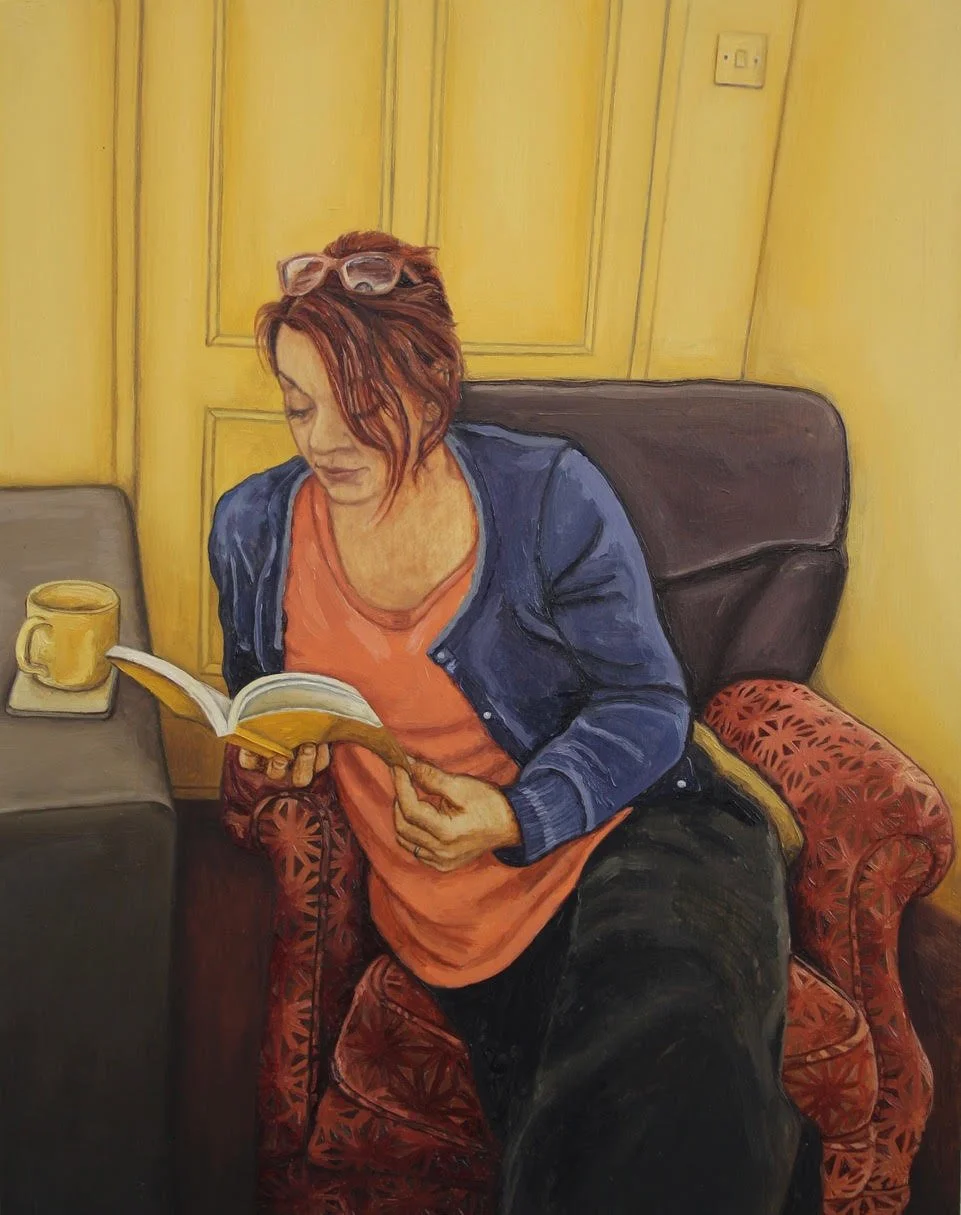
Hannah Reading in Armchair
You document fragments of your daily life through your artwork. Why is it important to you to capture these moments in a painting? When was the last time you saw something in your surroundings that you were compelled to paint?
In 2018, when asked to explain the term ‘Living Autobiography’, writer Deborah Levy said:
"It seemed to me that autobiographies are usually written in retrospect, right at the end of one’s life: what would it be like to write one while you were living?”.
This notion has always stuck with me, as I feel it perfectly encompasses what I am trying to do with my artistic practice. By observing my immediate surroundings, my work acts as an almost autobiography, documenting glimmers from my daily life. These moments can be incredibly personal, showcasing friends and loved ones, or they can be as simple as the way the light falls on a corner of a room. I hope when others look at my work, they see moments from their own lives reflected in the details I’ve chosen to depict.
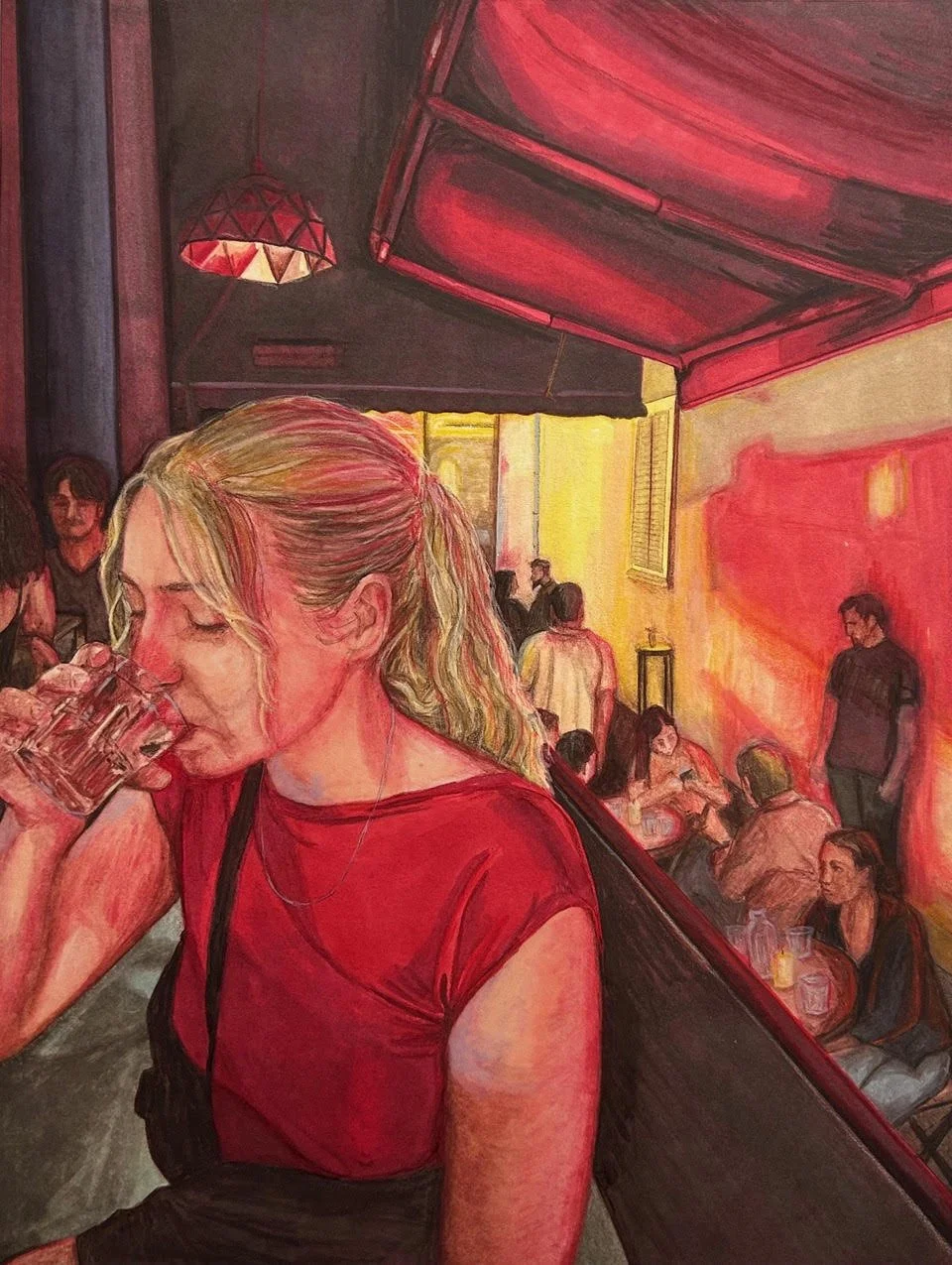
The last thing I saw that I was compelled to paint was when I was walking past a bar window in Edinburgh. The room had a beautiful wash of red light across it and felt so warm and inviting against the cold of the pavement I was standing on. The moment reminded me of a Caroline Walker painting and the film ‘Rear Window’. I’m currently in the process of translating this moment into drawings and paintings and seeing where it takes me.
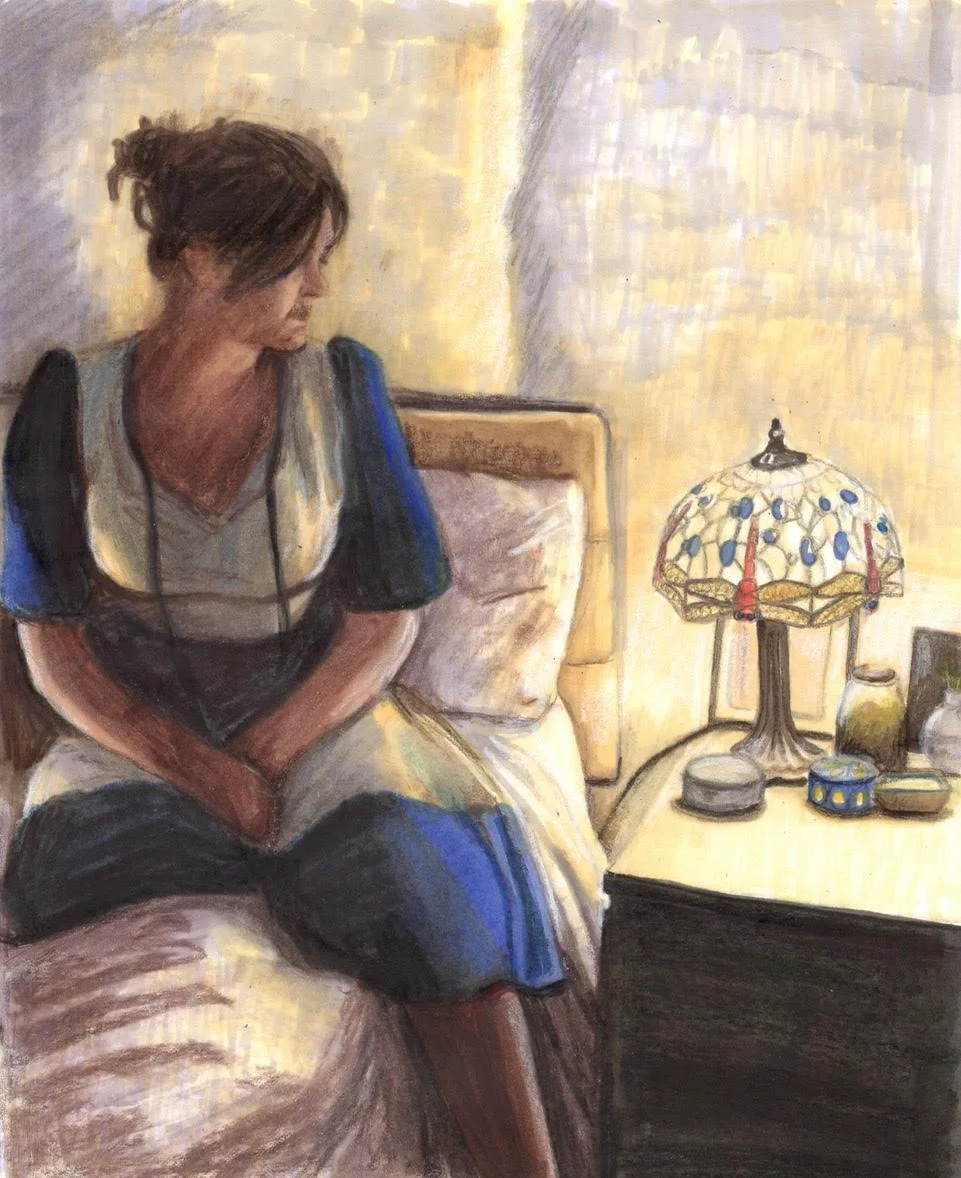
Self Portrait by Lamplight II
Thinking about your last piece, what was your creative process? Describe the process from start to finish of the painting.
I capture moments of intrigue as I go about my daily life, taking photographs and sketching down ideas and concepts continually. When in the studio, I translate these references into more sustained drawings, allowing me to experiment with the colours and composition. These drawings then aid me in my painting process.
I often start with the figure (if there is one) as it’s important for me to capture a likeness or essence of the person I’m painting. I’ll then move on to other areas of the painting, juxtaposing heavily saturated colour against looser washes of tone. This allows the grain of the wooden panel to breathe through certain areas of the work, disrupting the illusionism of oil paint and bringing the pieces back to the naturalistic moments from which they were taken.
Once I feel the painting is complete, I’ll make sure to paint the edges of the cradled wooden panel. I can’t really say why or when I started painting the edges of my works, but I think it’s partly to do with making the works objects rather than something 2D and also acts as an almost ritualistic end to my process making.
What is your favourite part of your painting process? Which part do you find most challenging?
There’s almost a flow state you go into when painting at times, which feels like everything is going as it should and everything is meant to be. If I could bottle this feeling, I would, as it’s when I enjoy painting the most. However, most of the time, painting is more of a push and pull feeling, it’s subtly changing colours to be more cohesive with one another or adjusting compositions for a more balanced image.
The most challenging part of the painting process for me would be capturing someone’s likeness. There is such a subtlety to depicting people, and even the slightest of changes can make that depiction go from looking like that person to not. However, when you get that likeness, and you feel the sense of that person in the painting, it’s such an amazing feeling.
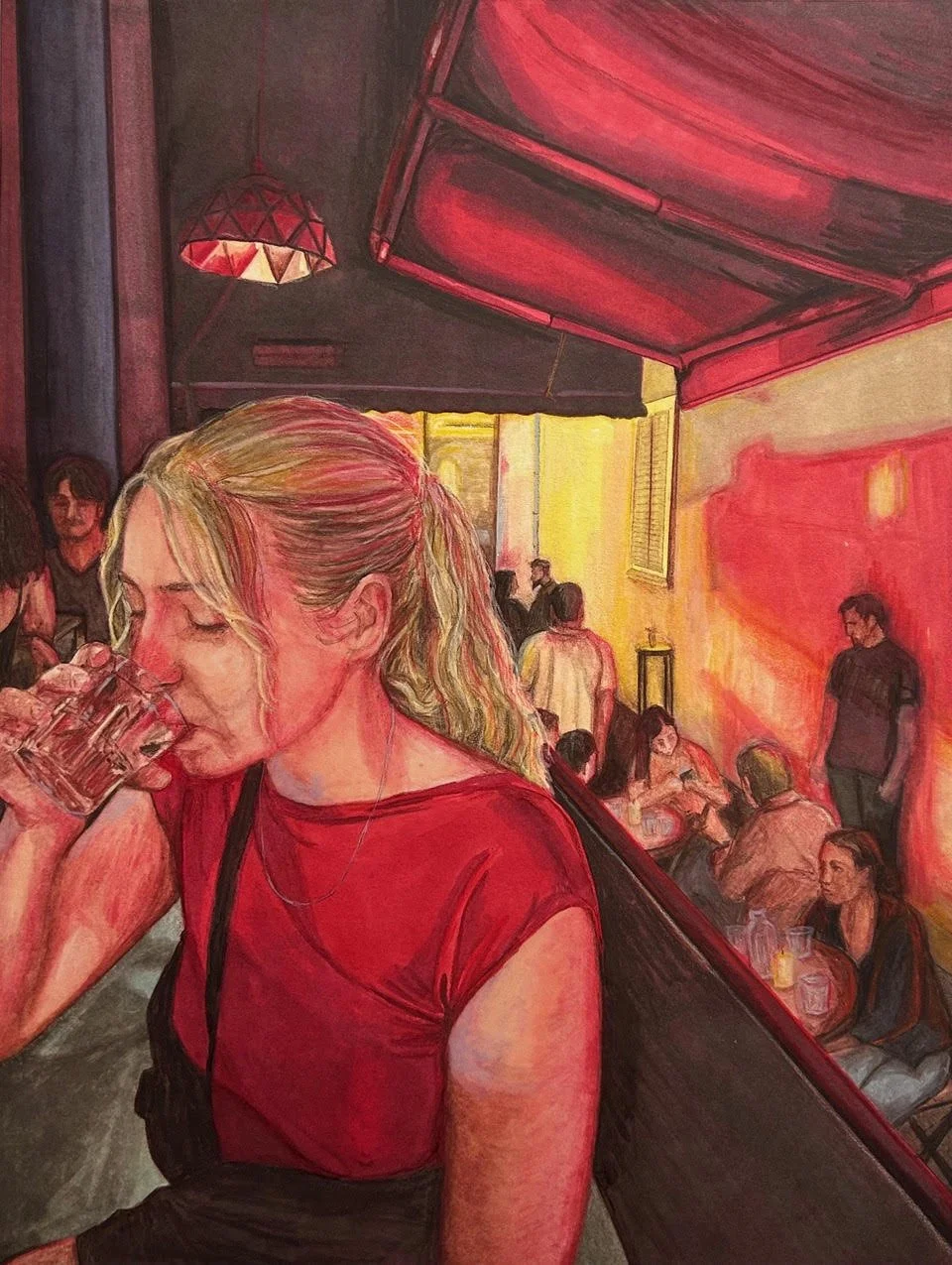
A Night in Istanbul
You appeared on Sky Portrait Artist of the Year, successfully making it through to the semi-finals. Tell me about your experience on the show. Did you have to adapt your process due to the time pressure?
Appearing on Sky Arts Portrait Artist of the Year was an incredible experience and one I’ll be forever grateful to have been a part of. I’m a fairly slow painter, so the time pressure was definitely a concern of mine. To adapt I decided to simplify my process slightly by only painting a cropped head and shoulders composition, in a small 11”x14” size. This allowed me to really focus on capturing the likeness of the sitter, rather than worrying about filling large expanses of background. I also found premixing a range of colours was super helpful, as I had a set of naturalistic tones from which to work from.
In 2024, you were the winner of the BTA Rising Star Award and consequently receiving representation by Wing Gallery. How has this impacted your career as an artist?
Winning the BTA Rising Star Award gave me such a confidence boost, as I was honoured to have been selected by such an esteemed panel of judges/fellow artists I look up to. Receiving representation with Wing Gallery was also such a great learning experience, as it gave me a behind-the-scenes look at how a gallery is run. Dani Humberstone, who ran the gallery, was particularly kind to me and went above and beyond to guide me on the practical sides of being an artist, such as marketing, racing and selling my work.
How do you picture your work evolving in the future? Who would be your dream commission?
At the moment, I am working on a new series of works, depicting the artists and people closest to me. For each person. I’m doing a sitting, where I sketch and photograph them in their own homes and studios. I hope to include the various plants, lights and objects in these spaces, as a deliberate nod to how our homes/ studios reflect our own personal stories, mapping our lives in the objects we surround ourselves with. I’m not sure exactly where this body of work will take me, but I hope to continue to develop my visual language and perhaps experiment with working on a larger scale.
My dream commission is a hard one, but I’d have to say it would be any of the incredible women who have inspired me along my own creative journey. The ones that come to mind instantly are: Deborah Levy, Chantal Joffe, Caroline Walker and Patti Smith. Then there are those who are no longer with us, whom I could perhaps pay tribute to in a different way. Such as Alice Neel, Paula Modersohn-Becker, Margaret Kilgallen and Paula Rego.
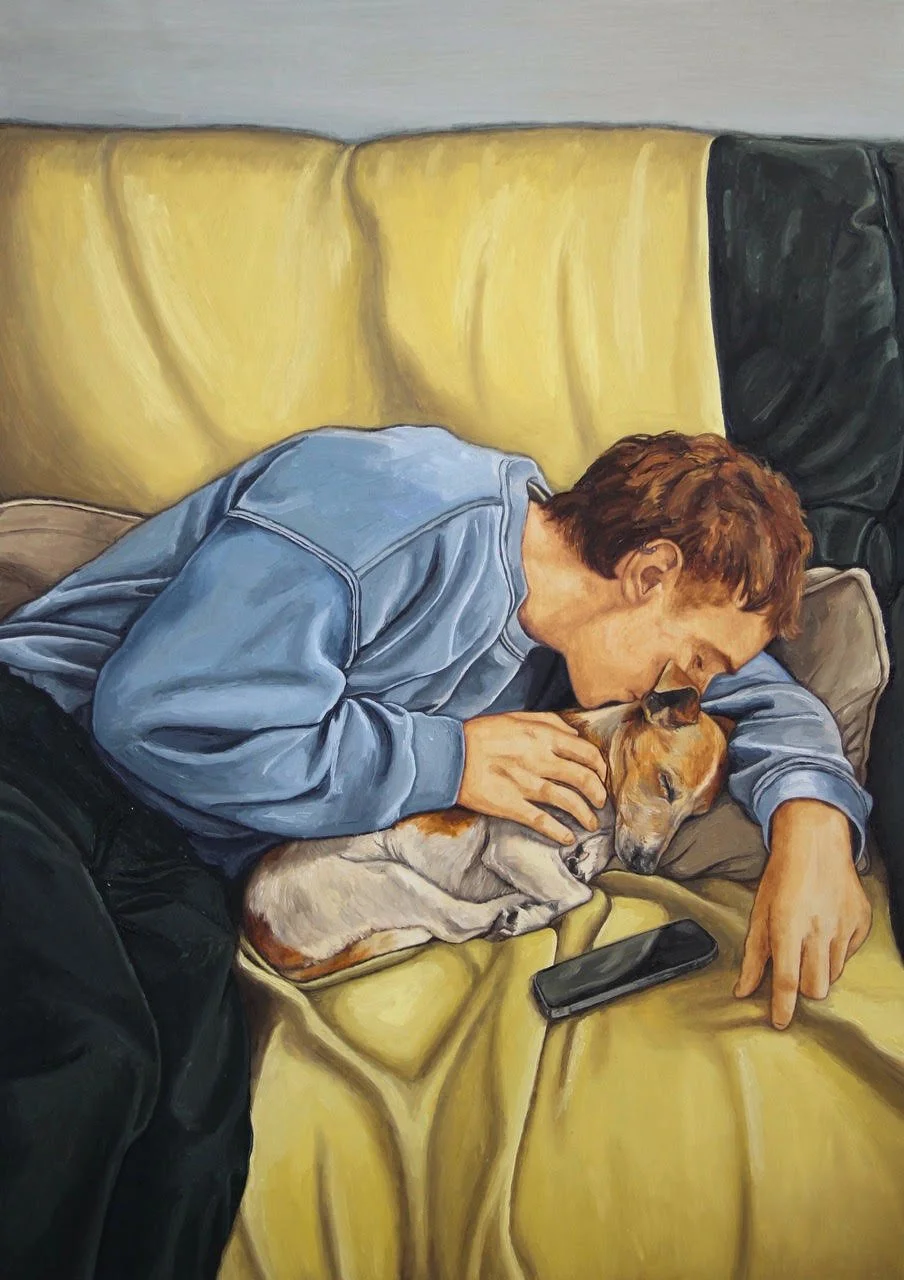
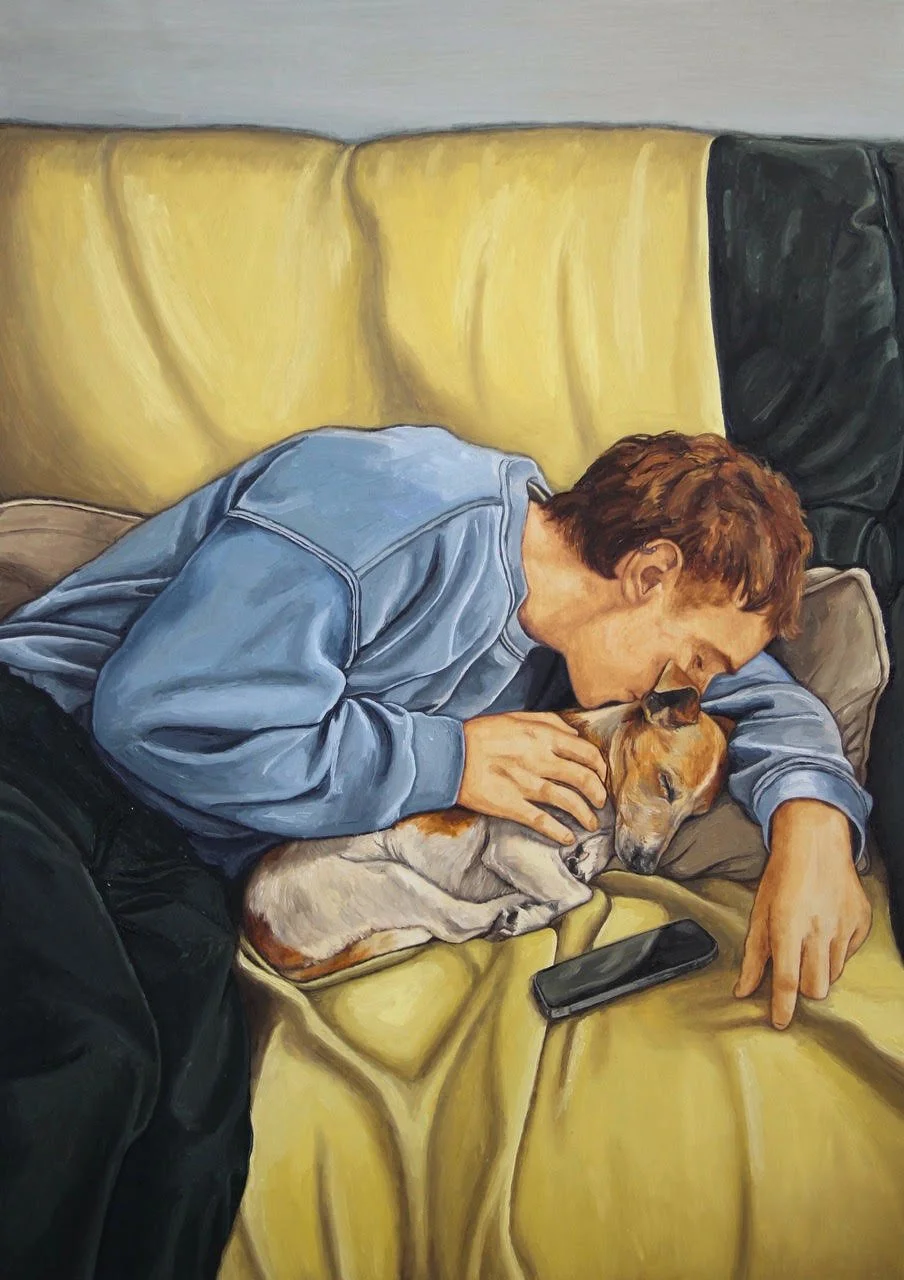
Sean and Cookie II
Why do you think art is important in society?
I remember being on the bus a few years ago, and an old man sat next to me. We started chatting and he asked me what I did for work. I said I was an artist and he replied: “When are you going to get a real job?” At the time, I just laughed it off awkwardly; however, afterwards, it made me think. What kind of world would we be in if artists didn’t exist? Our homes would have nothing on the walls, no furniture to sit on, no music to listen to, no films to watch, no books to read, the list could go on and on.
In a time where the arts are becoming increasingly threatened for numerous reasons, I think it's extremely important for us as a society to remember how valuable art can be.