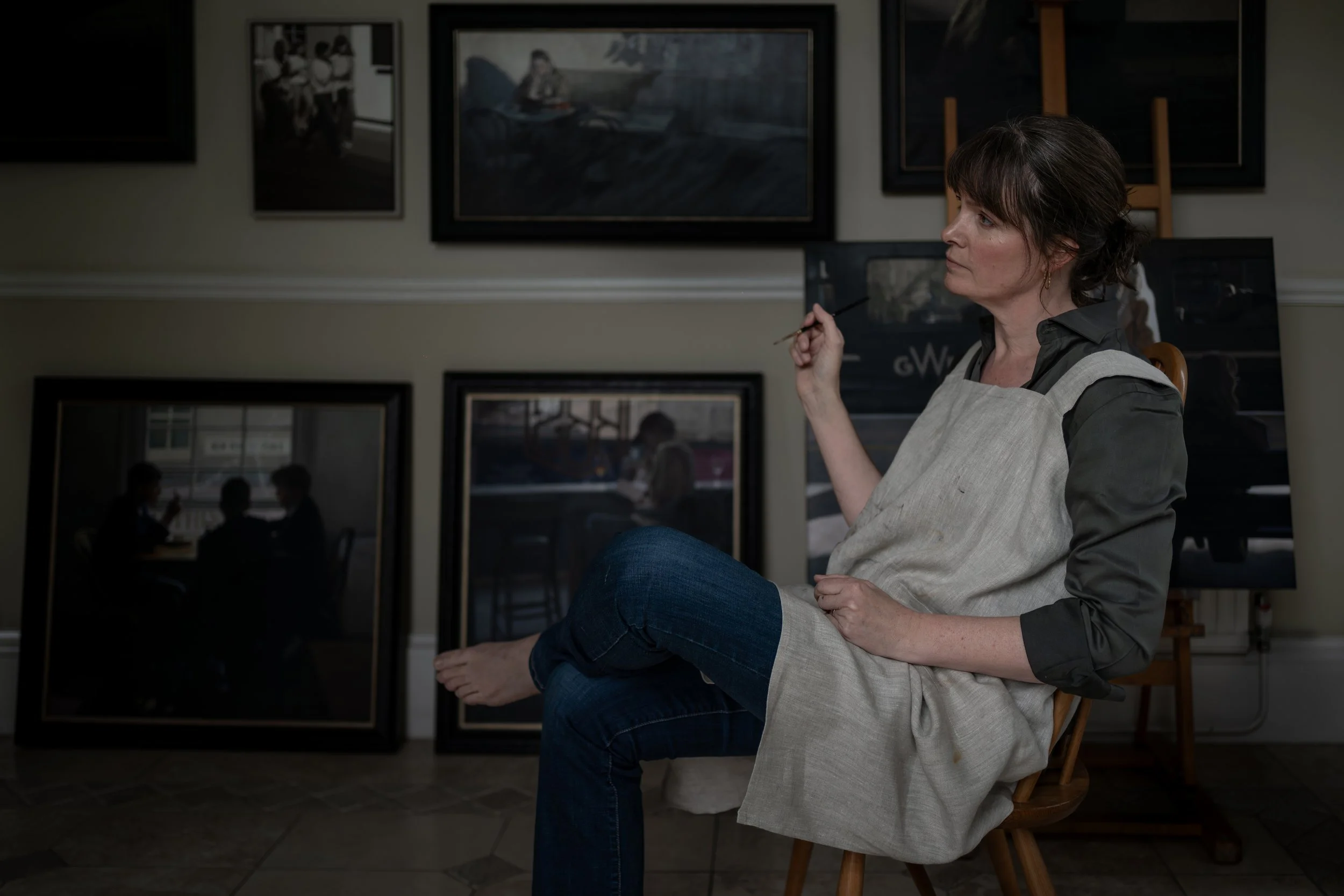
Rebecca Holton
Tell me about yourself. How have you turned your passion for art into a career? What initially sparked your interest in becoming an artist?
I always loved Art. I won my first Art competition aged 4 with a drawing of the 3 little pigs (!) - cut to 15 years later, and I followed its path into a 5-year MA in Fine Art.
However, at the end of the degree, I wasn’t yet ready to follow it into a career.
Art can be quite a solitary and possibly lonely career day to day. You need to allow a lot of time by yourself to create. I enjoy chatting and company. At the end of my degree, I was mid-twenties, eager to move to London, and I wasn’t ready to dedicate so much time to my own headspace and company. Hence, I combined my interest in Art and the London business world, and I went into branding and advertising.
Fast forward to 2018 (having met and married my husband, had two children, moved to, and returned from Hong Kong), and my head space was very different. I still loved company, but my family base was sorted, and I really missed Creativity.
I was ready to dedicate my life to pursuing Art – and determined to try to make up for lost Art time.

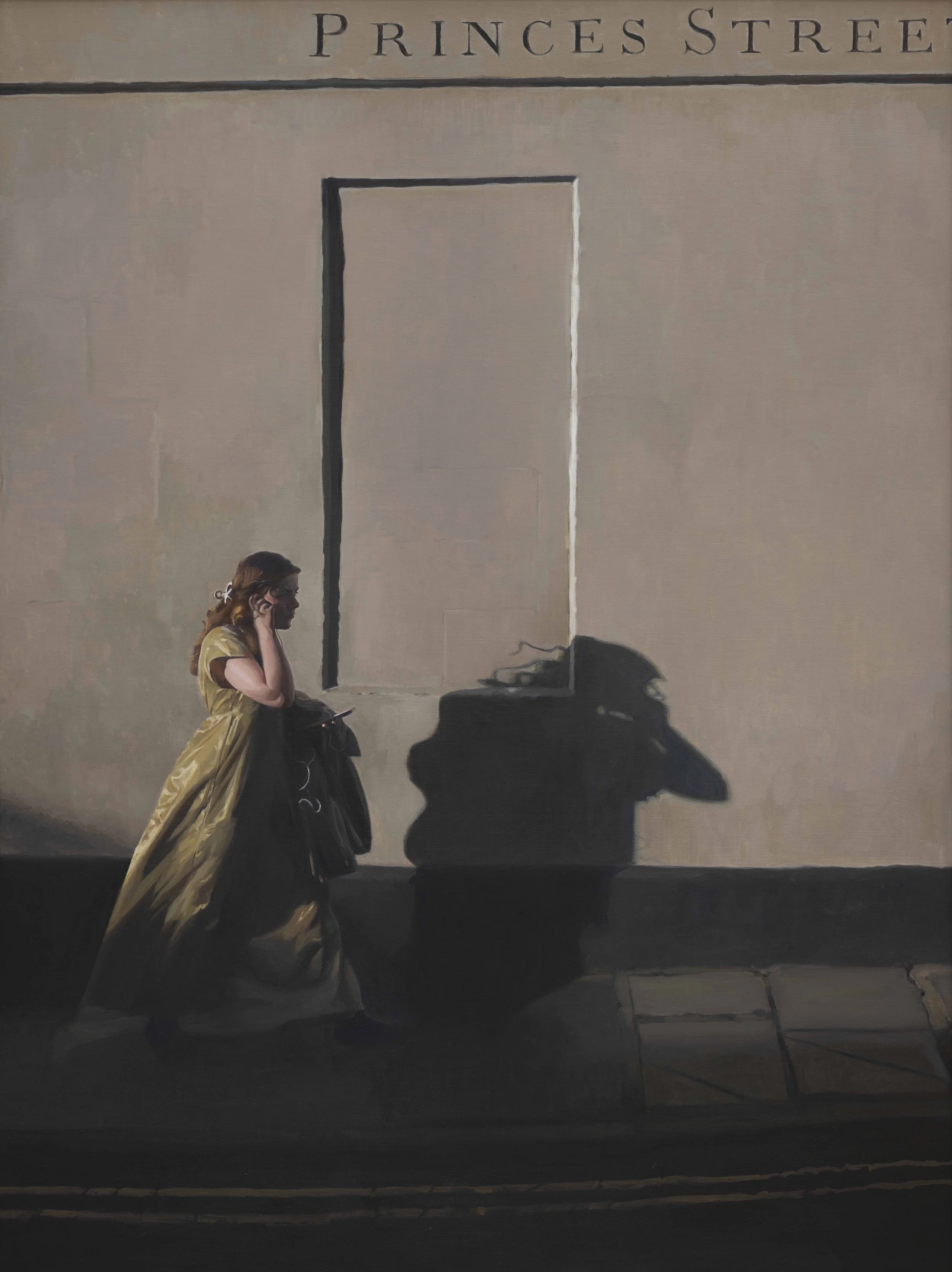
MISS BENNET WAS AN EXCELLENT WALKER
The subjects of your paintings are mostly people you have observed on the streets, or public places such as café or train stations. Why do you find people fascinating to paint?
I have always been drawn to people – my Edinburgh sketchbooks are filled with drawings of my friends and family. My degree had a heavy focus on drawing from life; we were lucky to have a life model 3 or 4 times a week. Hence, I had a very thorough training in capturing people.
I love capturing reality – observing what is around me rather that constructing an image. I believe that the closer a narrative is to your own life, the more it resonates with you. Women artists have been capturing people in everyday moments for centuries — from Berthe Morisot and Gwen John to Dame Laura Knight. I love the idea of inheriting that tradition while bringing those scenes into a contemporary context.
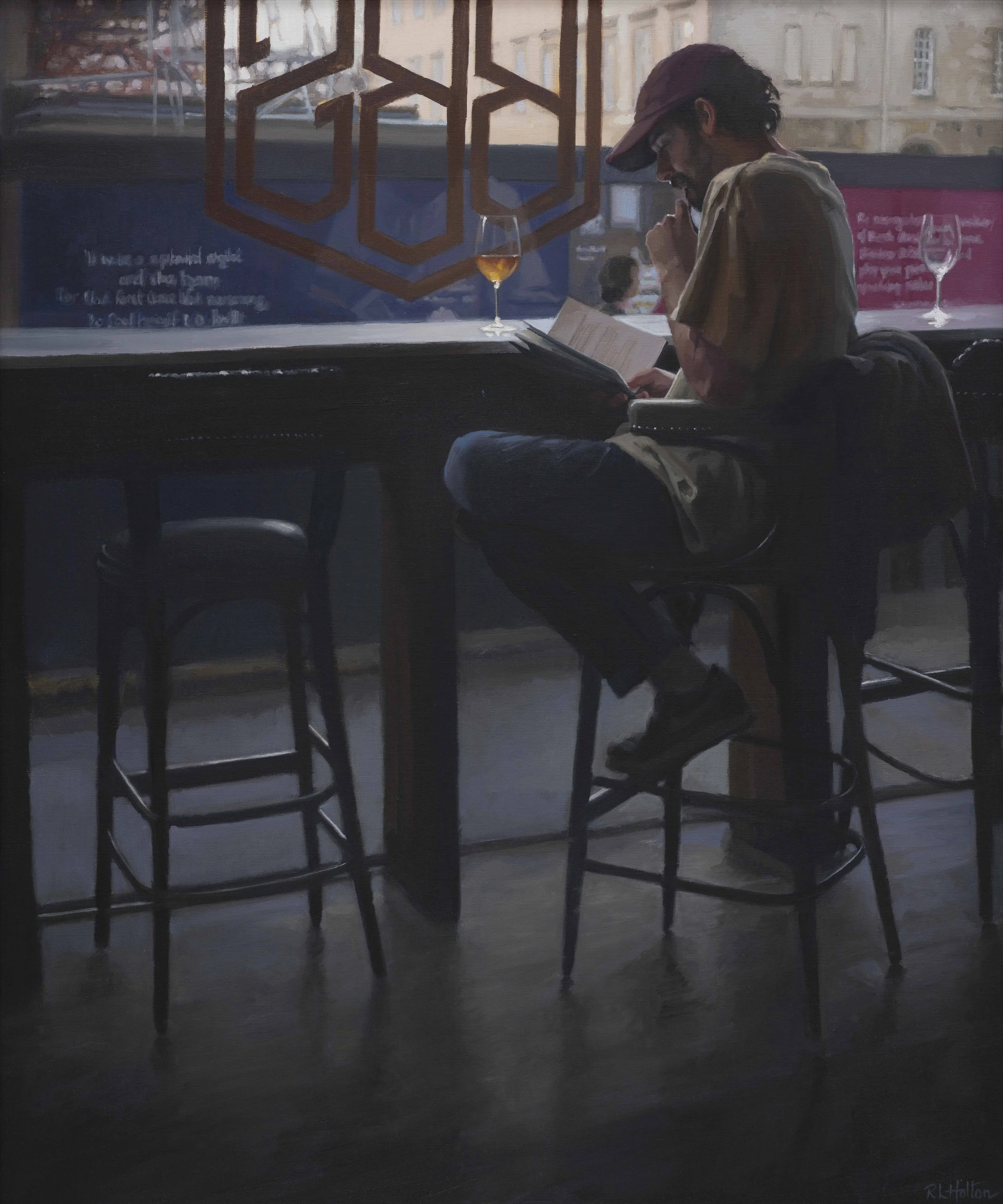
THE READER
Where was the last place you felt inspired to paint?
I was having a coffee with my friends outside our local café early yesterday morning in the sun, and a lady walked past us pushing her bike. She had her hair in bunches, ¾ length trousers and a cross body bag. She walked to park her bike in the stand on edge of the pavement. It was such a natural, beautiful image – who knows, if I can track her down, she may well be in my next painting – caught forever parking her bike in the sun.
Thinking about your most recent painting, what was your creative process from start to finish? How did you establish the composition?
It usually starts with a random moment that catches my eye. Often, it's the light that draws me in and sparks an idea. I tend to take hundreds of photos one after the other, very fast, to catch the light and tiny changes in expression or gesture. I’ll then jigsaw the images together back at the studio (I do this by hand with print outs and sketches – adding and removing pieces; collaging ideas for compositions).
I’ll hone it down to maybe 3 or 4 favoured compositions and begin with a few oil studies – this may be in monochrome (focussing on values) or colour. Using the results of the studies, I’ll embark on a full oil painting – often I’ll still play with a new thought, be that shadow, composition, or expression for the end piece.

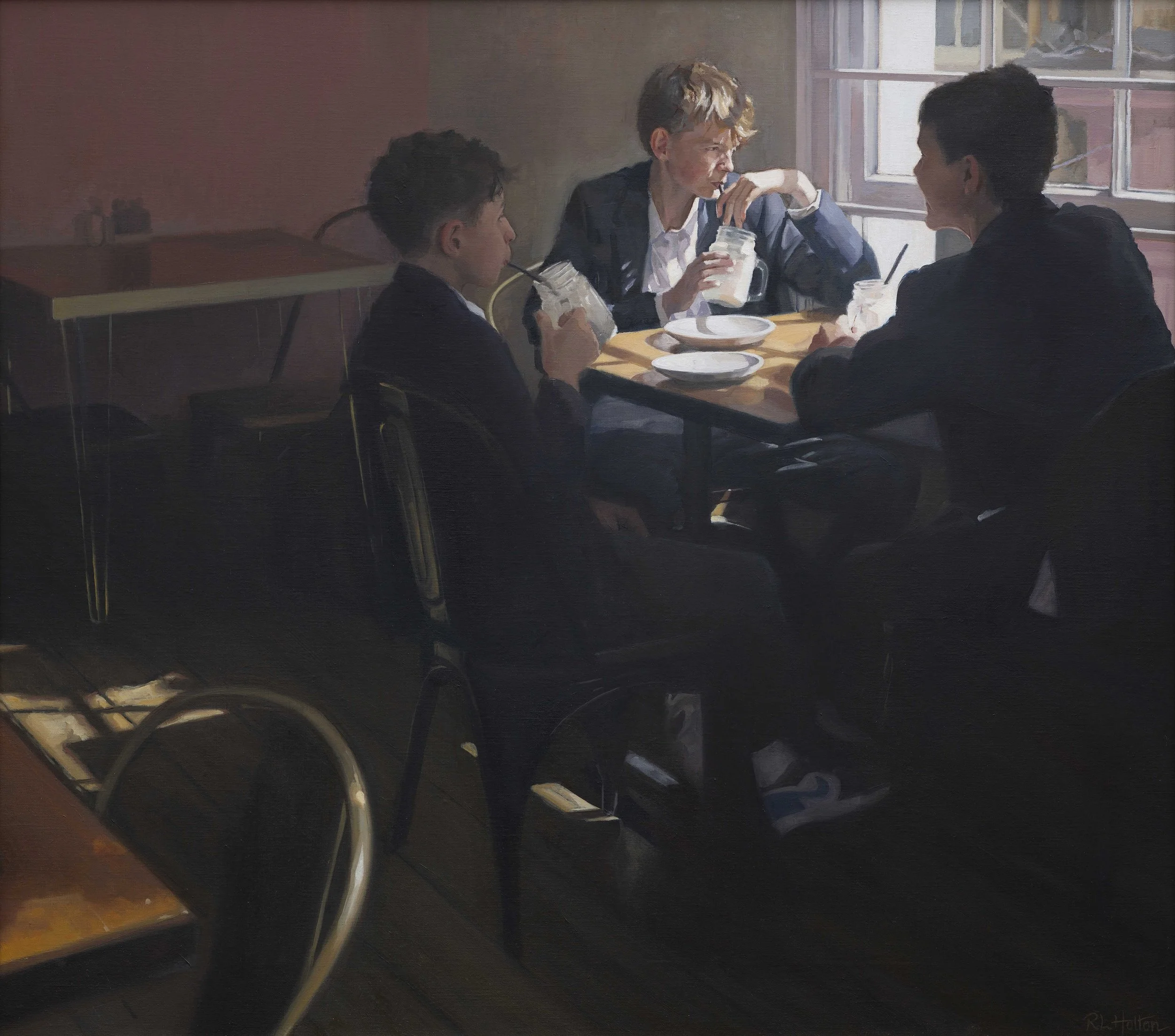
BESTIES
Which part of your process excites you the most?
That’s difficult to pinpoint – I love what I do.
I think it would probably be when the painting is ¾ done; so the final 1/4. There’s a real energy to painting that last section. I think the final details define the narrative; softening or sharpening edges, brightening, or muting colours. I use a fairly muted colour palette, but at this stage I may introduce a brighter hue to direct the eye – Cadmium Red, Cadmium Yellow or even Phthalocyanine Turquoise.

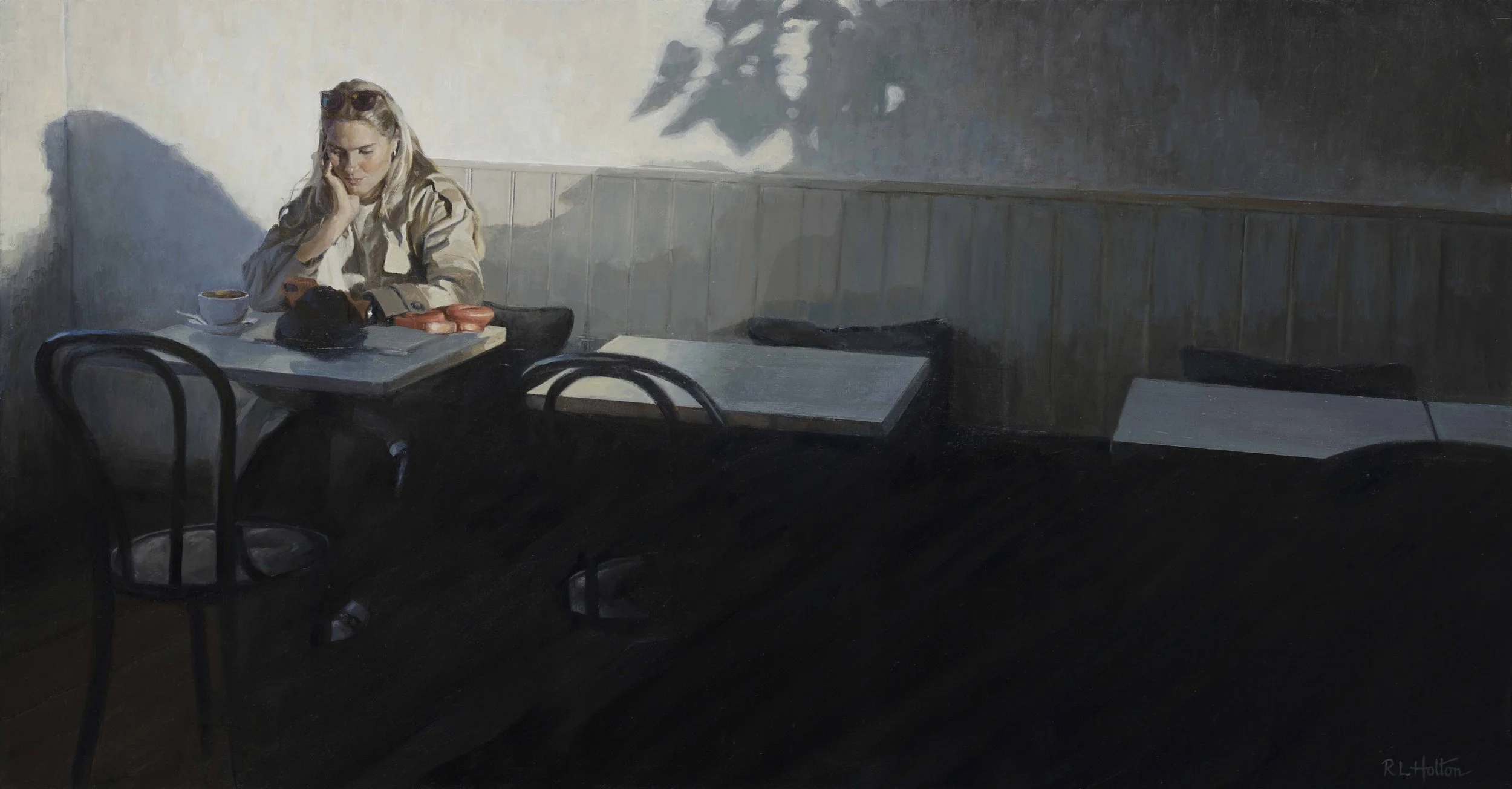
FLAT WHITE
What does a typical day look like for you in the studio?
I’m normally in the studio by 8.30am, having fed the dog and packed the children off to school. I begin by checking and updating my ‘to do’ list; this allows me to see what I’ve achieved and helps give the day direction. No day is the same, but I like to prioritise painting in the mornings. I’ll put on a podcast and settle into a few hours painting interspersed by a break around 11 - this often includes a short walk to my local coffee shop! The day is mixed with conversations with galleries, art advisors, packing artwork, arranging deliveries, marketing, emailing, or invoicing. I finish around 6 depending on the day and occasionally return to the studio after dinner.

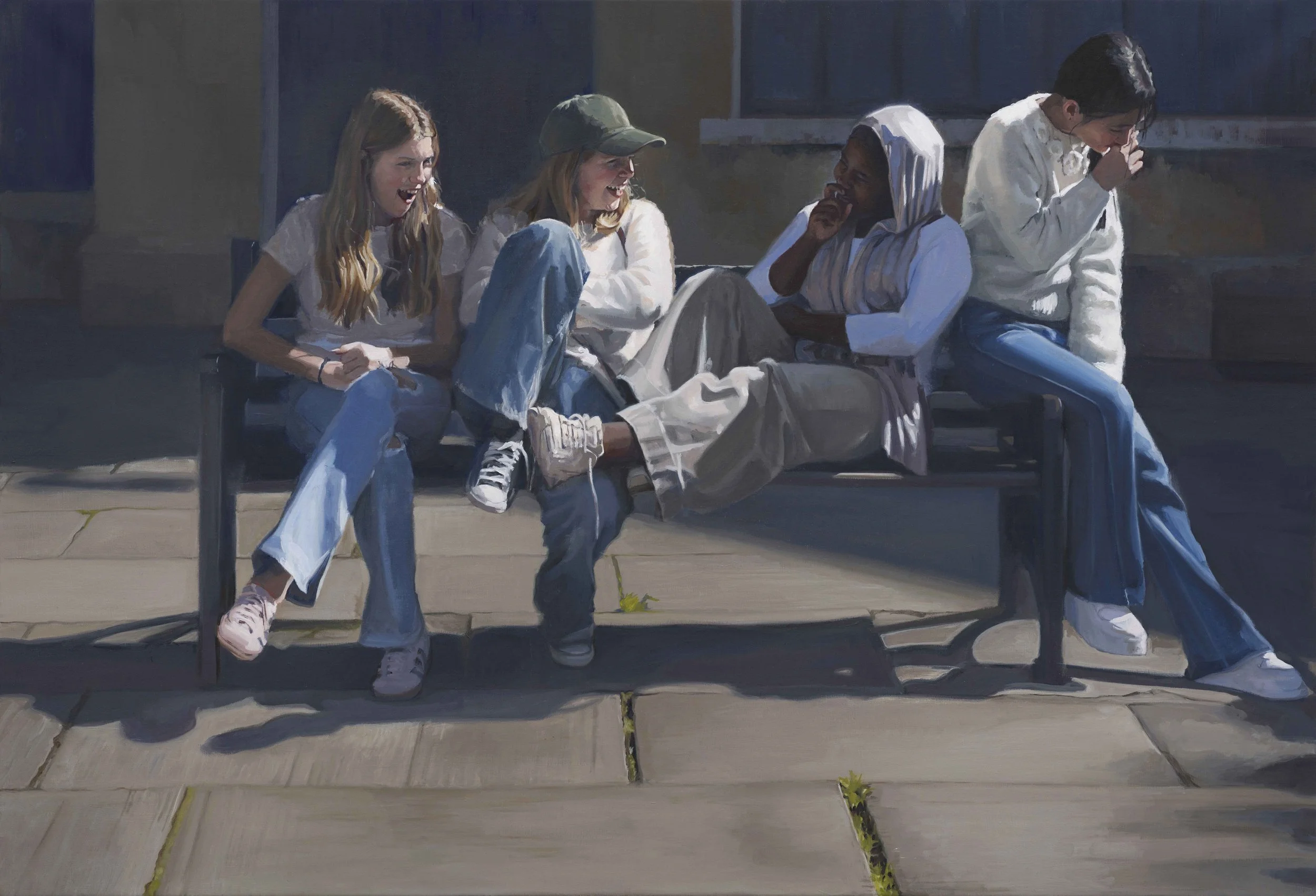
HANGING OUT
Who is your greatest artist inspiration? If you could ask them one question, what would it be?
Blimey – I can’t narrow it down to just one… I’d love to meet Vilhelm Hammershoi or Gwen John. Of the two, I think I’d go for Gwen John – I’d love to discuss the challenges of being a female figurative painter with her.

LAST DROP
You have exhibited at various prestigious institutions, including RA, ROI & RBA. What has been your greatest achievement so far as an artist? Have you endured any challenges?
Last year was amazing for me. I won 7 awards – 4 first prizes, and 3 exhibitions, including The British Art Prize for Portraiture. A true ‘pinch-me’ moment.
The nature of being an artist means you must continually expose yourself to strangers’ opinion. That, alongside working mostly by yourself in your studio, means there can be a continual feeling of imposter syndrome. I think this is an ongoing challenge for most artists.

ICE CREAMS
Why do you think art is important in society?
So many reasons! The most obvious is to encourage and promote creativity which we will all need more than ever as AI develops.
I hope my art offers an opportunity to reflect on contemporary life, culture, and routines.
Interestingly, I’ve been asked more than once whether I’m commenting on contemporary technology through my art, as some pieces include laptops/ phones. My answer is no, I’m just capturing life today – if they’re part of the scene, I leave them there. I think that capturing a digital device in art surreptitiously draws more attention to it - something we don’t notice in the original scene itself.