

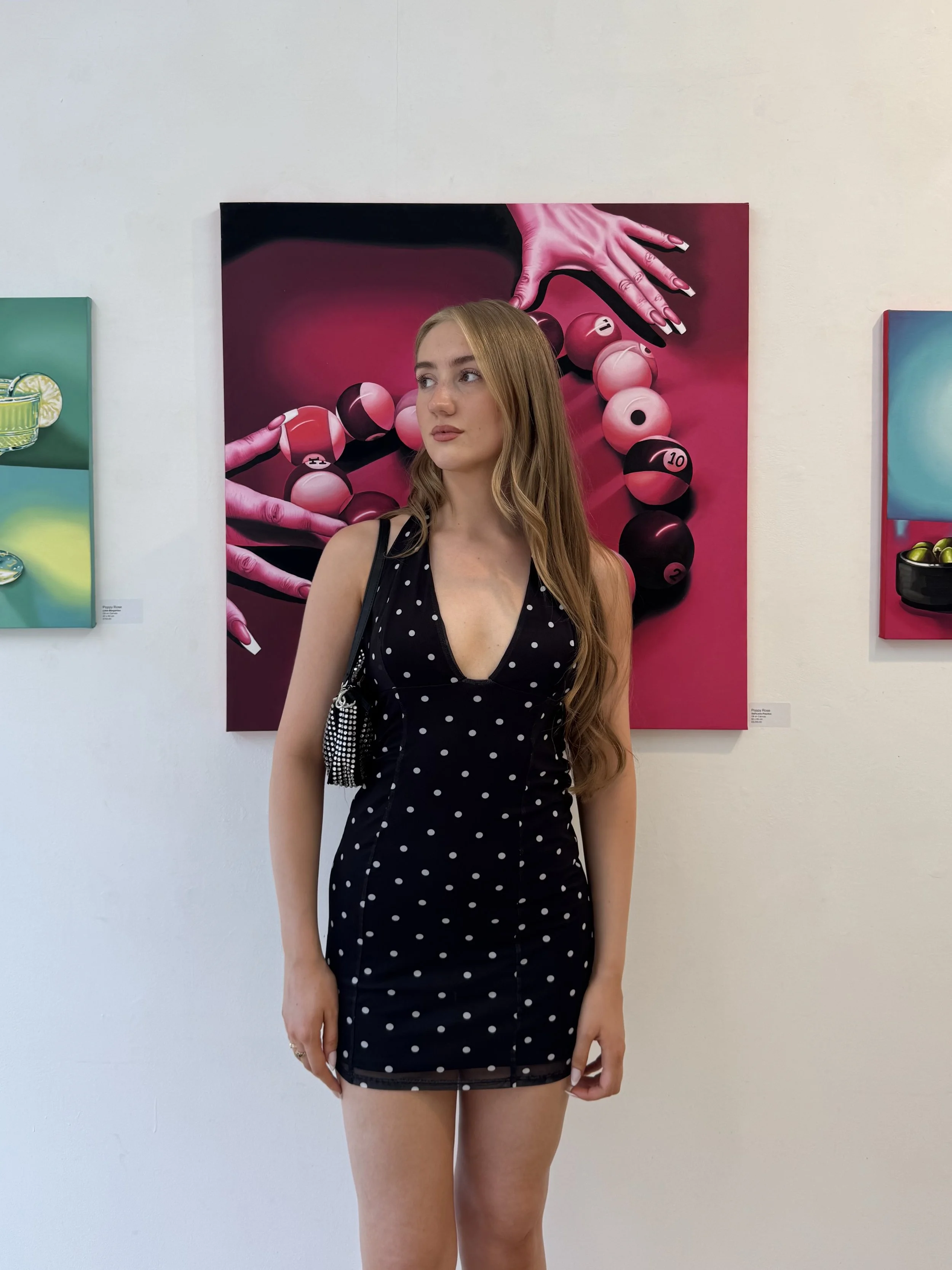
Poppy McDonald
Your passion for painting started at an early age. What do you think sparked your interest in art?
While interacting with other children felt confusing and isolating, art never did. I often chose to sit alone and draw rather than try to play with others. I found comfort and safety in my crayons and paper.
I felt so isolated among children my age that being an outsider quickly became my norm. Instead of spending that energy attempting to make friends, I could create five drawings in the same amount of time. Art gave me a sense of purpose and companionship when human connection felt out of reach. Even now, at 22, I’ve never fully shaken that feeling of distance.
Art doesn’t judge. Paint is forgiving. You can make mistakes, layer over them, and keep going. When I make a painting, I’m no longer alone - there’s a presence with me, something that listens without demanding anything in return. That quiet, accepting relationship is what first drew me to art, and it’s what continues to keep me there.
You were diagnosed with autism at an early age. Do you feel your autism influences your art? If so, how?
Absolutely, when I was unable to advocate for myself or communicate my needs in ways others could easily understand, my art became my voice. Painting allowed me to express what I couldn’t always put into words. My emotions, thoughts, and experiences found sanctuary through creativity when language often failed me.
Still to this day, I feel I most accurately convey myself through painting. Art is where I feel understood. In times when I couldn’t communicate for myself, art spoke for me, and that role has never disappeared. It remains my most authentic form of self-expression.
STARLET
Is there something you wish people understood better about autistic artists?
Autistic artists are often some of the most introspective and deeply attuned individuals you’ll ever encounter. We spend an enormous amount of time alone in our heads observing, analyzing, and reflecting. Our inner worlds are rich with complexity and feeling, even if it isn’t always visible or easily translated to others.
What people sometimes mistake for distance or a void of detachment is often a deep connection to a true sense of self. Autistic artists are not lacking emotion or awareness, if anything we feel it deeper than the neurotypical mind. Our art often comes from that quiet, internal space, shaped by long periods of reflection and self-examination.
I wish that non-neurodivergent people could see that the solitude so many autistic artists live in isn’t emptiness, but a sanctuary of peace and creativity.
Why do you enjoy using a saturated colour palette?
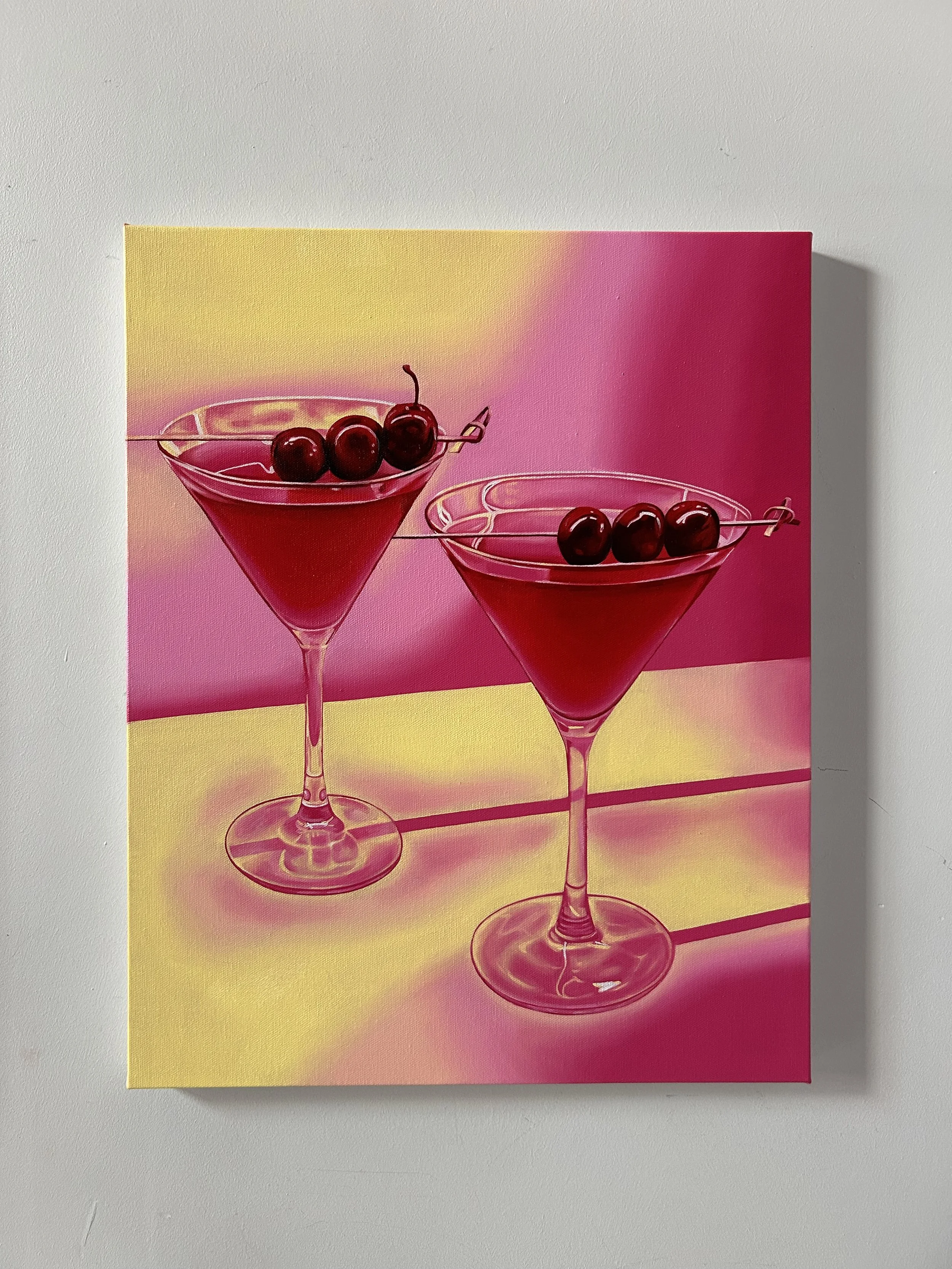
I enjoy how colour can provoke the nervous system, not just the eye. I often ask myself whether I can truly make a viewer feel a specific emotion purely through the palette I’m using. Saturation becomes a tool for that experiment. How far can I really push colour to register throughout the body as much as in the mind.
I think that saturated colour mimics a dopamine hit. It creates an immediate rush that stimulates the mind. I want to create art that mirrors the heightened way I experience emotion and sensation. Through colour, I’m not just constructing an image, I’m trying to trigger a response from the viewer. I want people to lose themselves in this immersion of rich, indulgent colour.
Right now, we’re living in a time of whitewashed trends - ‘Sad beige house’ and ‘Millennial grey’. Pantone’s Colour of the Year, ‘Cloud Dancer’, felt deeply disappointing and almost insulting. Why are we so afraid of colour? When did we stop painting bright statement walls or installing pink bathtubs? I like to think my work contributes to the colour movement; the more saturated the palette, the better.
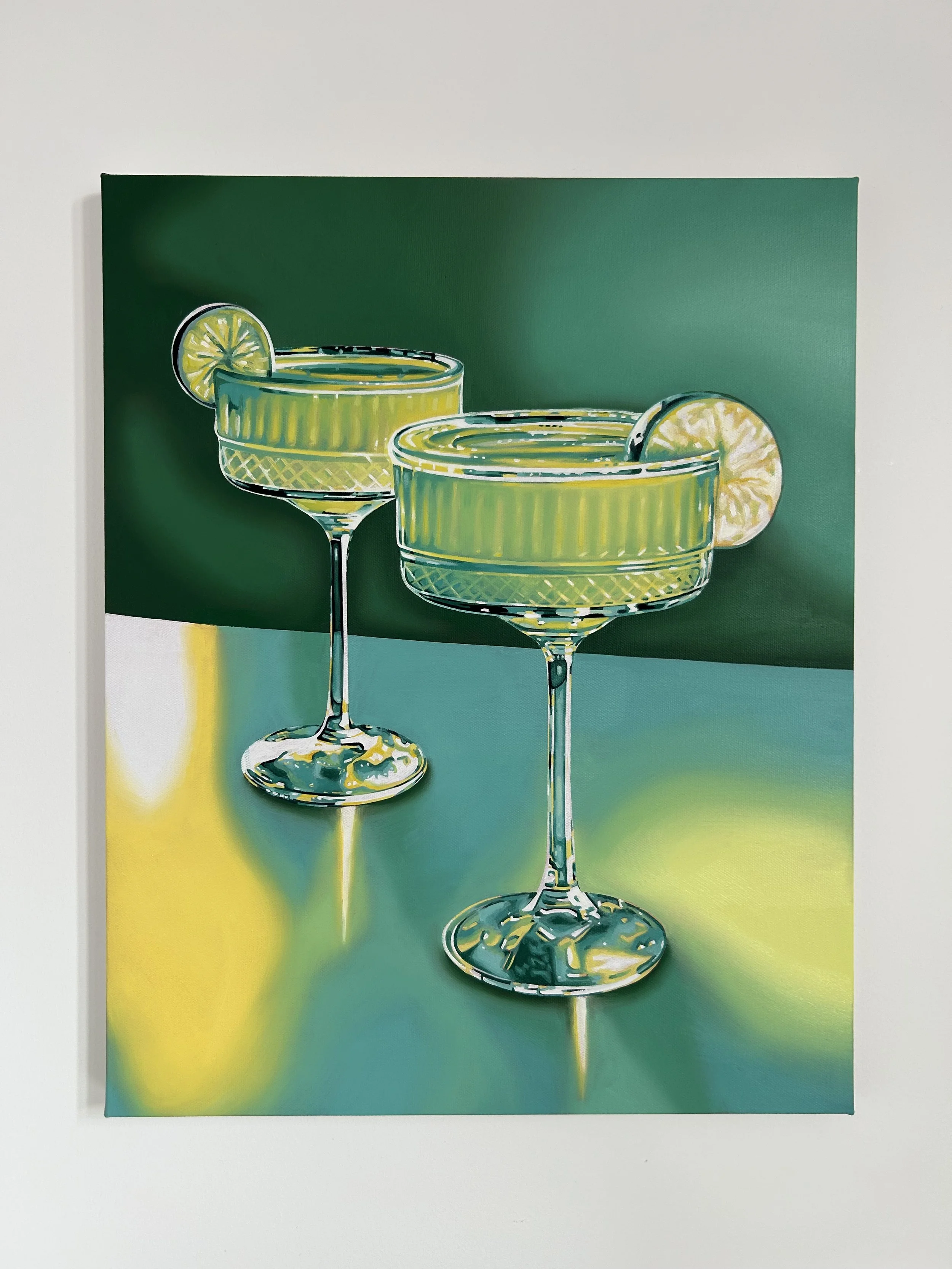
LIME MARGARITAS
What excites you most about working with artificial light, shadows, or darkness?
I’m fascinated by watching viewers as their brain tries to comprehend how a static painting can give the illusion of light being emitted. How can paint convince the eye that something is genuinely glowing and alive.
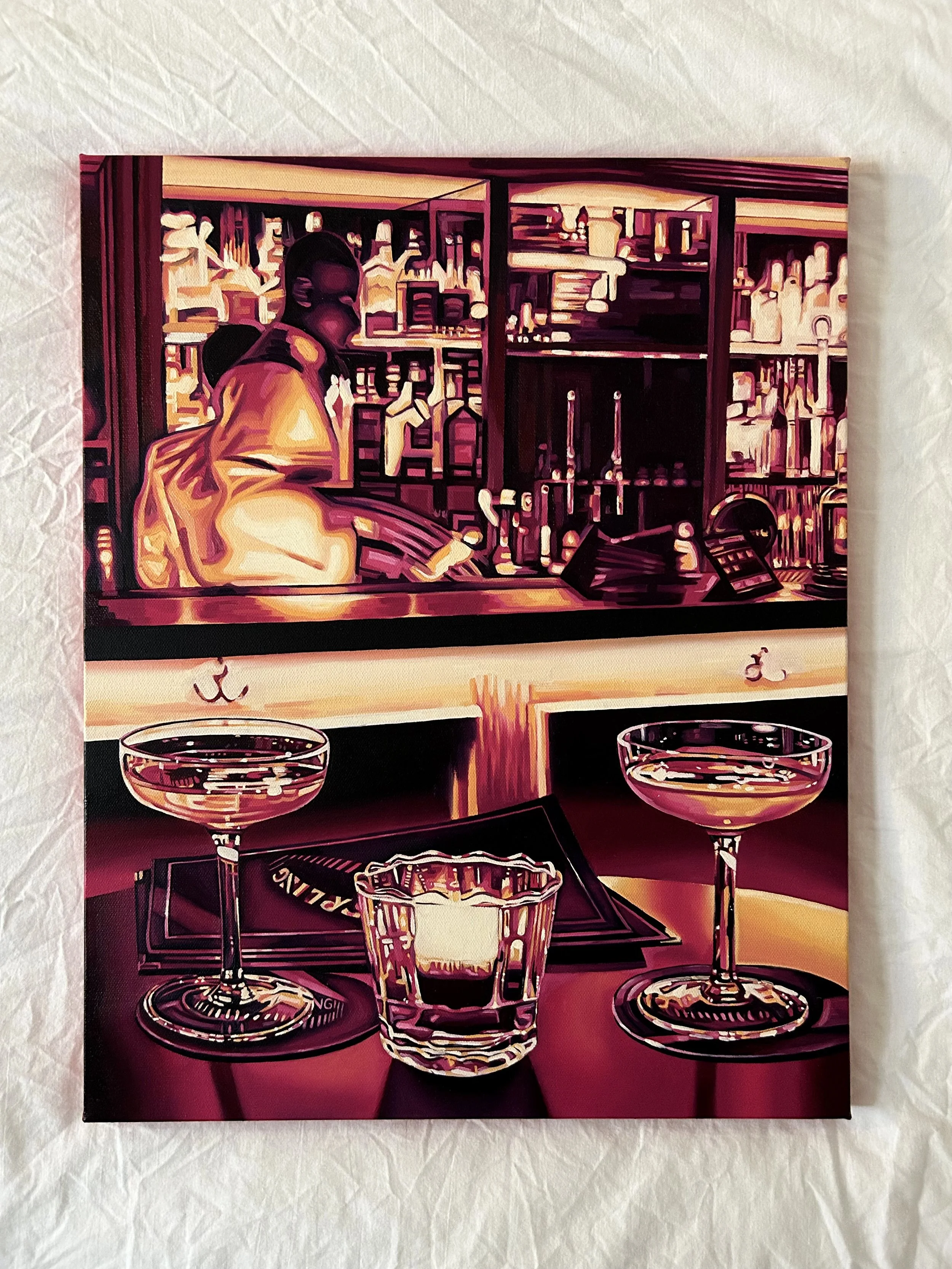
I love, love, love Caravaggio’s work. His use of Chiaroscuro just itches my brain, and I’m constantly chasing that same tension between light and shadow in my own practice. There’s something addictive about pushing contrast so far that it’s breaking through the surface of the canvas.
I’m deeply inspired by Renaissance depictions of myth, legend, and biblical narratives, especially their drama and sensationalism. Artificial light, shadows, and dark allows me to achieve that theatricality of 17th century artwork within my own pieces.
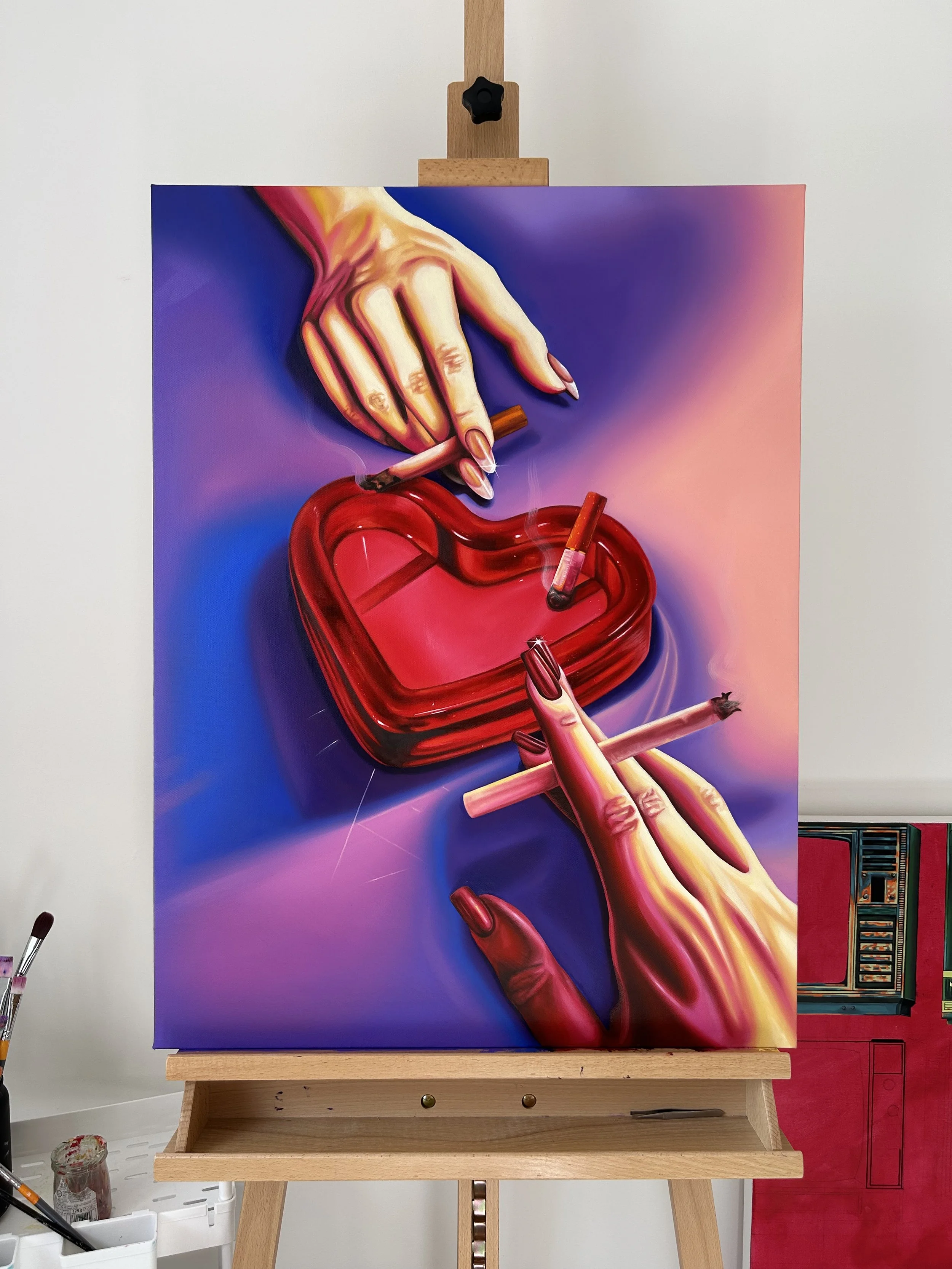
CONVERSATION PIT
Thinking about your most recent painting, what initially inspired you to create it? Describe your process from start to finish.
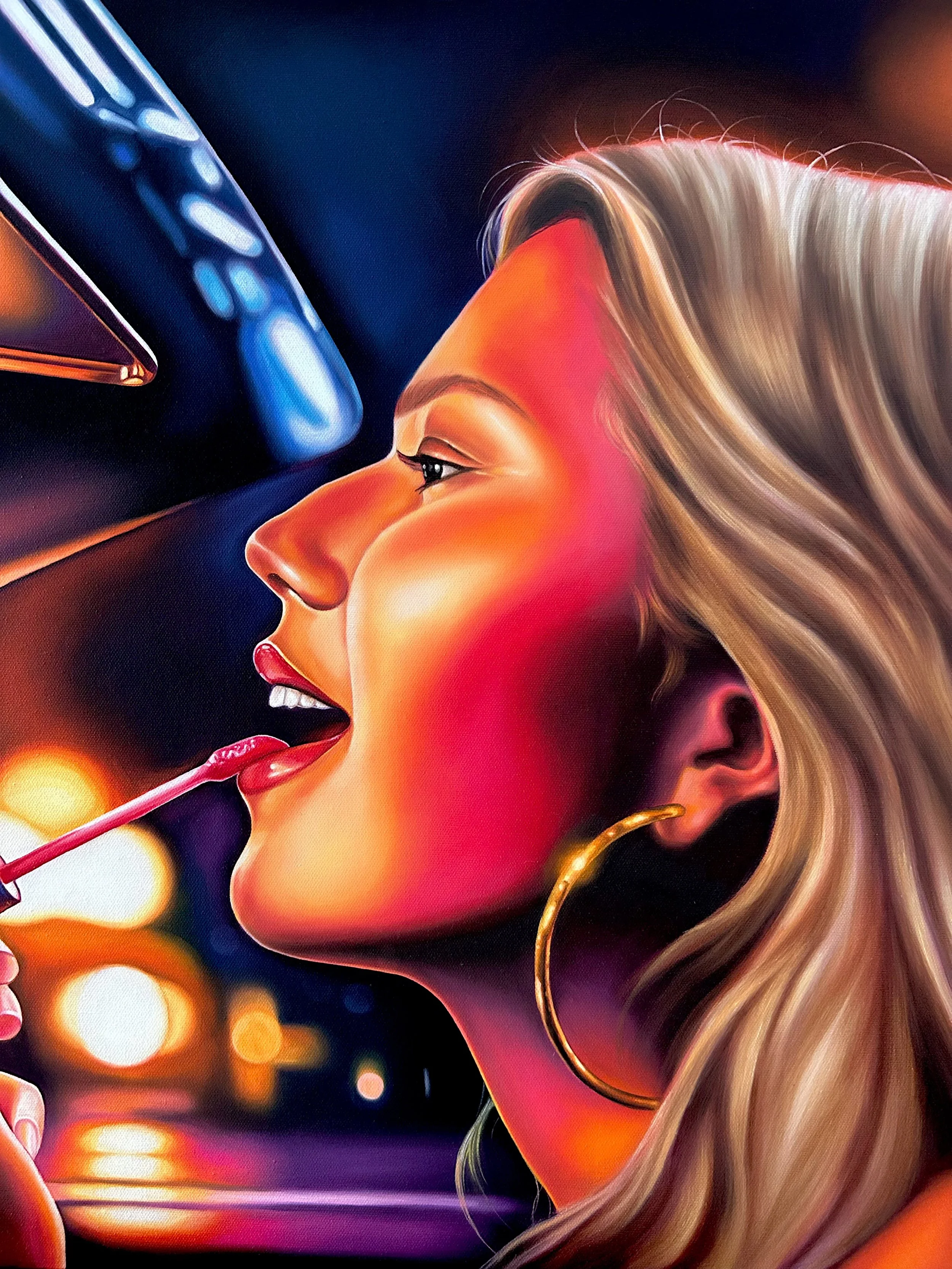
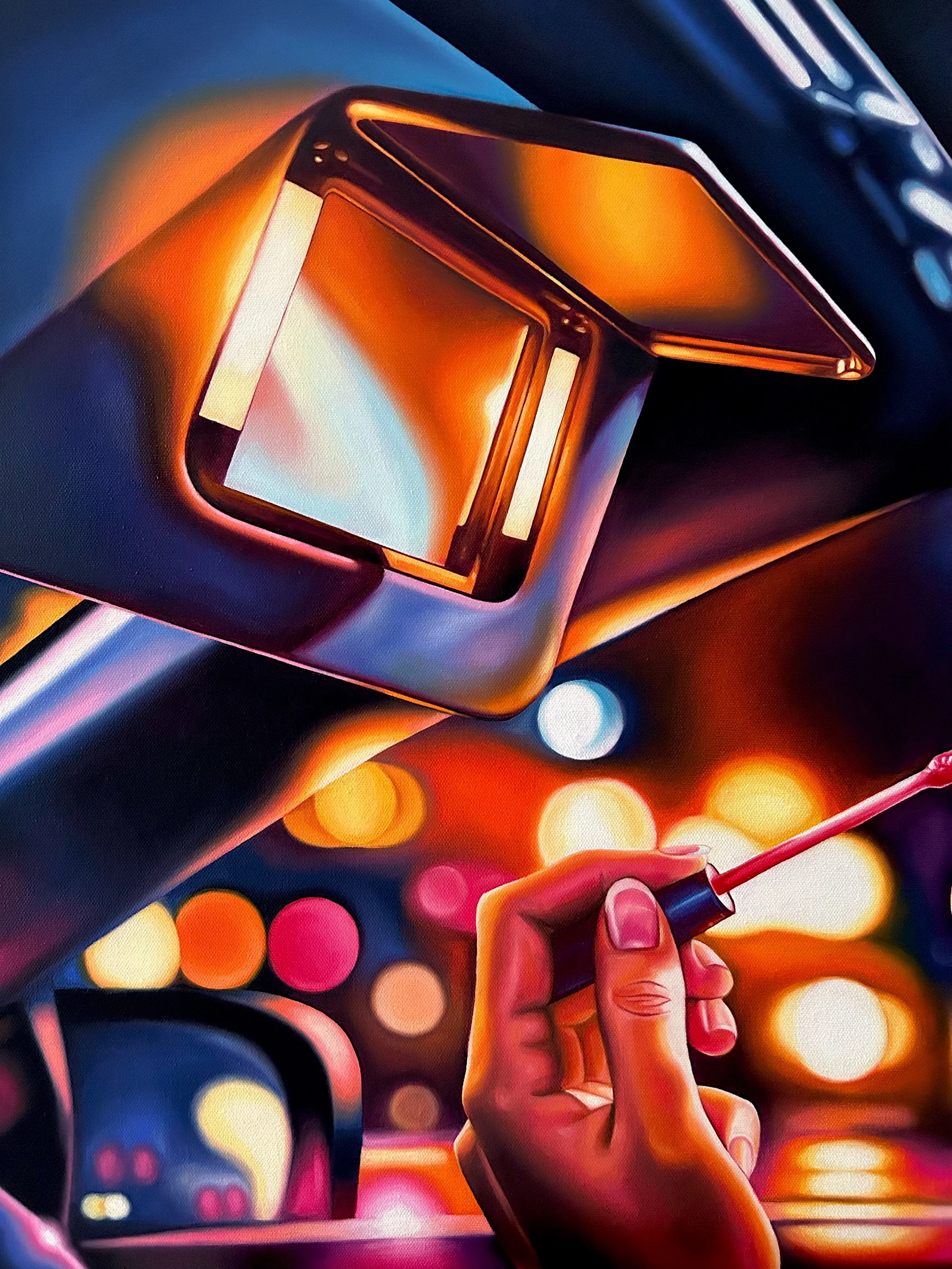
My most recent painting, ‘Starlet', was initially inspired by the desire to reclaim derogatory labels often assigned to leading women - terms like ‘Prima Donna’ or ‘Diva’ and reframe them as symbols of confidence and power. The piece celebrates loud, successful women who refuse to soften their presence or dim their light
Visually, this piece pays homage to retro airbrush art and 80s Miami aesthetics.. I was drawn to the era’s unapologetic glamour, saturated colour palettes, and hyper-polished surfaces. Loud, bright colours were essential from the start, as was a strong concern with overall aesthetic.
My process starts with building mood boards to establish atmosphere, colour palette, and references. From there, I begin conceptualising and curating the overall vibe using Procreate. I sketch and mock up ideas in Procreate, constantly moving back and forth, bringing concepts to life, scrapping them, starting over, and experimenting again. I spend a lot of time playing with gradients, motion effects, and light, creating these amalgamations of 80s paraphernalia until the sketch feels right and I begin to form a painting.
STARLET
What is your favourite part of the painting process, and why? What do you find most challenging?
My favourite part of the painting process is the blending, especially that moment when the primary background colours are first blocked in. I love watching the colours almost battle it out beneath my paintbrush as they merge and push against each other. I always paint my backgrounds last; it feels like the cherry on top, the final step that truly brings the whole piece together. That moment never gets old for me, particularly when I’ve recorded the process for social media and get to watch it back. Seeing my work from a third-person perspective gives me a completely different appreciation for what I’ve made.
The most satisfying part of my process is using masking tape. When I’m working on a piece with a large background area that needs heavy blending, I tape over the existing features so I can blend more frivolously. Peeling the tape off at the end is the best feeling, like I’m unwrapping the final version of the painting.
I don’t find any part of my process particularly challenging, only because I’ve spent so long refining my practice. That said, there are certain elements I don’t enjoy painting - teeth and lips, for example, it’s fiddly business!
CHERRY MARTINIS
If you could spend the day with an artist, who would it be, and why?
It would have to be Caravaggio, strictly for his artistic genius, not his personal life. There’s no doubt he’d probably shout profanities at me, and honestly, there’s a non-zero chance he might try to kill me. But artistically? What a privilege.
To be taught Chiaroscuro in the 17th century, through purely traditional Old Master practices, would be unimaginable. Learning beyond artificial light, screens, and technology - just raw observation, oil paint, and shadow. I think we’re slowly losing the ability to paint from real life references today, I almost always work from premade digital Procreate sketches myself.
During the Renaissance, artists had people physically modelling for reenactments of biblical scenes and Greek or Roman myths. Real bodies, real light, real drama. That level of immersion and raw reference feels almost incomprehensible now. I’d give anything to experience that kind of teaching, to witness light and shadow behaving in real time and learn directly from it, the way Caravaggio did.
How do you see your work evolving in the future?
I see my work evolving by going bigger, literally. I think I’ve finally mustered the courage to start working on a larger scale. Large-scale painting can be unforgiving when something goes wrong, but I feel ready for that challenge now. I’m drawn to the idea of creating more elaborate, almost Caravaggio-esque works. I want to make paintings rich in drama and storytelling that explore modern-day gender, social, and political issues, while still leaving room for moments of light-heartedness and play.
That said, I won’t be abandoning my saturated palette anytime soon. Raging colour has become integral to who I am as an artist and where my work finds its meaning. It’s part of my visual language, and I don’t see that changing, only expanding.
Looking ahead, I would absolutely love to have a solo show under my belt and begin putting myself out there more within the contemporary art world. Advocating for yourself can be difficult at times, especially as an autistic artist, but it’s something I’m continuing to work through. Ultimately, my goal is to keep developing my style, pushing my practice forward, and seeing where that growth takes me.
CHAMPAGNE DATE
Why do you think art is important in society?
Art is everywhere, even when the untrained eye doesn’t immediately recognise it. Society fundamentally depends on creatives, despite the persistent stigma that there are no real jobs or value in creative fields. Art isn’t limited to paintings hanging in galleries; it exists in the embroidered handbag someone carries, the light fixture in a hallway, or the pattern on a local bus seat.
Wherever you look, there is intention, purpose, and design. These choices shape how we move through the world, how we feel in spaces, and how we connect to one another. We are constantly reusing and reworking ideas, borrowing from each other, and repurposing self-expression into new forms. Art becomes a shared language that we can all metaphorically speak, one that allows communication, identity, and culture to exist beyond words.