ARTIST INTERVIEW: LUCY PASS
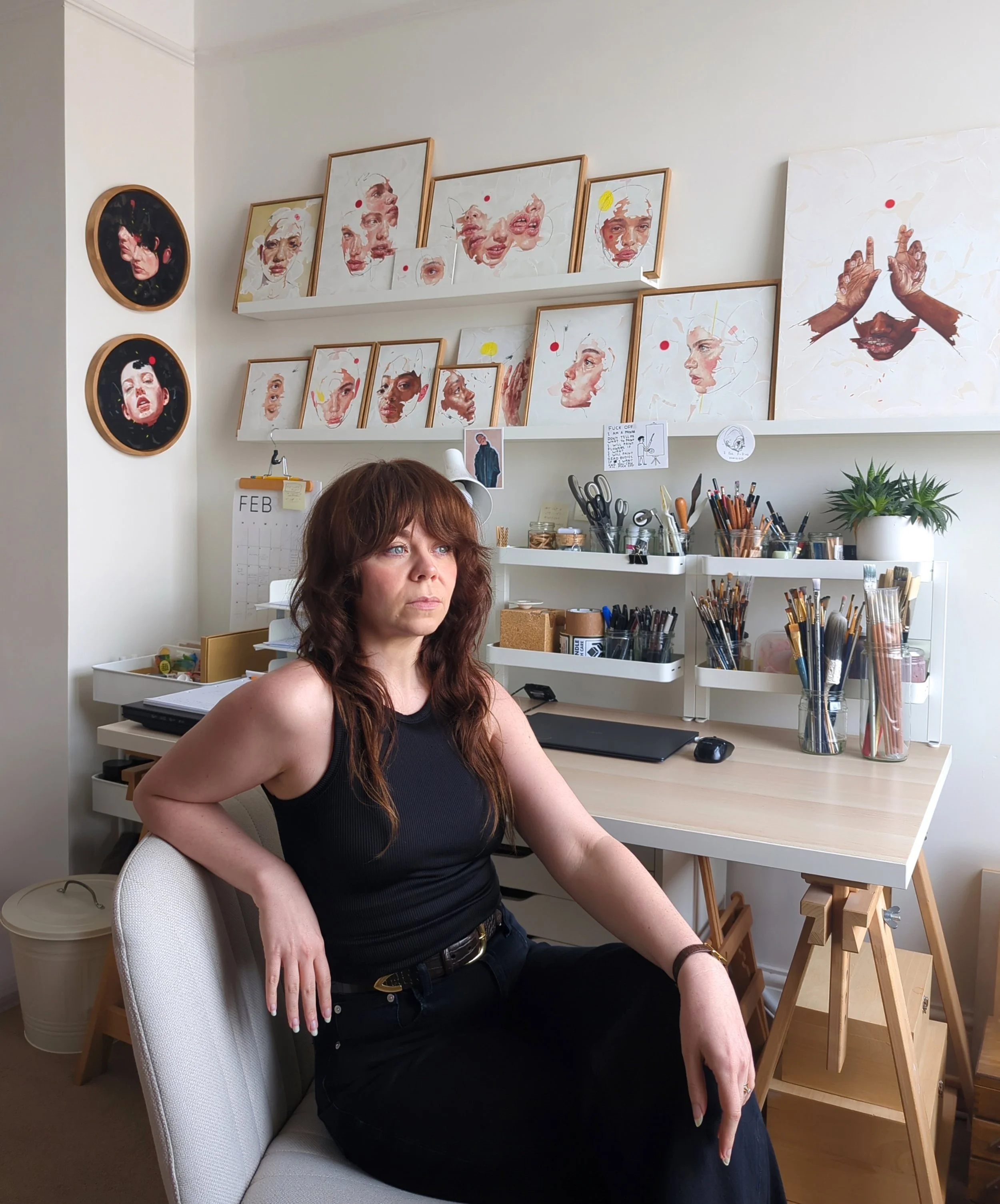
Lucy Pass
You're an award winning self-taught artist. What originally inspired you to venture into art? How did your passion for art develop into a career?
Art was always my ‘thing’ ever since I was tiny – I don’t remember the spark igniting, it’s just always been there and I wasn’t much interested in anything else! At school I would take any opportunity to squeeze in some kind of creativity into my work and if I couldn’t do that, I would secretly be drawing through those classes and pretending to pay attention! After my A-levels, university was presented as the only reasonable path to becoming a full time artist so started a degree in fine art. I hated it for so many reasons. Exams make my blood run cold anyway, but I found it to be a rigid, contradictory and unfortunately at times a very toxic environment. After sticking it out for a year, I left with little more than a pointless chunk of student debt. My 19 year old confidence was badly knocked by the experience and I had no idea where to start on my own – I had big doubts about whether being an artist was still the right path, despite everyone close to me telling me to go for it. I’m very lucky to have always had the full support of my then boyfriend, now husband, but it took me a long time to believe in myself again enough to listen to him!
For years I pursued other creative outlets – freelance design work and more Etsy shops than I care to mention! None of it ever felt quite right. I kept my art to myself as a quiet thing on the side and I shied away from calling myself an artist. Putting yourself out into the world as an artist is no small thing – it requires you to be vulnerable and willing to fail and you have to find a way to be comfortable with those failures being on display. It’s scary stuff! But eventually I just ran out of excuses to not do it and I realised I’d be forever miserable if I didn’t try. I started sharing my work regularly on social media and a year later I’d made my first ‘proper’ body of work, had started selling my work online and at art fairs and was filming for Portrait Artist of the Year – since then I haven’t looked back. I only wish I’d been brave enough to go for it sooner! Momentum really began to pick up in 2020 during the covid lockdown when I started selling work through the Artist Support Pledge on Instagram – that was such an amazing boost for so many artists, but it really lit a fire under me and I’ll always be grateful for it!
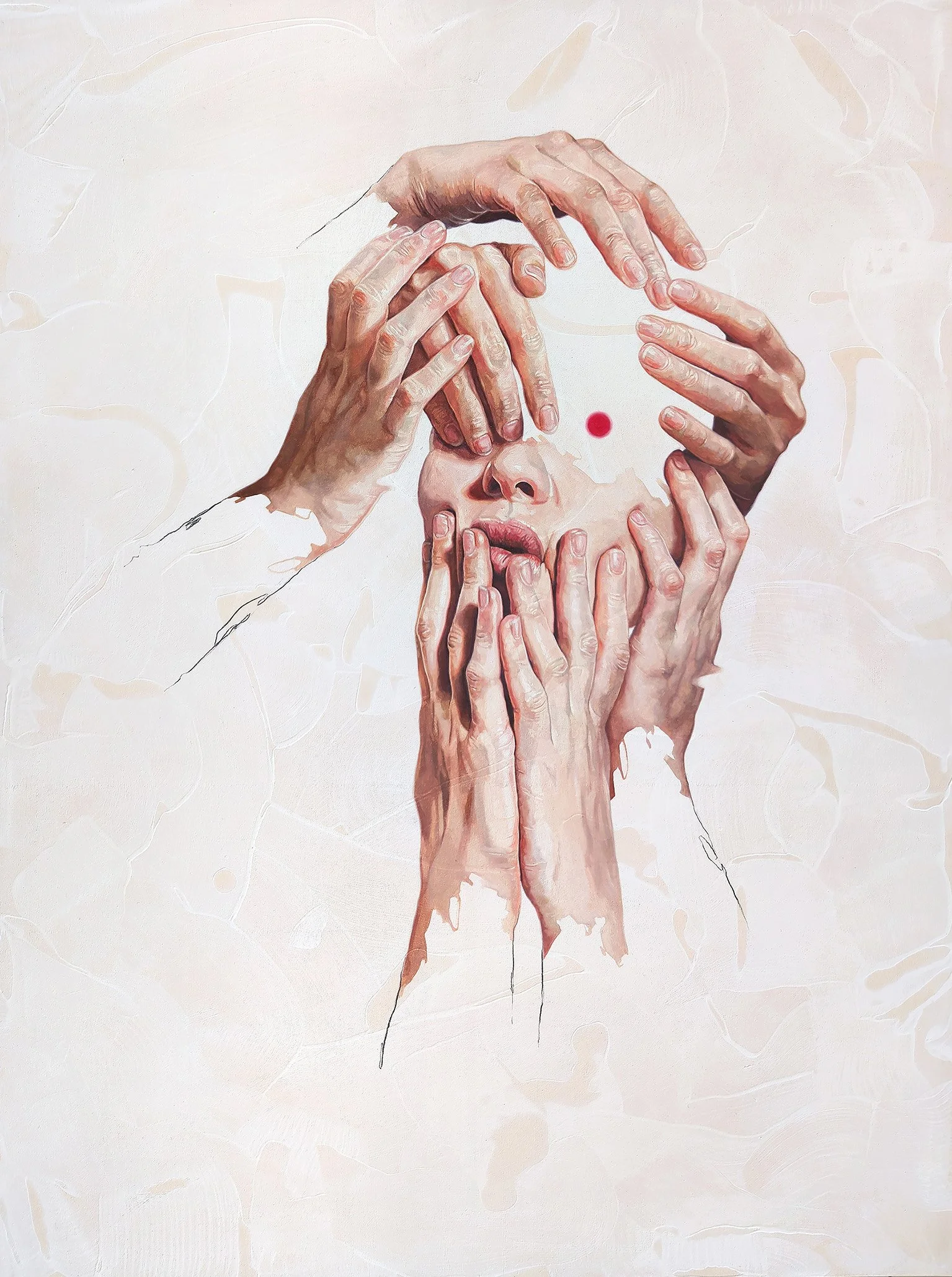
Applecart
What fascinates you about the human form? Why do you feel compelled to capture it in your paintings?
I’ve only ever been interested in making figurative art but in recent years I’ve begun to better understand why that is. For me painting or drawing the human form isn’t about creating a pleasing image to look at or capturing the essence of a person, but a way to make sense of the wider human experience – to document my own but also to search for connection and understanding and to express something bigger than just the subject in the painting.
I spent my childhood feeling like I was never quite in the right place; a square peg in a round hole. I would study people intently, trying to crack the code and trying to be less alien and still not finding a spot where I fit in. That feeling has never fully left me and now I’m older, I know that it probably never will, but I’m far more accepting of the things I can’t change about myself and I no longer see it as a fault – The whole time it was the reason I chose/needed to express myself through art, I just didn’t know it.
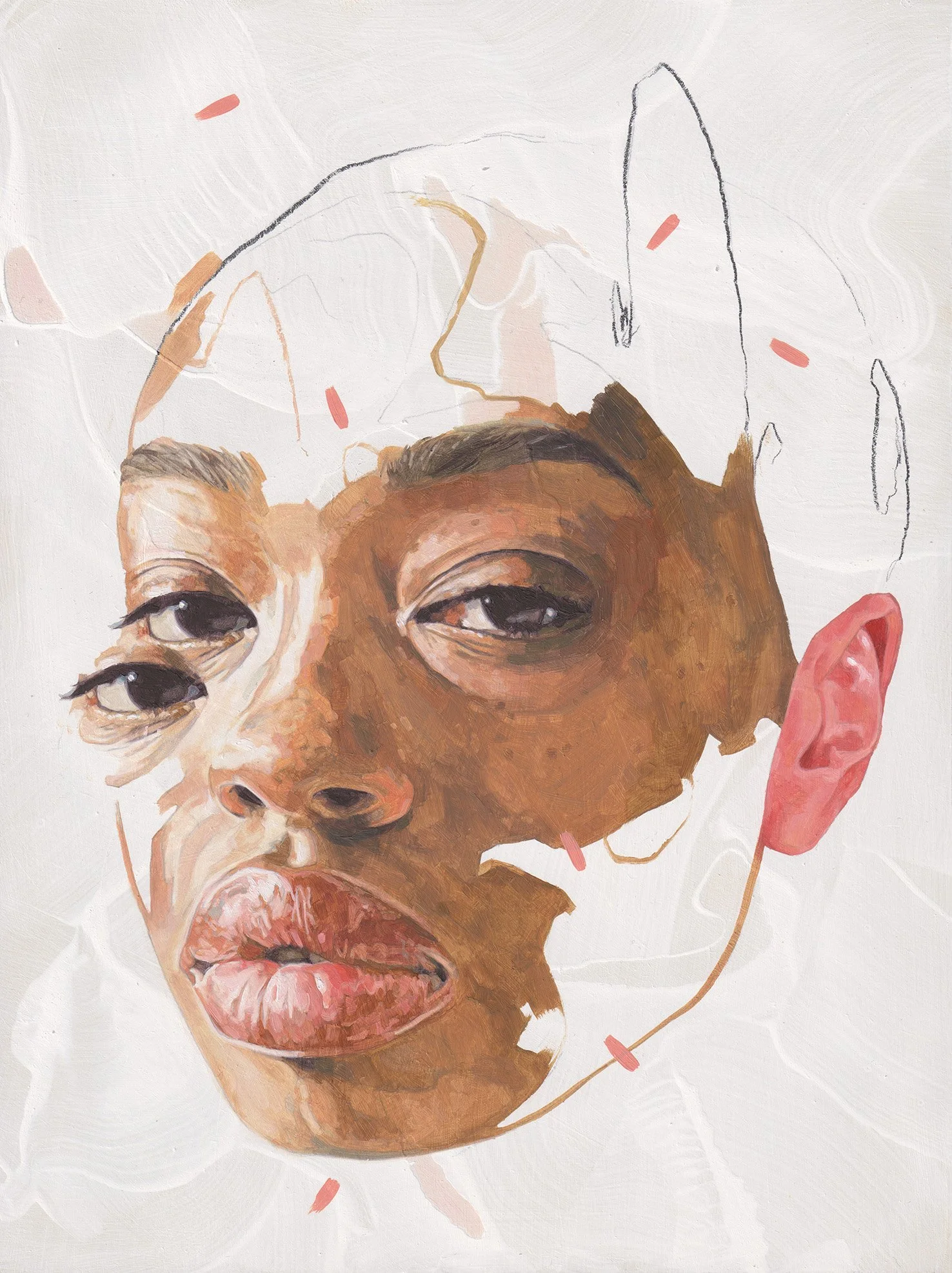
All The time
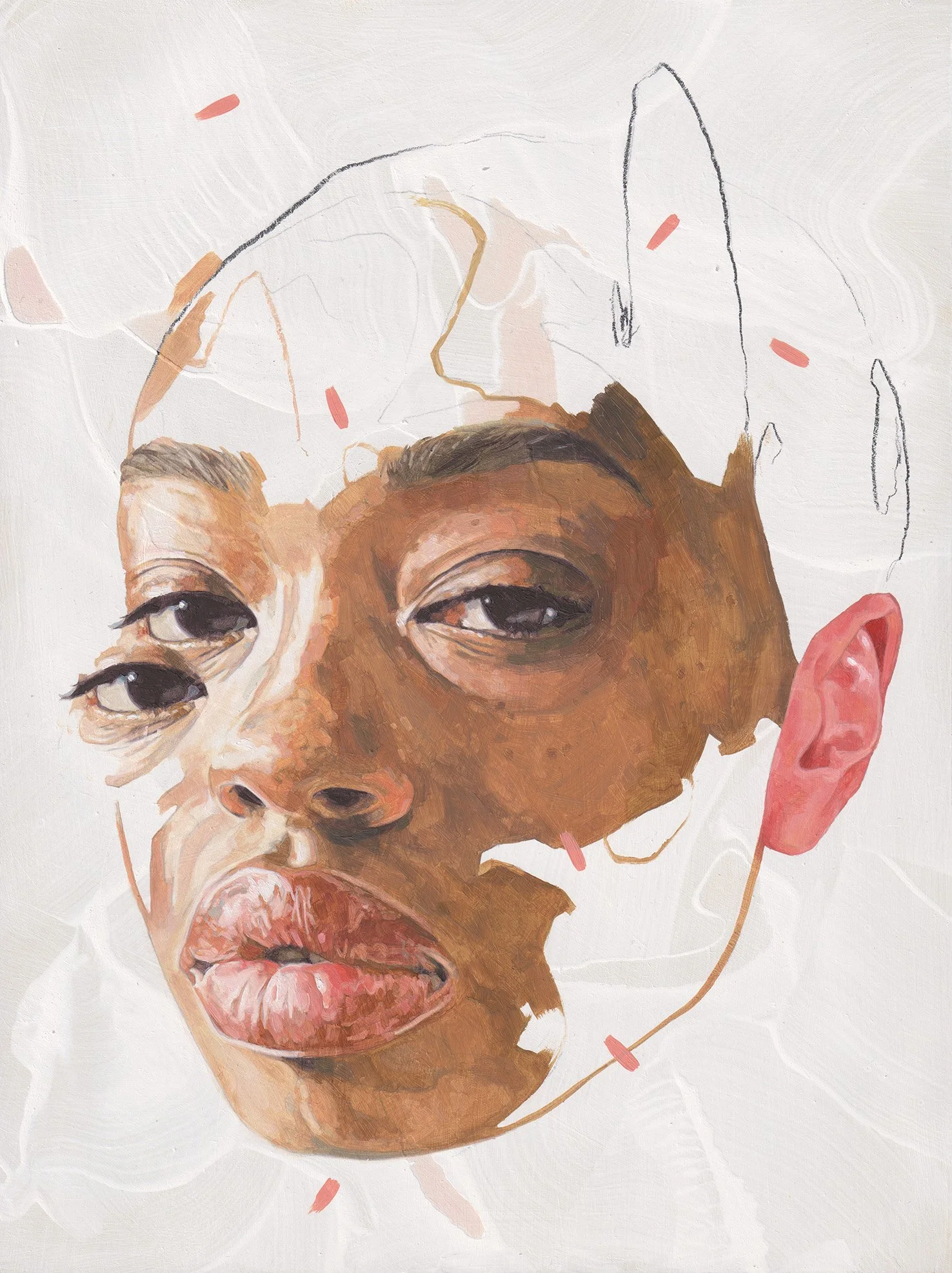
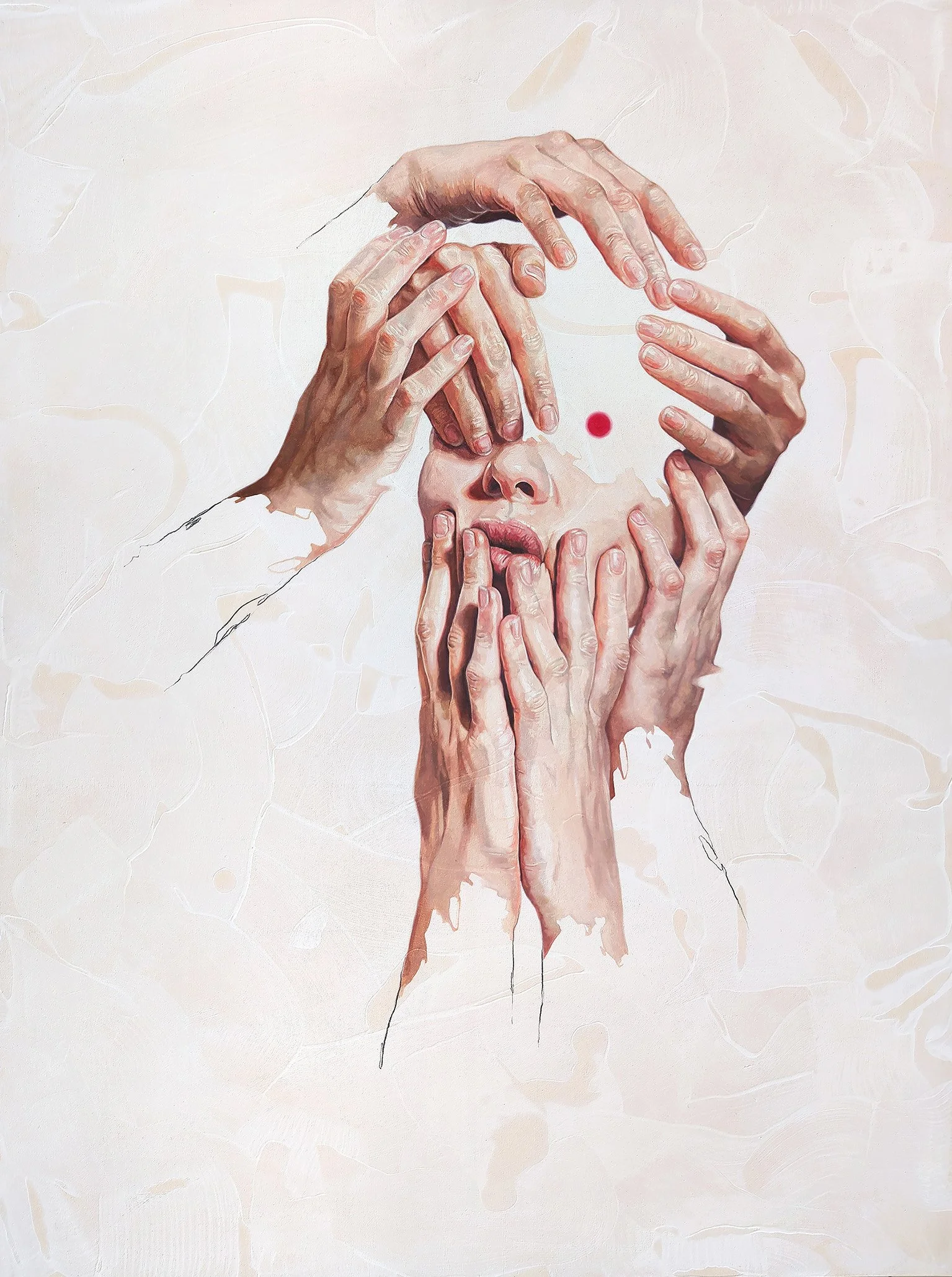
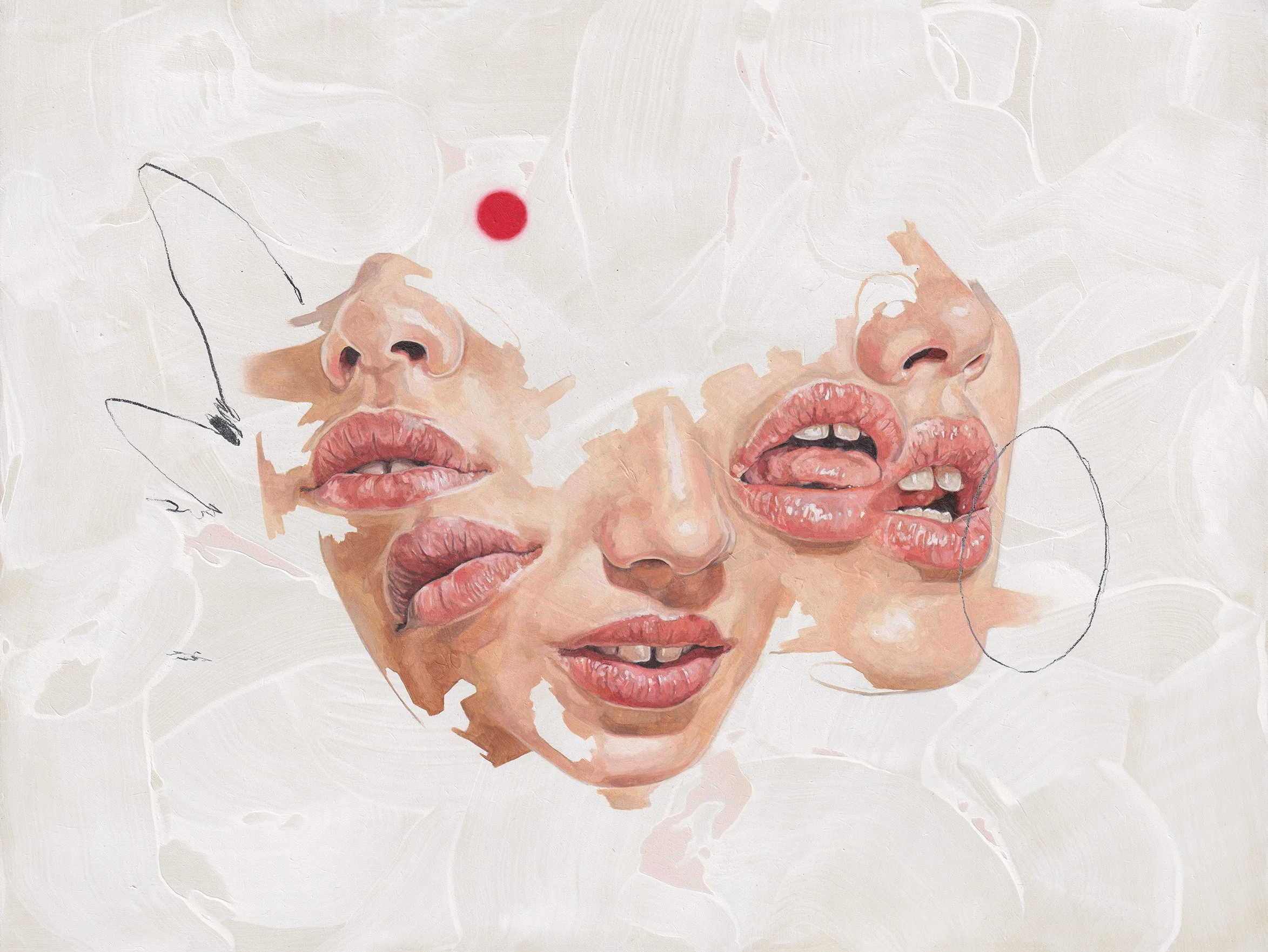
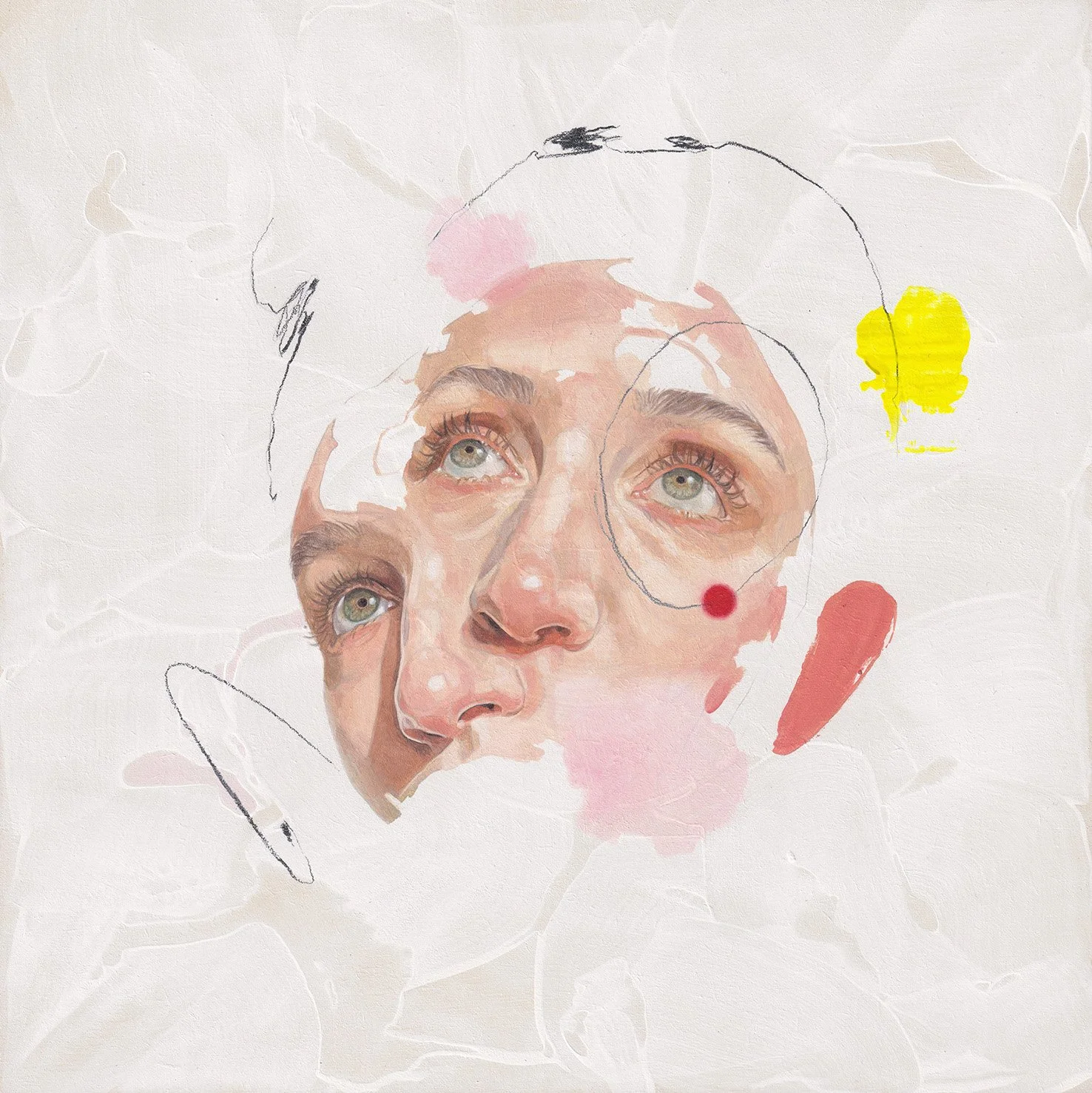
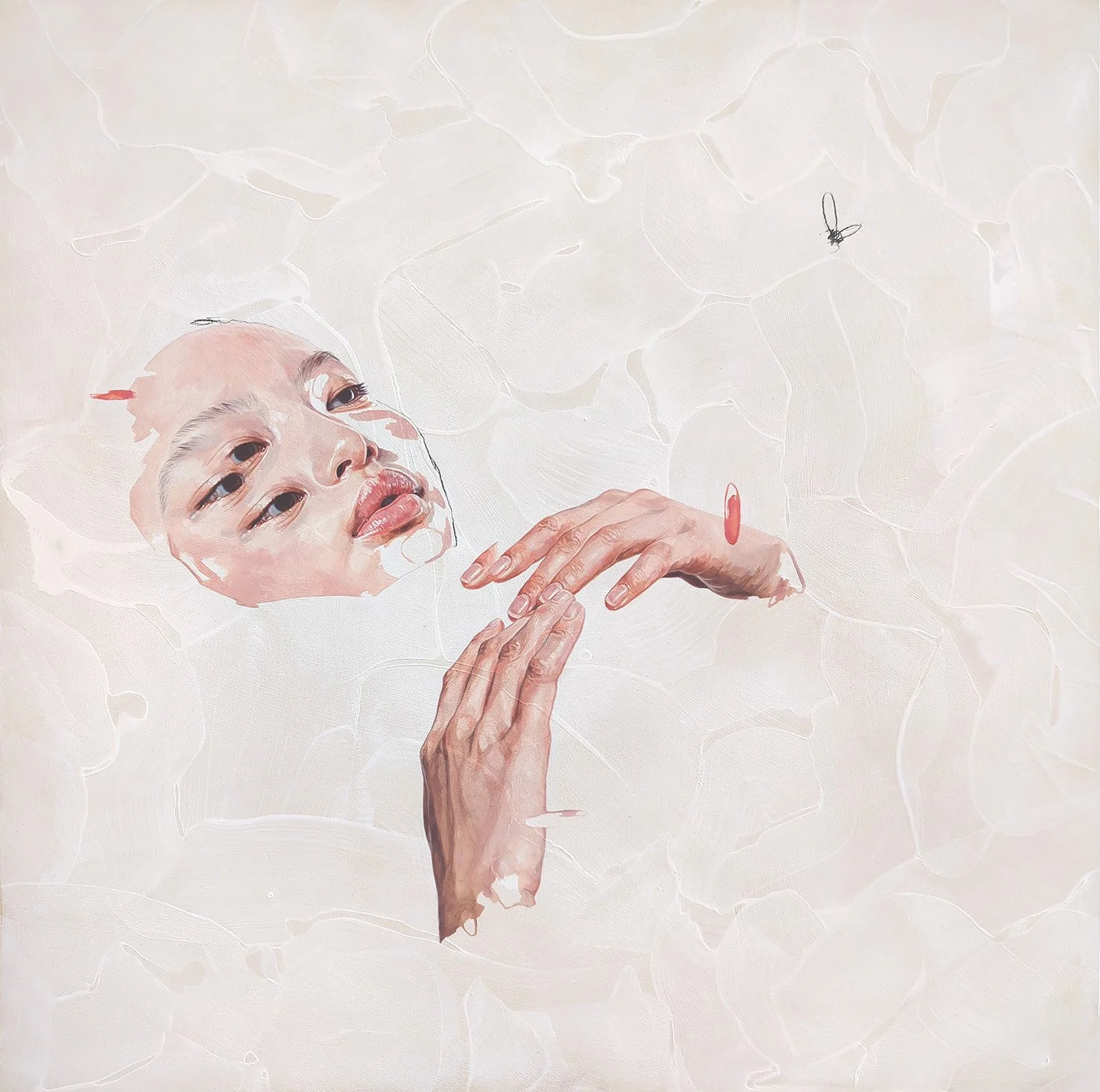
This new lens made a lot of things make sense. It was the reason my experience on Portrait Artist of the Year left me feeling empty – not that I wasn’t proud of the piece I’d created, but because most of the time painting representational portraits of others felt detached from my own voice. I couldn’t drag my thoughts away from the expectation of the subject or recipient, which killed my creativity. I would always retreat back to the safety of unknown faces and the fragmented portraits that now I understand – human puzzle pieces falling apart, rearranging or piecing themselves together – they’re all part of the same effort to make sense of the human experience.
How does using a mix of both representational and abstract elements explore inner self?
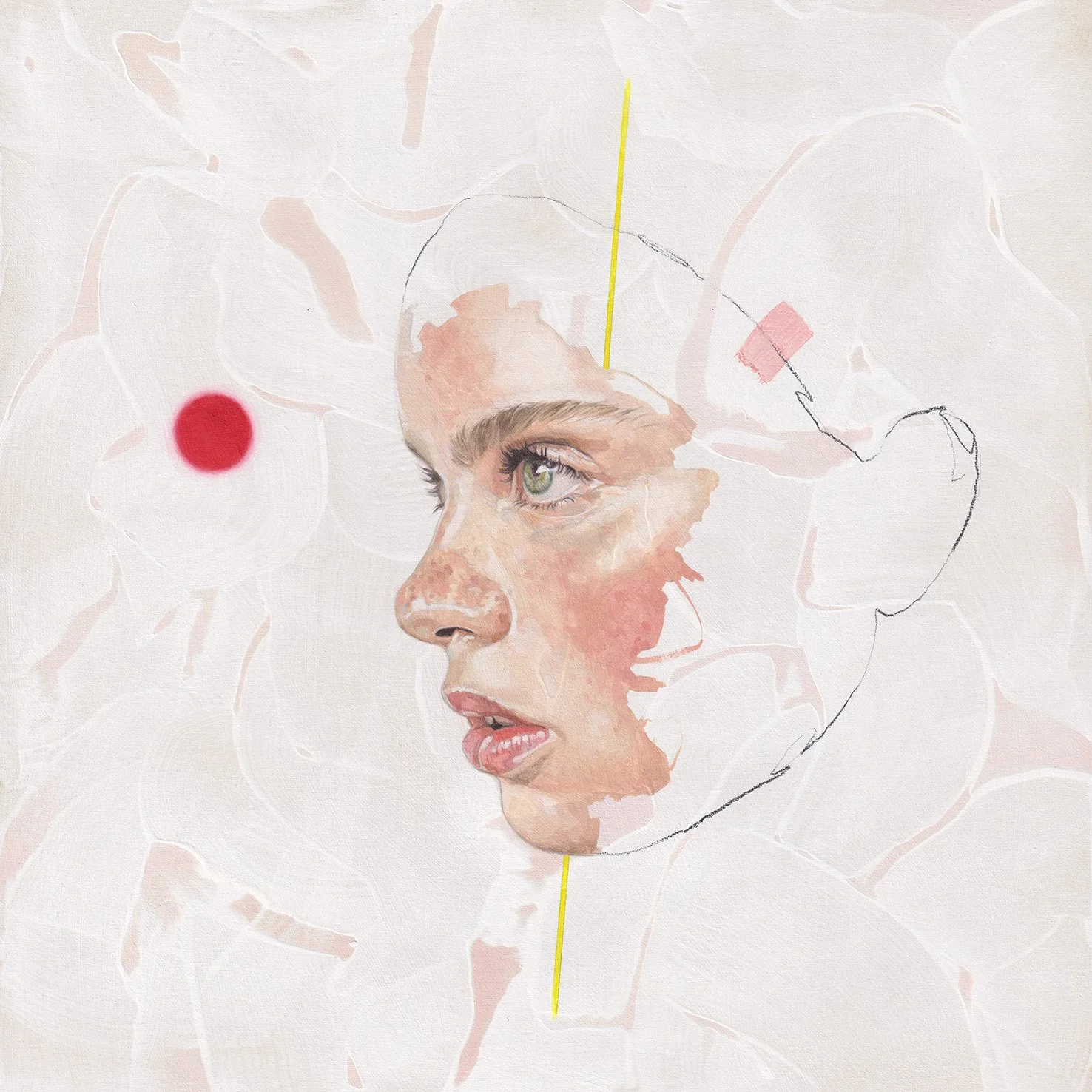
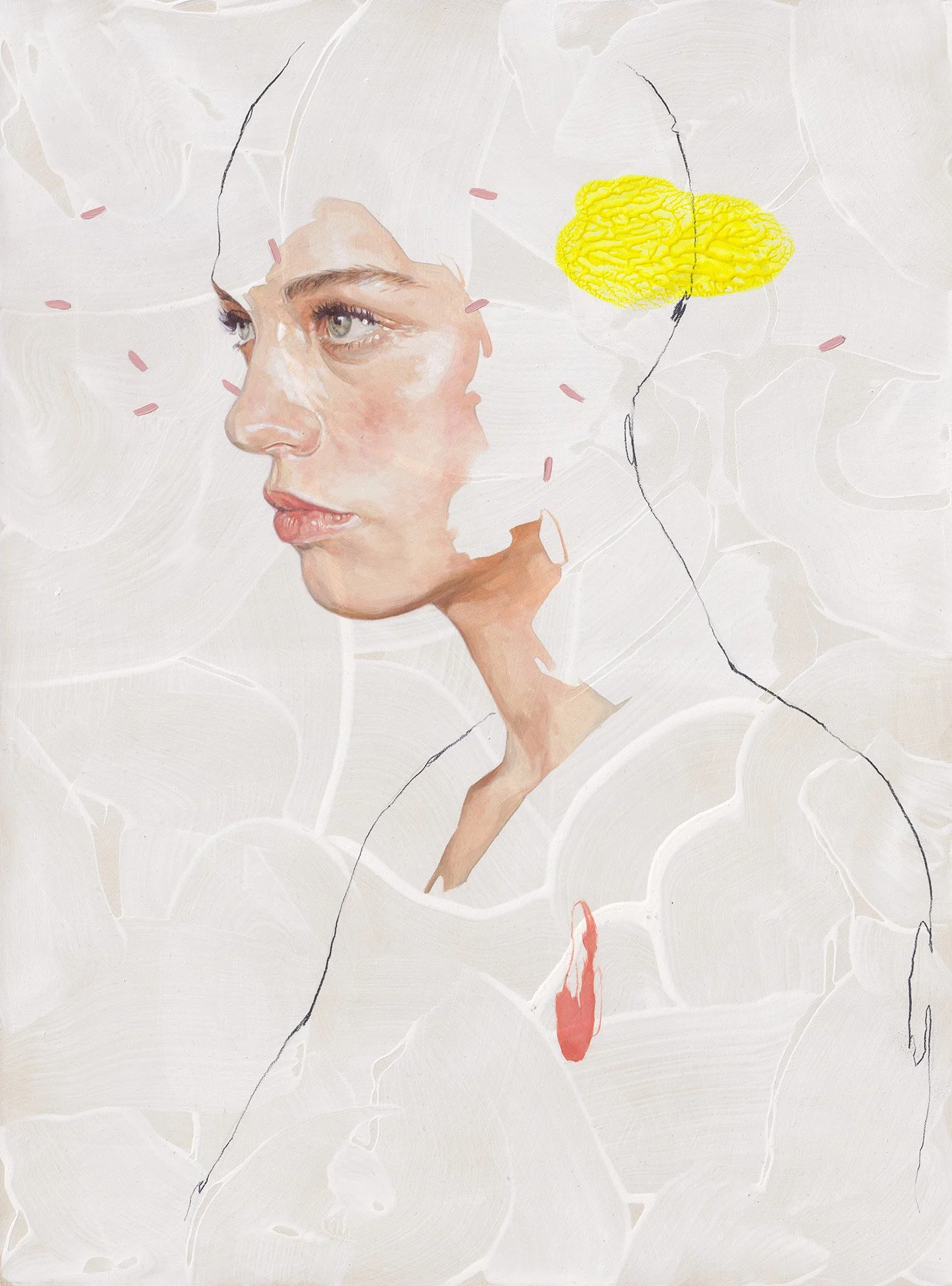
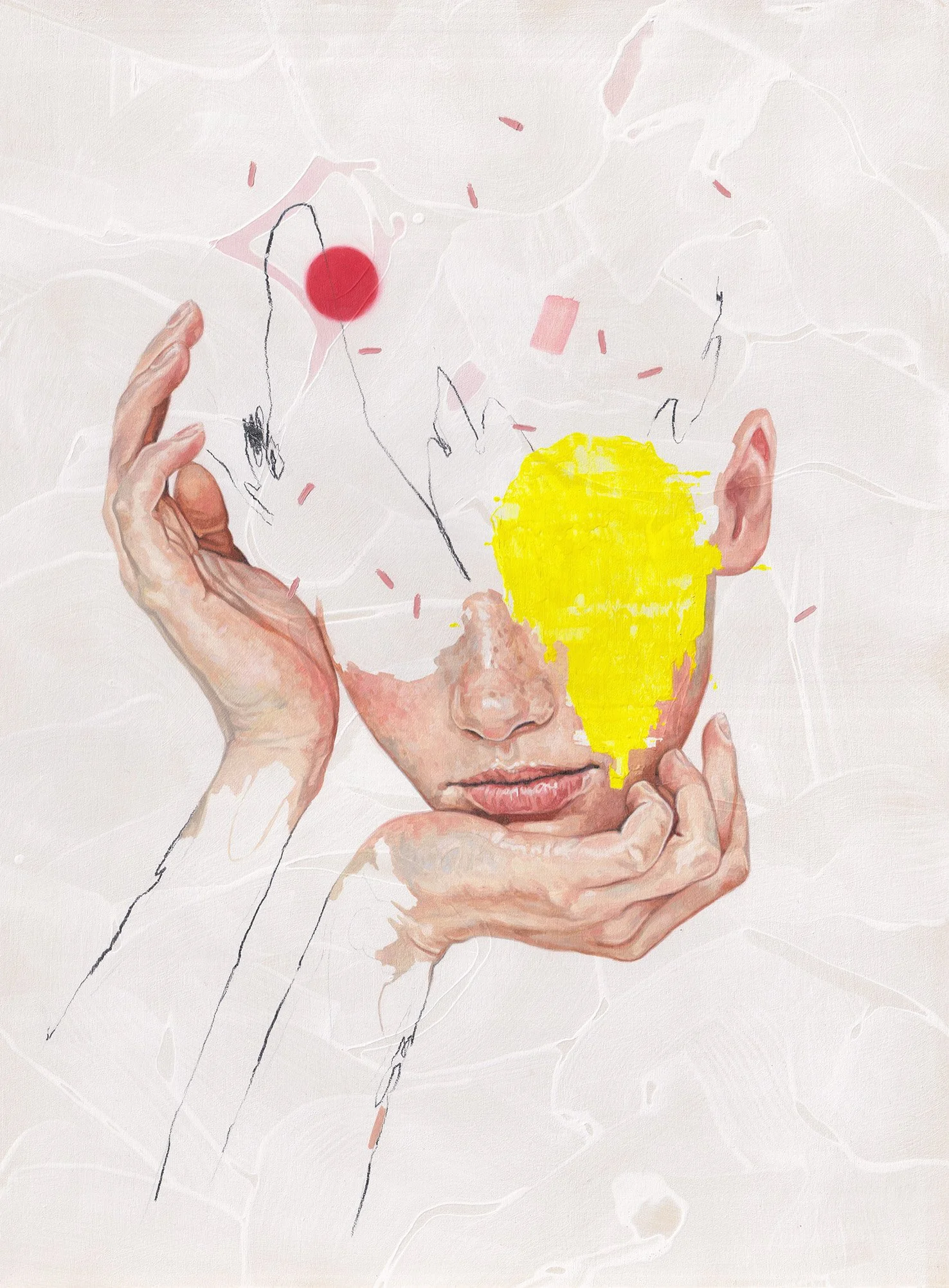
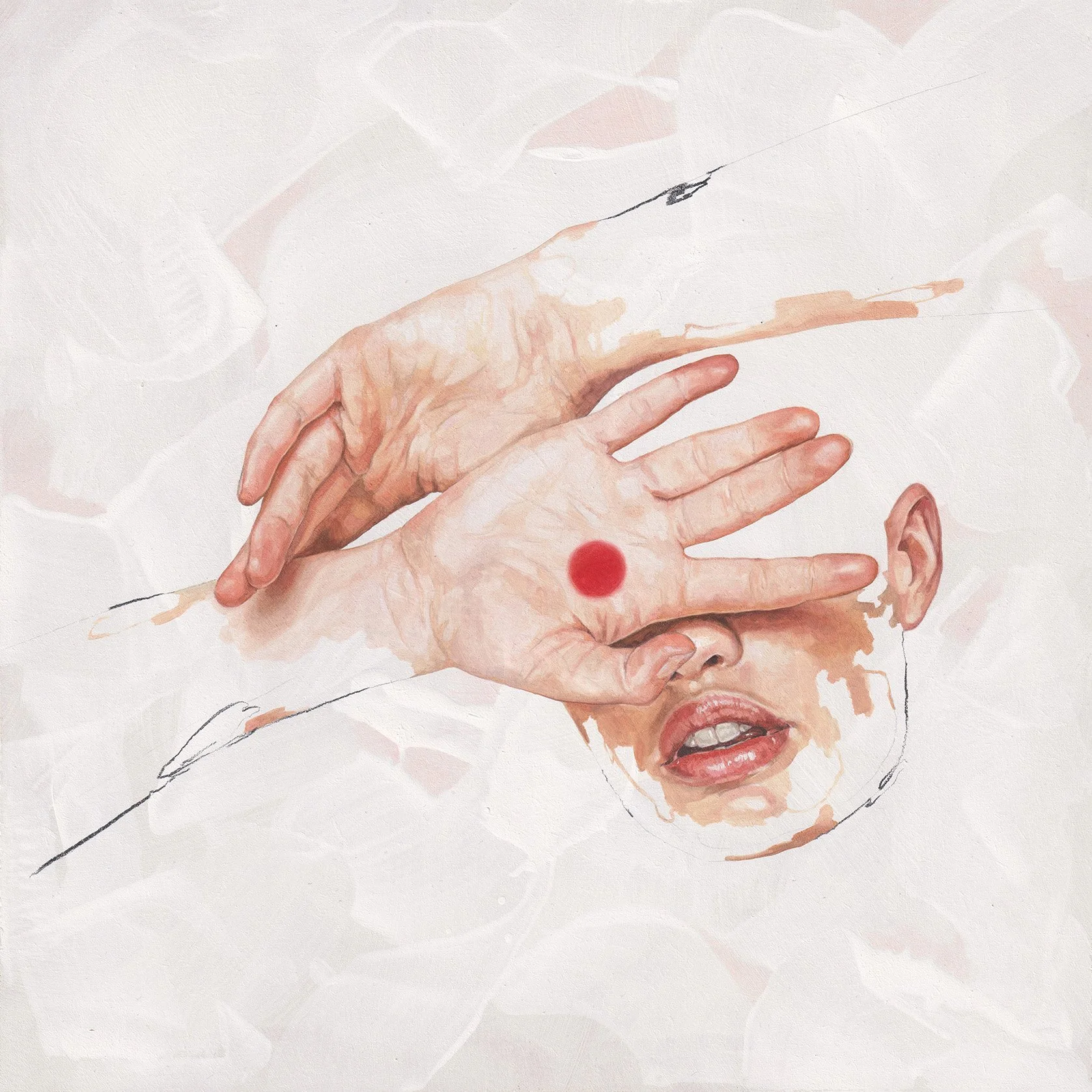
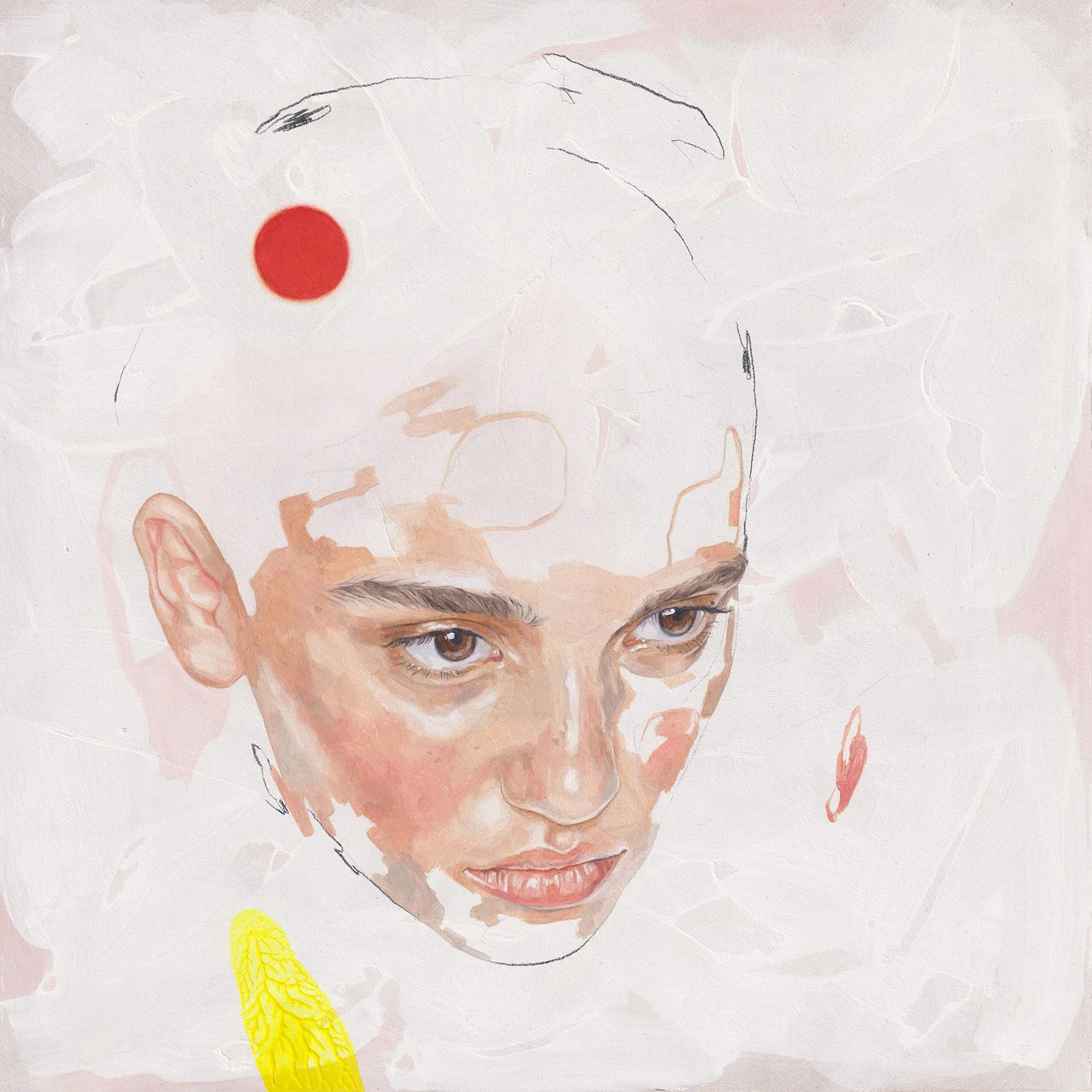
There are things that I find aren’t quite possible to express through representational art alone, like a feeling you can’t quite put into words. The fragmenting, glitching and manipulation of the human form goes some of the way for me, but over the years I slowly began adding in more abstract elements as a way to explore more deeply. It’s now become a language that I can select from; symbols I can use almost like props to create focal points or distractions around the more tangible human parts. They take multiple forms; clumsy blotches, blemishes, clouds, insect-like scrawls, contours, falling confetti, strikethroughs, frantic scribbles and scratches, orbs that quietly float or cigarette burns that puncture through the void. They serve to tug at and stimulate the observers mood, thoughts and perceptions. Sometimes only one element will play a part, creating an intense exchange with the subject, while other pieces will feature many different forms that interrupt each other and vie for attention. My mind goes to those mindfulness exercises, where you’re supposed to clear your mind of thoughts or let them pass by you like cars on a motorway – but sometimes it’s really hard because there are just too many cars or maybe there’s one huge bus that keeps honking its horn! I guess my paintings are a bit like that, except instead of cars there are abstract forms in varying degrees of size, weight, sharpness or intensity.
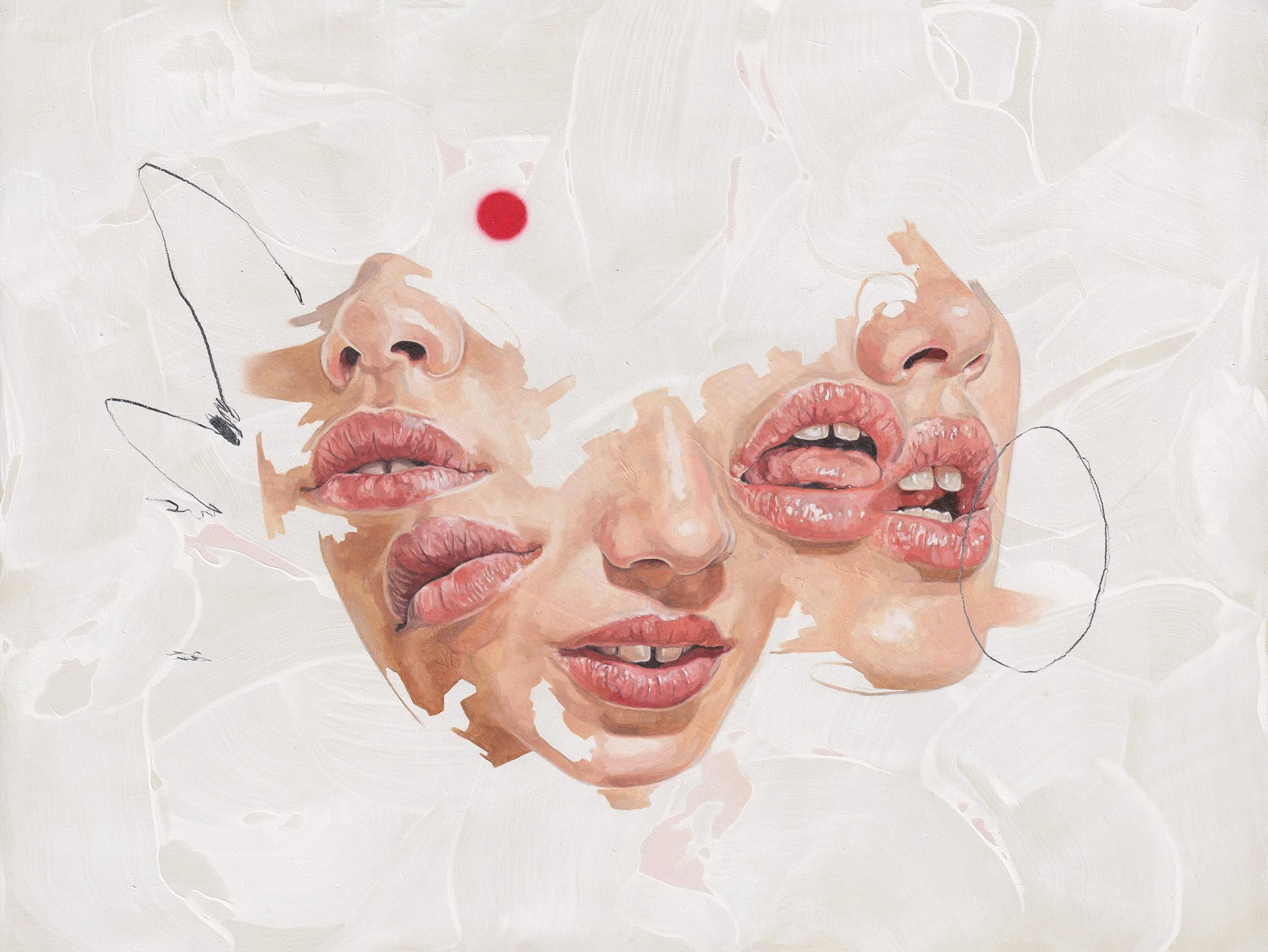
Dinner Party
Many of your paintings feature a dash of yellow. Why is this? Why is the colour yellow significant to you and your artwork?
I don’t think the yellow is especially significant, even though it’s a favourite that I’ve developed a slight obsession with! It’s more about what the yellow does visually within the context of my paintings. Actually, the first time I used it in that way, it was out of convenience – an idea entered my head that required speed before the compulsion left my brain and, searching my desk for something that would give me a punch of colour, a tube of lemon yellow acrylic paint happened to be within arms reach. Brave or stupid, I smashed it straight out of the tube and dragged it across my painting with an old store card. Luckily I liked it! It demanded to be noticed – like a thought that breaks into your consciousness with no warning. A sharp, electric, acid burst that sliced through the flesh tones already on the panel. It was one of those days where the intrusive thought won and it just so happened to be a good one!
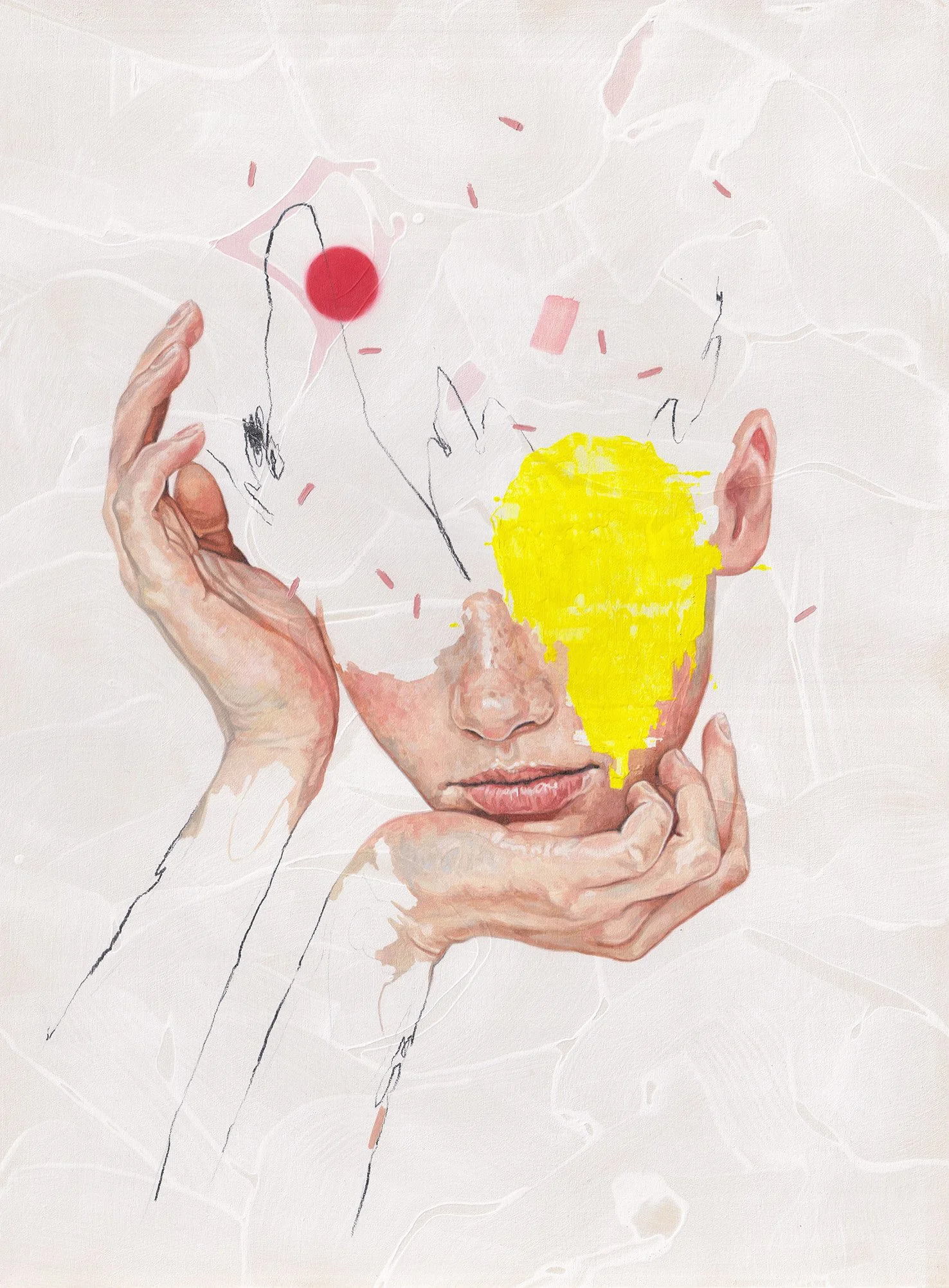
Open Here
Thinking about your most recent painting, what initially inspired you to create it? Describe your process from start to finish.
I’ve actually been working on several different paintings at once recently and I’ve been doing it in secret! Both of those things are very unusual for me, but I’m having a period of experimentation at the moment so normal service has gone out of the window! I’ve realised that about every 18 months or so, I feel the need to give myself a little shake up and try out some new things. It’s never a conscious decision, it’s just a feeling of unease and being stuck that creeps in and grows until I can’t ignore it. It always takes me by surprise and can feel pretty unpleasant or frightening – like I’ve lost the spark! But now after years of this same cycle, I’m slightly better engaging my rational brain and recognising that it’s simply a feeling that comes from sitting in a comfortable groove for too long. I had my first solo show last year and having that huge deadline forced me to focus my practice into something that I could consistently rely on – which is great in so many ways and it produced some of the best work I’ve made – but when the formula is perfected the process becomes too predictable and safe, the part of my creative brain that craves chaos and play begins to starve.
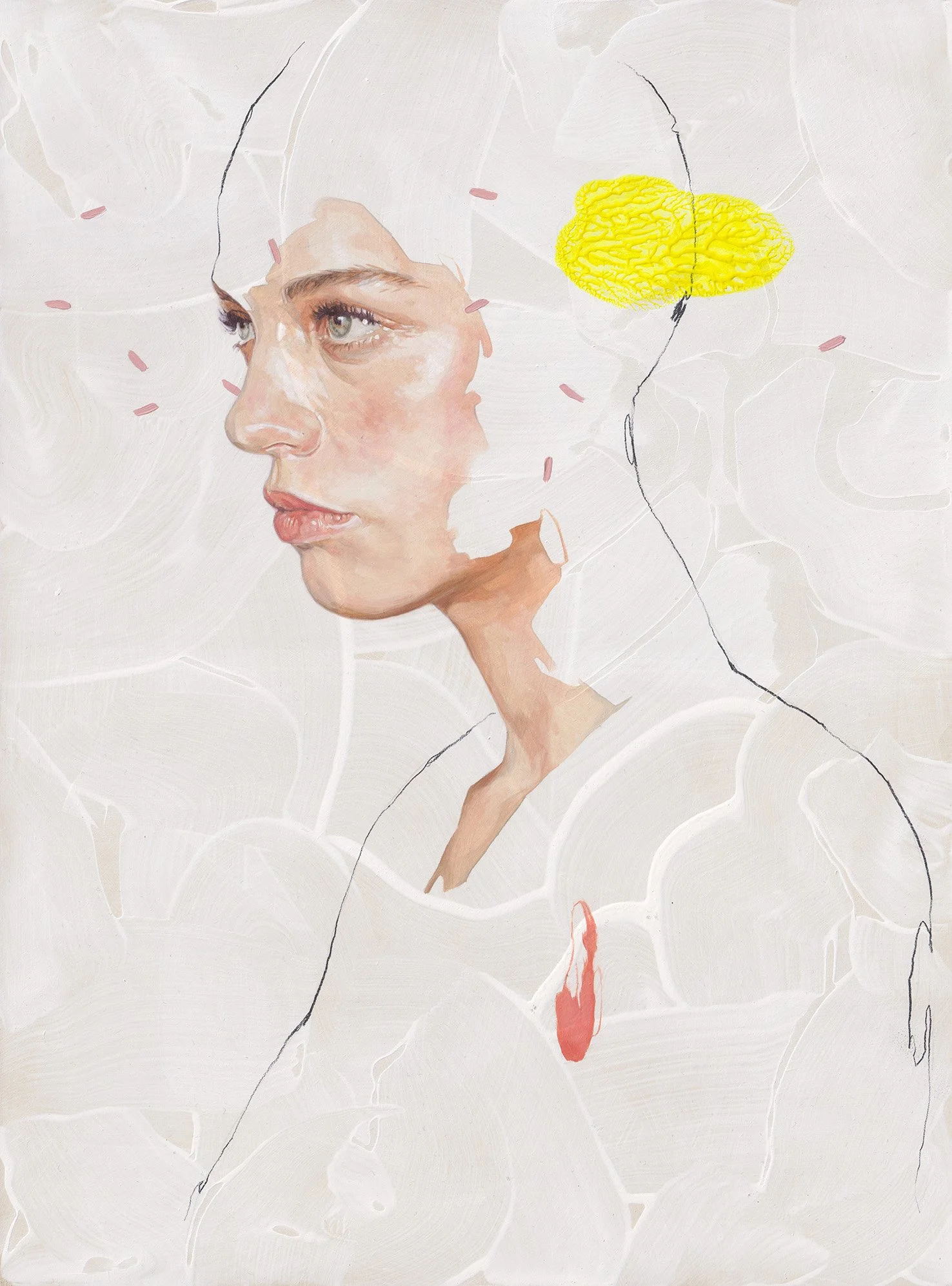
Mute
So currently I’m feeding the chaos and experimenting with different colours, textures, mediums and tools. Some of it is fun, some of it is frustrating and most of it will never see the light of day! In the past I’ve shared these experiments on social media but the reactions to them influenced me far too much, so this time I’m sitting alone with them to wait and see what truly speaks to me. I don’t know what will make it permanently into my practice or how many of these paintings will be released out into the wild, but I’ve now reached a point where I’m integrating parts of my trusted formula into these new experiments and I’m enjoying myself again. The dialogue between chaos and clarity is a really important part of my work and these retreats into playful trial and error are integral to keeping the scales balanced, even if they’re never shared!
What is your favourite part of the painting process, and why? What do you find most challenging?
I love getting lost in the details! Not all paintings are 100% enjoyable, but sometimes everything aligns and the whole process is pure meditative joy. There are times where I’ve been so lost in the process it’s like I went somewhere else and when I look back at the finished painting I’m unsure of how it came to be! To describe my process a little, I use a size 2 brush for almost all of the figurative elements of my paintings, which is just over a centimetre long and a couple of millimetres wide – pretty small! I work in one thin layer of paint, applying patches of colour like tiny puzzle pieces, mixing each colour as I go. I don't know what you would call this way of painting, because I wasn't taught and I have no respect for the "correct" way of doing things – This is just the way my brain and hands do things! This tiny brushstroke approach can have me so deep in creative flow that I forget to take breaks and don’t notice the natural light fading until I’m squinting at my work and I realise I’m ravenous because I forgot to eat lunch! I know it’s been a good painting day when I’m still in my apron an hour before dinner, raiding the kitchen cupboards like a raccoon!
I think the most challenging part of painting, practically speaking, are the limitations of my own body! I have a connective tissue disorder that makes my joints hypermobile and unstable which can cause me a lot of pain if I’m not careful – this means that the most comfortable way for me work is sat down with a panel flat on my desk, with plenty of space to rest my elbows and wrists. Standing up for long periods or keeping my painting arm raised up to an upright surface causes all kinds of problems, which rules out working on anything much bigger than 60cm. I’d love to be able to make larger paintings but haven’t found a way to make this possible just yet in my current studio. Maybe when I have more space I’ll get one of those big fancy architects desks – that’s the dream!
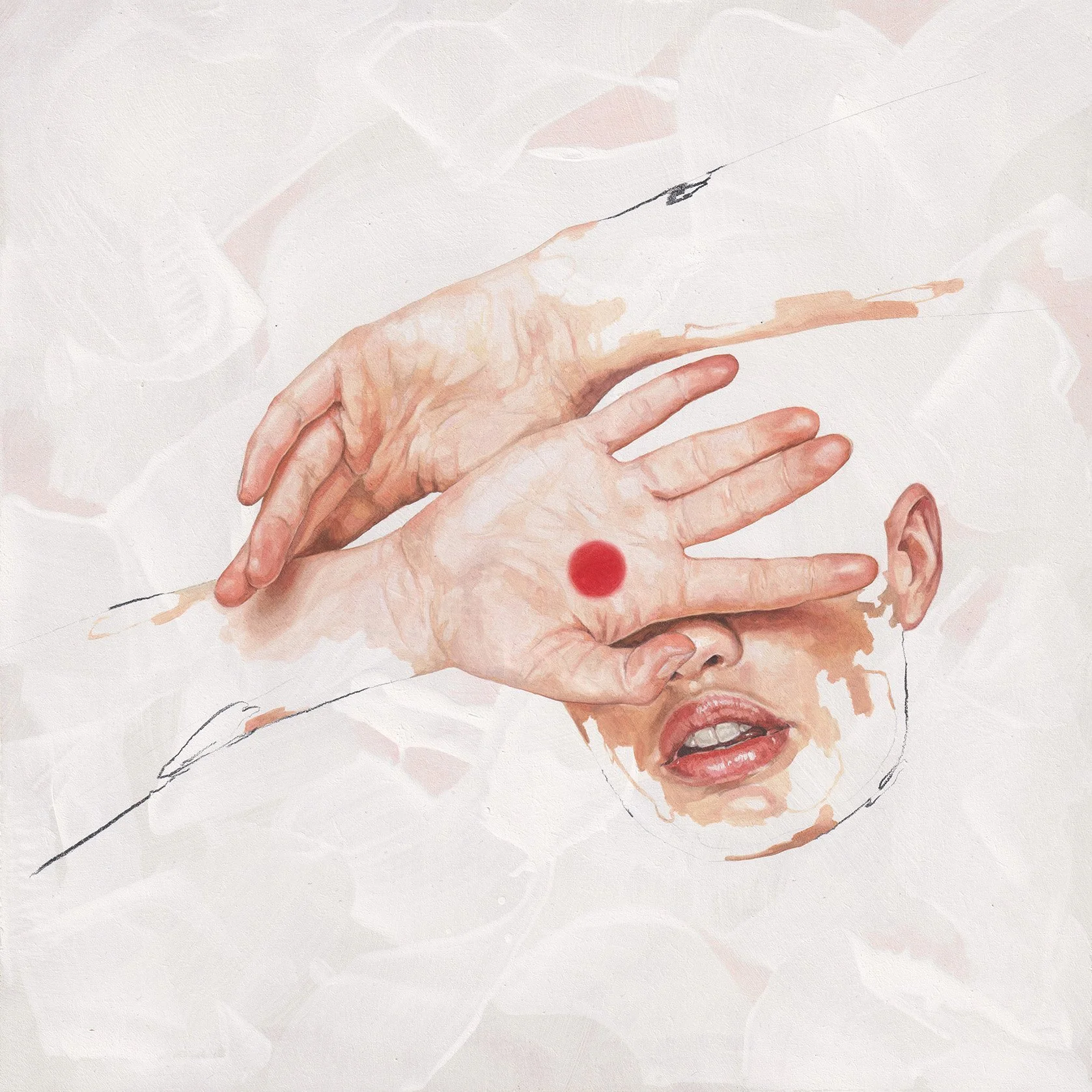
Eclipse
During your career so far, you have won the British Art Prize 2023, as well as numerous other prestigious awards, and have been shortlisted for many others. What do you think makes your work so successful? How have these art prizes impacted your career?
The biggest impact so far has been my first solo show which came from winning the Guildford House Open in 2024. I learned so much from it both in terms of my practice but also what goes into making an event like that happen, and the exhibition in turn has led to new collectors, contacts and new opportunities. But you don’t necessarily have to win the prize to feel the benefits and make meaningful connections within the art world. It’s a huge and multifaceted landscape which can feel quite daunting, but art open calls are a brilliant way to find your groove within it, open new doors and discover your tribe.
Despite my recent successes, I still don’t really understand what makes my work successful – my list of rejections is a helpful reminder that art is wildly subjective and that it’s impossible for it to be loved by everyone who sees it. The trick is to cast your net wide enough to find the people it’s going to resonate with and don’t worry about the ones it doesn’t! Honestly I try not to think too much about success at all, because chasing it usually doesn’t end in my best work – an attempt to repeat what was great before can easily result in a second-rate echo – hence my current period of experimentation!
Of course it feels wonderful when a piece makes it into a prize show and I’m insanely proud to have created anything that’s been deemed worthy of winning a prize, but really my goal is simply to be able to keep making art for another day! So I’m immensely grateful for anything that gets my work out in the world in front of fresh eyes – that in turn keeps me in the studio doing the thing I love most!
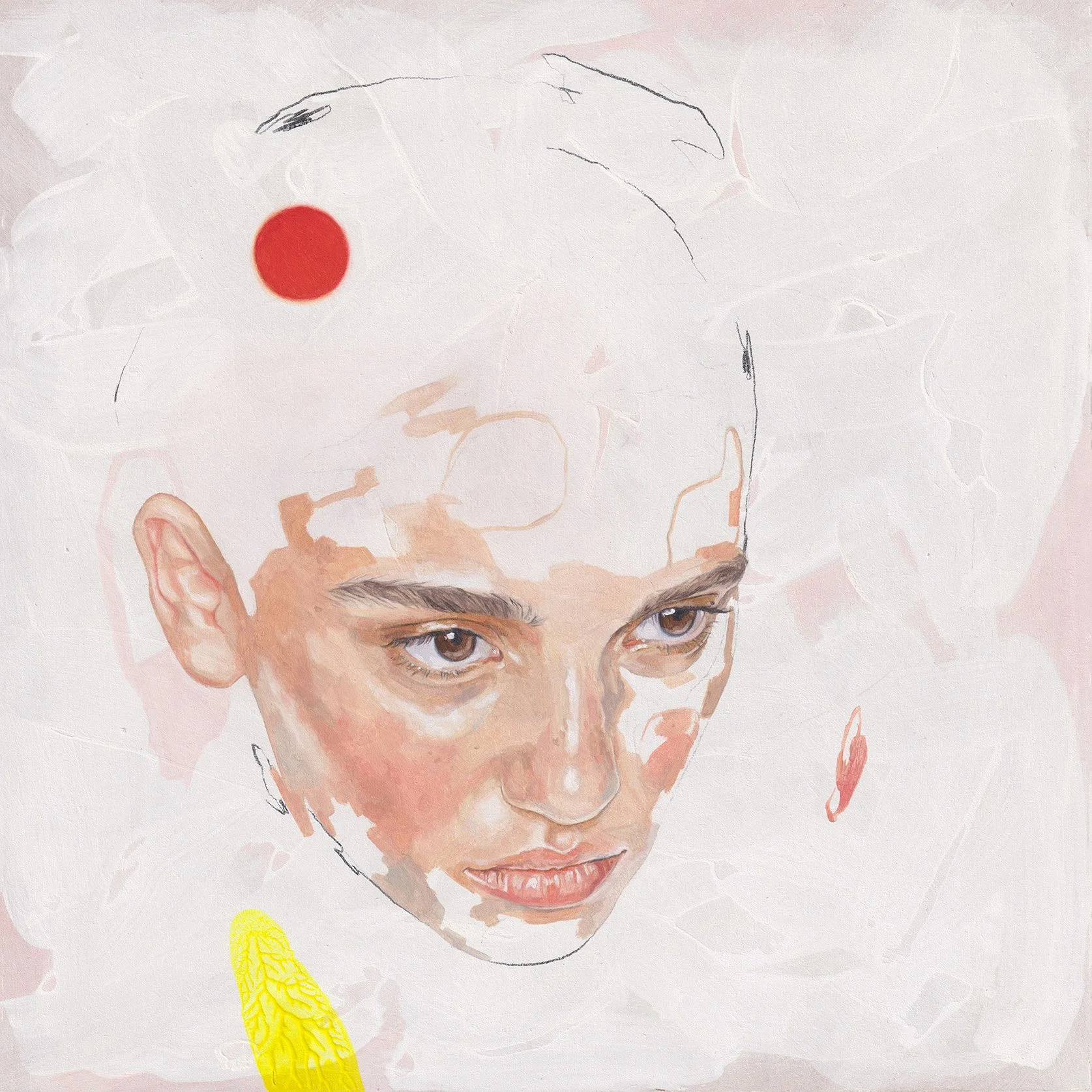
Something I Said
What is the relationship between psychology and art?
Art can have a huge impact on our psychological wellbeing, whether that means simply being in its presence or creating it ourselves. I know the joy and creative stimulation that comes from filling my home with other artists’ work and I know the peace and focus that comes from being in a state of creative flow – one of the reasons why creating art acts as a kind of therapy for me. I’ve always had what I would call a noisy brain, but when I’m painting or drawing, fully immersed in what my hands are creating and I reach a state of flow; that’s the only time everything is truly quiet! The pure act of creating itself helps me to escape from the noise and move fully into the present moment. It’s a type of mindfulness, where no abstract thoughts enter... which is funny, since abstract thoughts are kind of my entire subject matter!
Who is your greatest artist inspiration? If you could ask them one question, what would it be?
One of the positive things that came from my difficult year at university was being introduced to the work of Norman Rockwell by a fellow student – he had a feeling I would love Rockwell’s paintings, and he was absolutely right! I was completely captivated and floored by how much life there was bursting out of every corner of every painting.
It’s probably not surprising that I loved the aesthetic of his magazine cover paintings – the contrast between all of that vibrant and exquisite detail and the stark white backgrounds. The first paintings I made after quitting my degree were heavily inspired by them and detailed backgrounds have never reappeared in my work since! Other details – clothes, objects, hair – eventually began to depart too, leaving only my obsession with the human face and recreating its luminous intricacies. The empty voids that run throughout all of my work are purely thanks to Rockwell! But the thing I will always love most about his work is how much heart it has. He was an incredible storyteller and masterfully captured all facets of humanity, his later paintings dealing with issues that most were afraid to. His paintings tell me that he was someone with a great deal of softness and empathy, someone who saw details others missed and who felt the world around him very deeply. The thought that some still don’t recognise his work as anything more than lightweight illustration truly baffles me!
I guess it’s not really a question as such but, if he was around today I would love to see how he would use his work to document and respond to the social issues our world currently faces. When he left his job illustrating for The Saturday Evening Post, he finally gained the freedom to express his progressive ideas about human and civil rights and went on to paint incredibly powerful pieces like ‘The Right To Know’ and ‘The Problem We All Live With’ which have just as much relevance today. I’m sure his voice would would be an immensely important one in 2026.
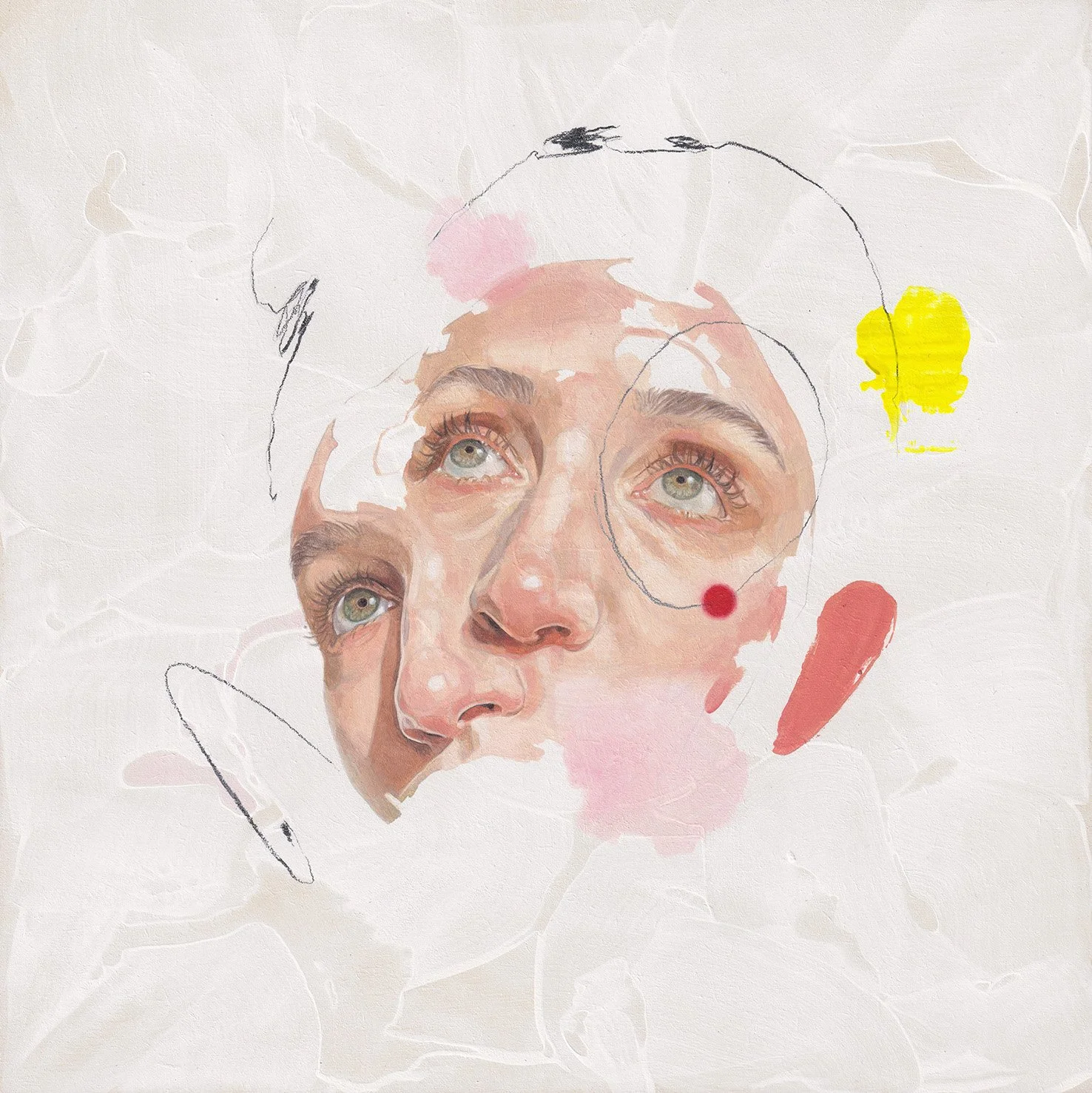
Stage Fright
Why do you think art is important in society?
Art has the power to move us to places we can’t reach any other way. It can hold up a mirror and force us to look inwards, to connect with ourselves and know ourselves better. And it can also cast a light on the world around us and offer new perspectives and ways of understanding others. It inspires deeper thought, feeling and connection. A willingness to understand ourselves and each other is the backbone of a well functioning and fair society – which is exactly why the powers that seek to divide us are terrified of the arts and will always move to de-fund and starve them!