Niki Widynska
What ignited your passion for art? How has your work evolved since you first began as an artist?
I have always felt a calling to art, and although my journey hasn’t been linear (with me choosing to study forensic science at a university before finally perusing a fine art degree), I have found myself coming back to it as it was the only way I could express myself and process emotions. Art for me became a voice before it became a career. Since first beginning as an artist, my work has evolved massively. One of the ways is through the improvement in my technique and experimentation. I now understand that with each intentional brush stroke comes an emotion that it represents. I am also now choosing to move away from representation and focus on creating my own unique visual language through blending of realism and abstraction, as my focus has shifted from trying to recreate a scene as realistically as I can, to exploring and expressing my own inner emotions through brushwork.
In what ways has being raised in a small Polish town with deeply rooted religious beliefs shaped the way you create and express yourself through art?
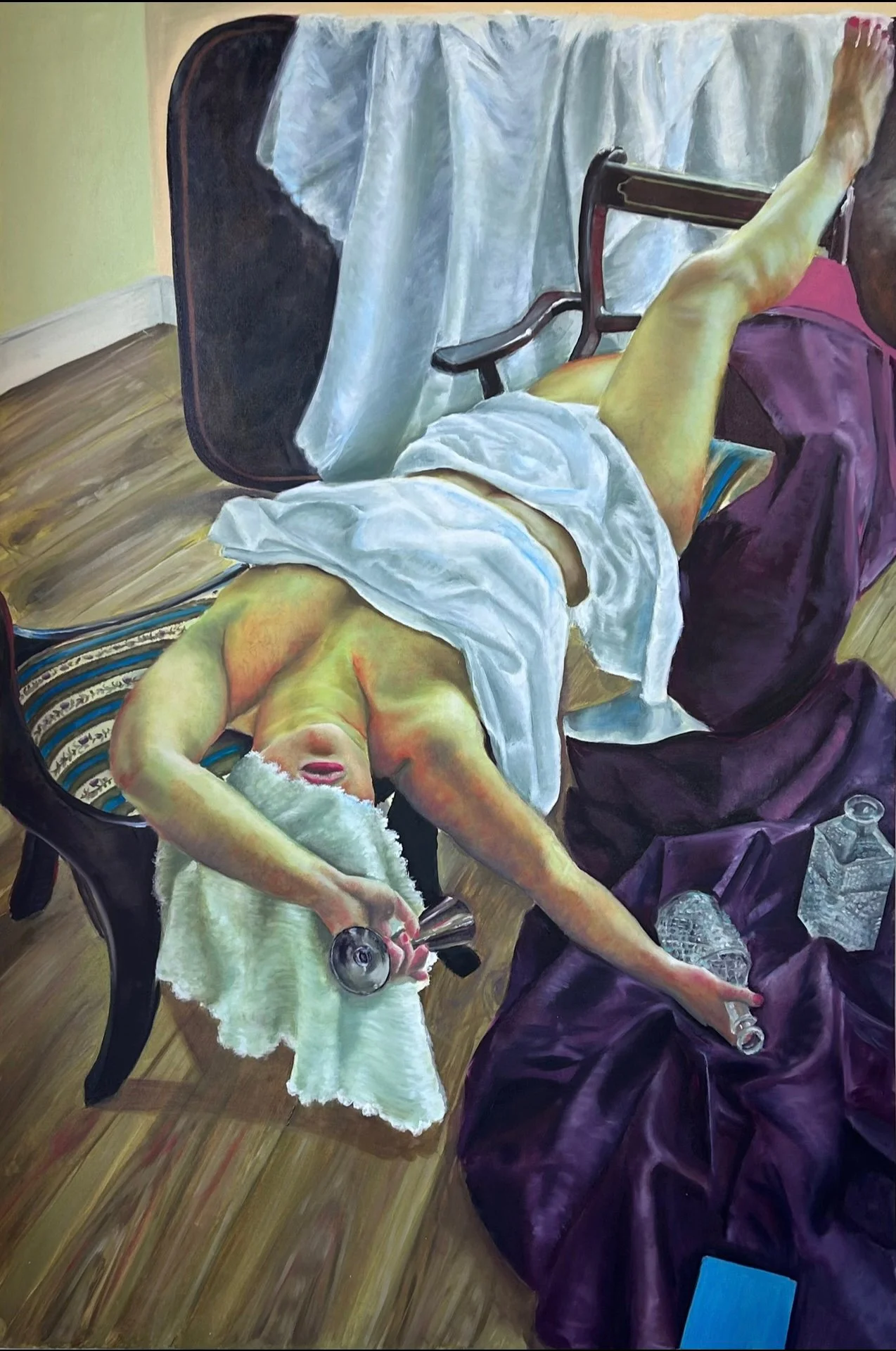
My work is often compositionally inspired by the Baroque period, which is deeply connected to religion, specifically Catholicism. Art was used as a persuasion to inspire belief and present the Catholic church as an absolute ‘truth’. This is very similar to what I have experienced as a child living in a small town in Poland, where religion was pushed onto you as a God-fearing ideology. By using the symbolism and compositions of Baroque in my work, I aim to subvert those ideas. I am able to do this by using the Baroque spectacle, but removing divine certainty through painting dramatically positioned figures on large scale canvases in domestic settings and contemporary situations that focus on individual, inner emotions rather than a religious authority.
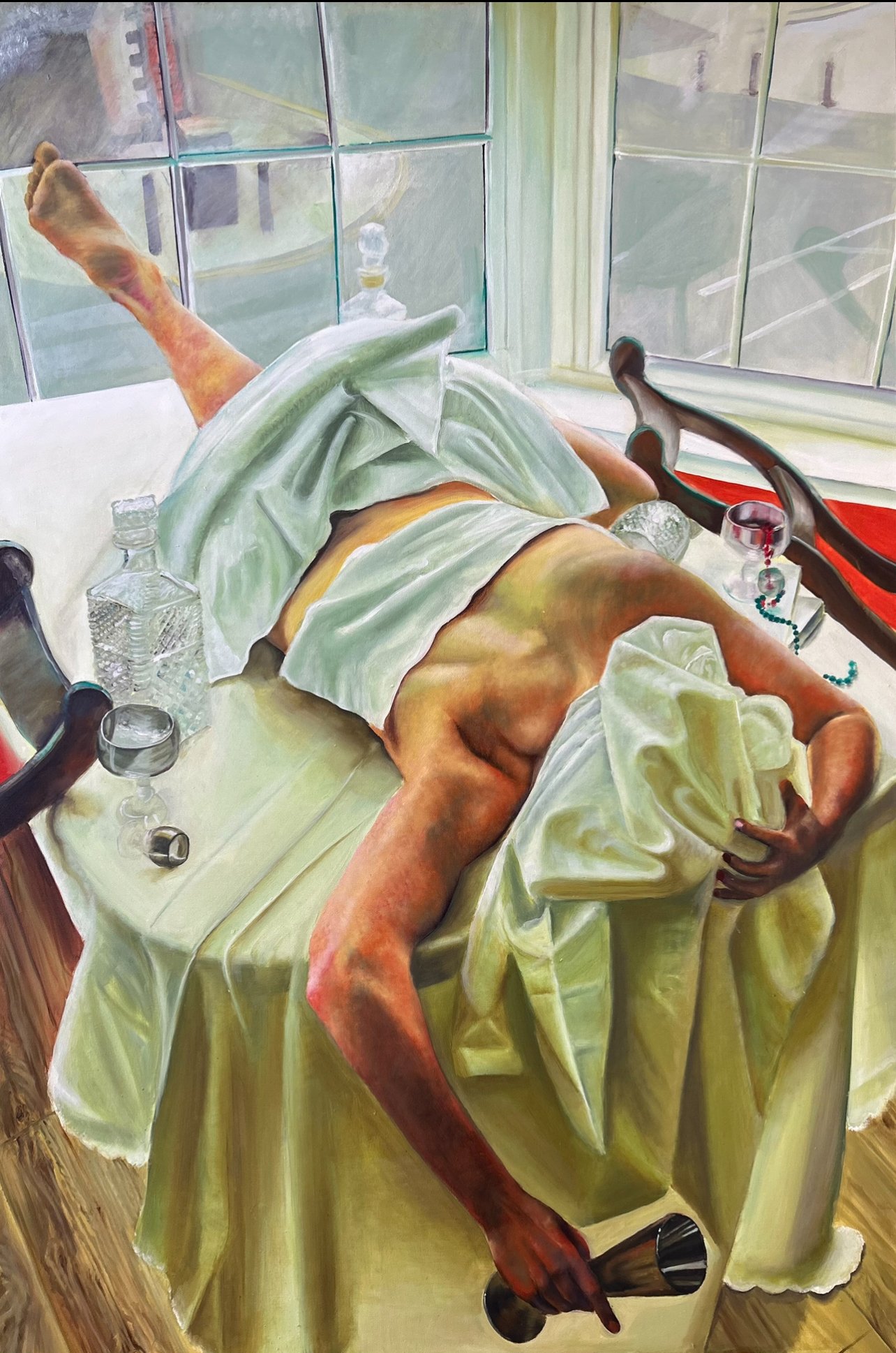
The Recidivist
Why do you choose to amplify or exaggerate human flesh in your paintings to convey a narrative? Why have you chosen to use a limited colour palette?
I see human flesh as the most direct and emotionally charged medium of expressing emotions. By distorting it through amplifying areas such as the veins and bruises, I am able to use it as a symbolic instrument to communicate ideas about pain, desires and feelings, as well as show invisible states. Through my work I aim to break the idealisation of the human body and create distortion which often feels unsettling and denies comfort, which mirrors real life and the essence of being a human. I often make the deliberate choice to use a limited colour palette for several reasons. Firstly, it holds the composition together and prevents visual chaos, making the painting cohesive. Secondly, by using a reduced colour palette I can amplify and portray certain emotions I want associated with each piece. For example, I could use red and purple tones to portray intimacy, vulnerability, and love.
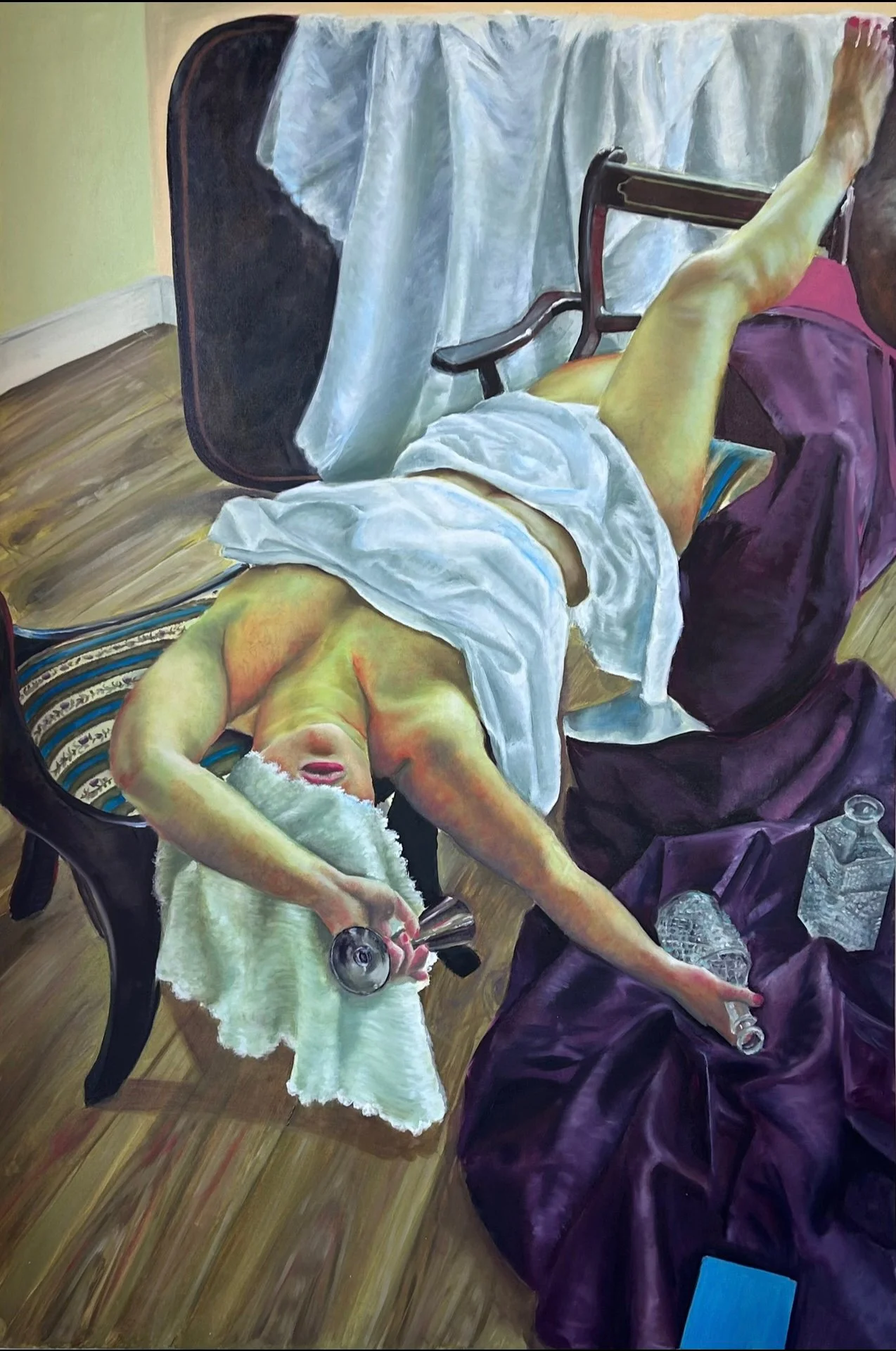
The Redeemer
What fascinates you about Baroque art, and how has this style inspired your own artistic practice?
What I find fascinating about Baroque art is how it demands emotional, physical, and psychological involvement from the viewer and turns art into an experience rather than an image. This inspired my own practice as it led me to using large scale canvases, dramatic lighting, and dynamic poses to achieve that.
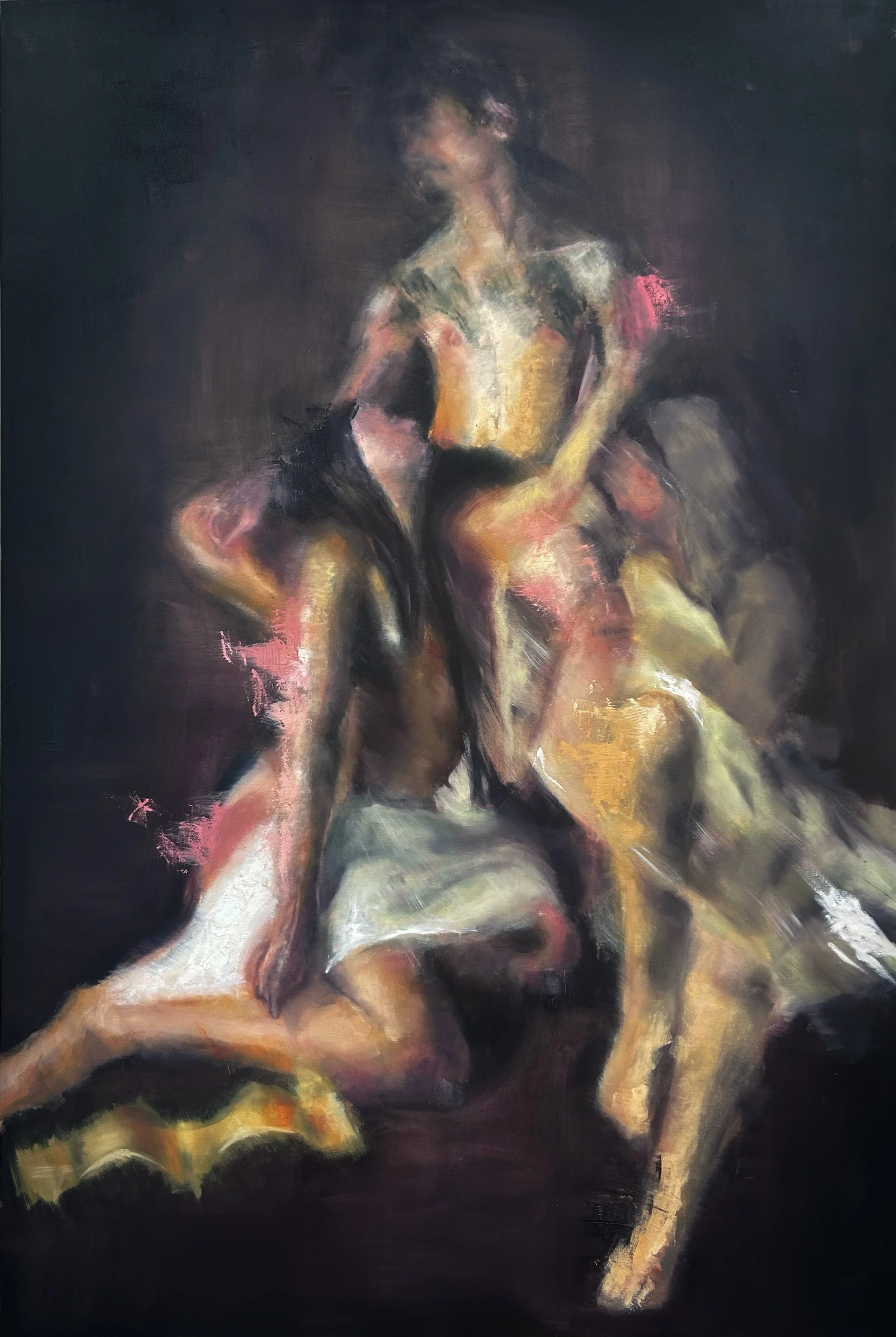
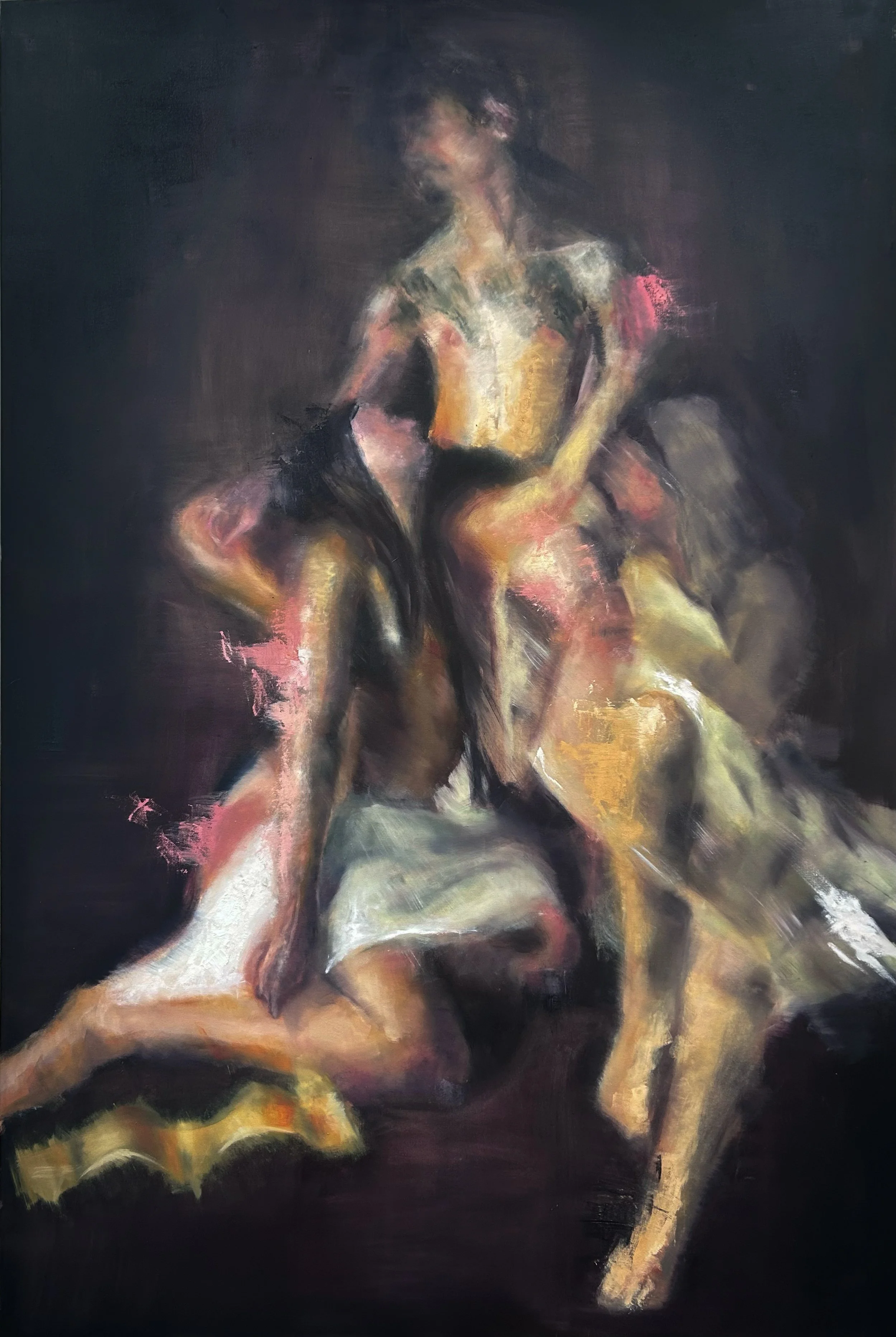
Disintegration
When beginning creating your series, 'Unknown Comforts', what ideas, emotions, or moments first motivated you to develop this body of work?
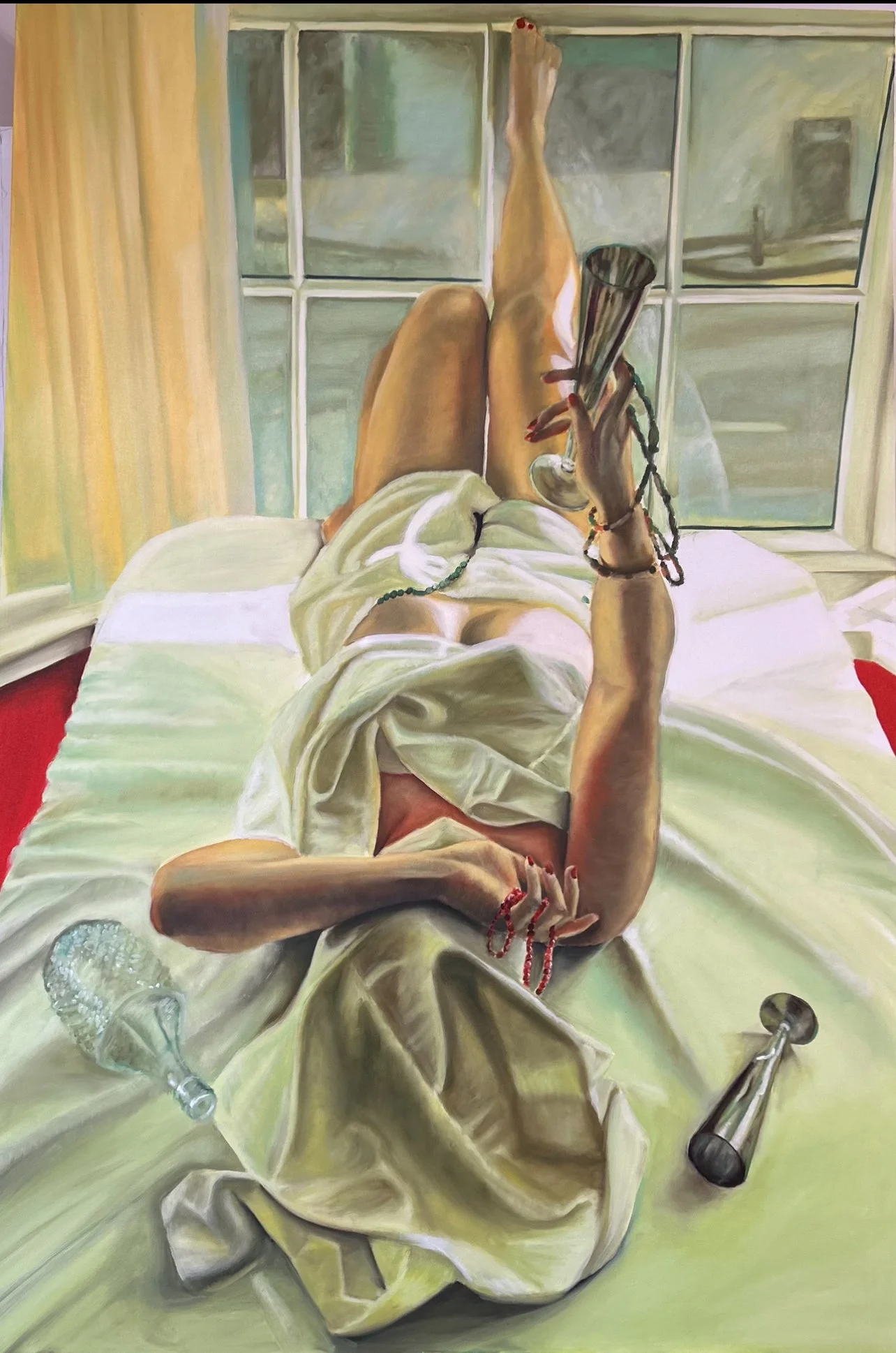
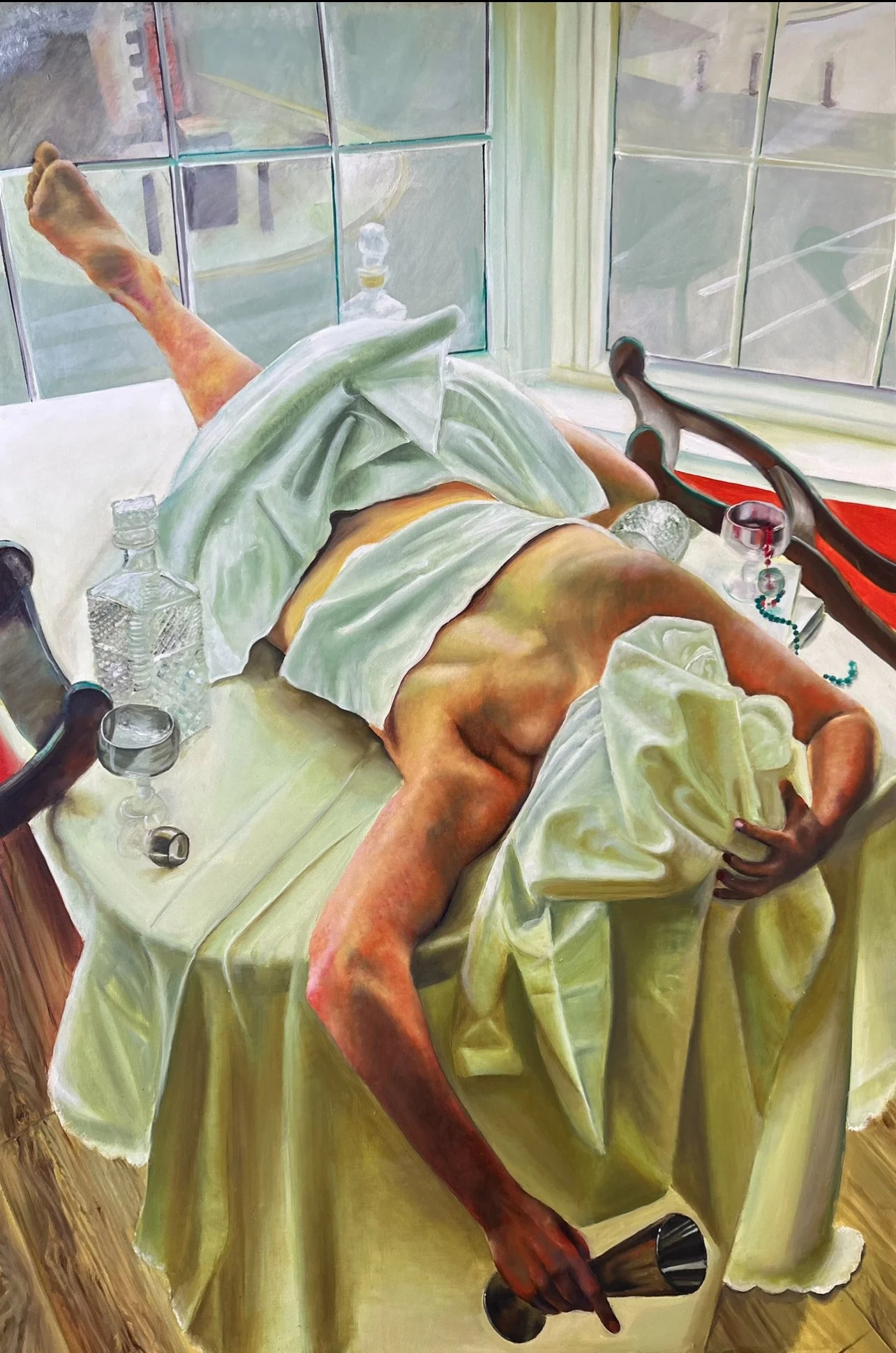
The emotions that motivated me to create ‘Unknown comforts’ were loneliness and emptiness. This series was created at a point in my life where I felt I was not seen or understood by the people around me which included my friends and partner at the time. By creating a series depicting a scene of a lone woman in an aftermath of a party, I wanted to portray the feelings of unfulfillment and loneliness, as well as the moment of realisation that after everyone goes home we are only left with our own destructive thoughts and regrettable choices that lead to those feelings.
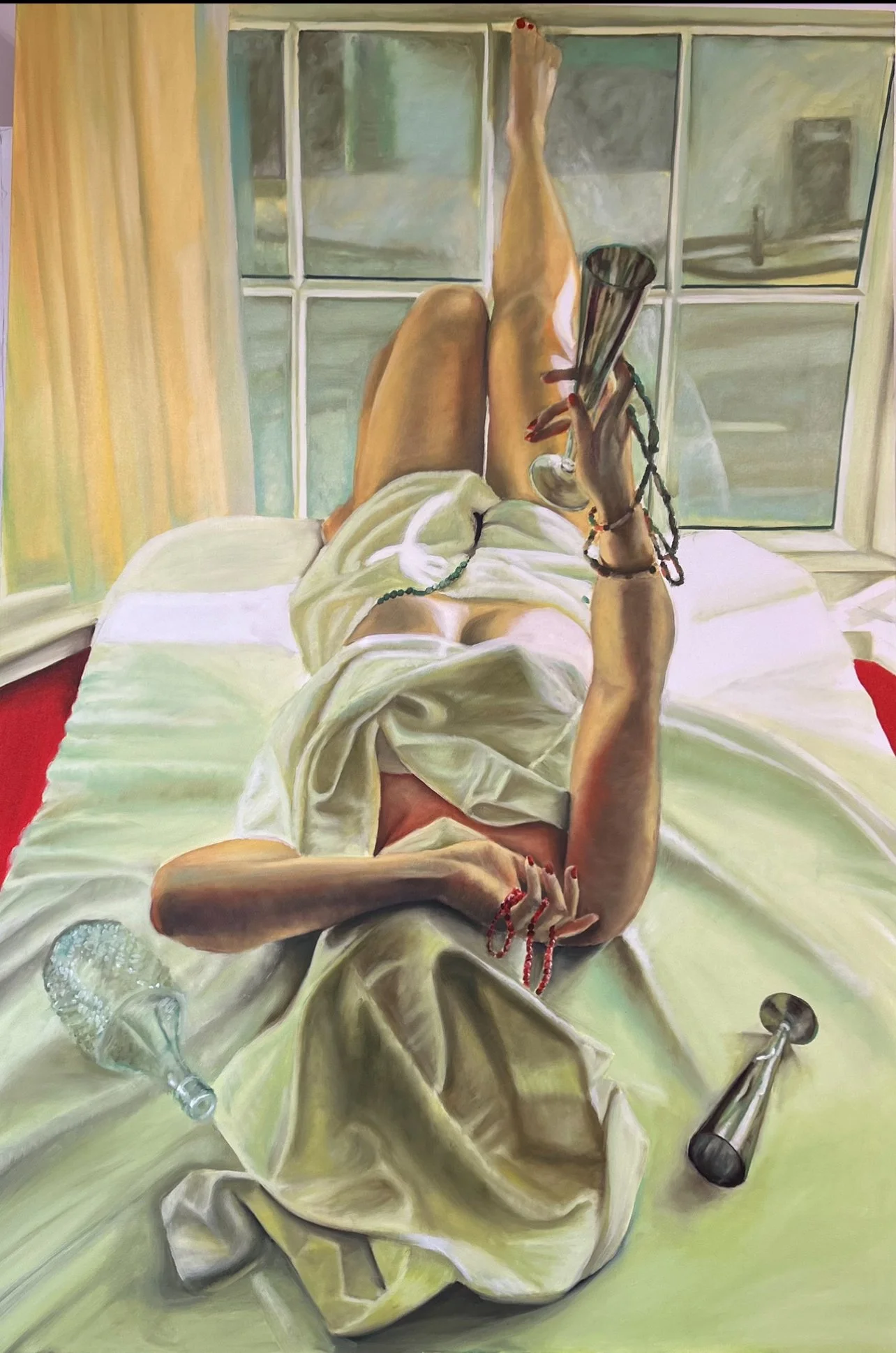
Unknown Comforts
Thinking about your last piece, what was your creative process? Describe the process from start to finish of the painting.
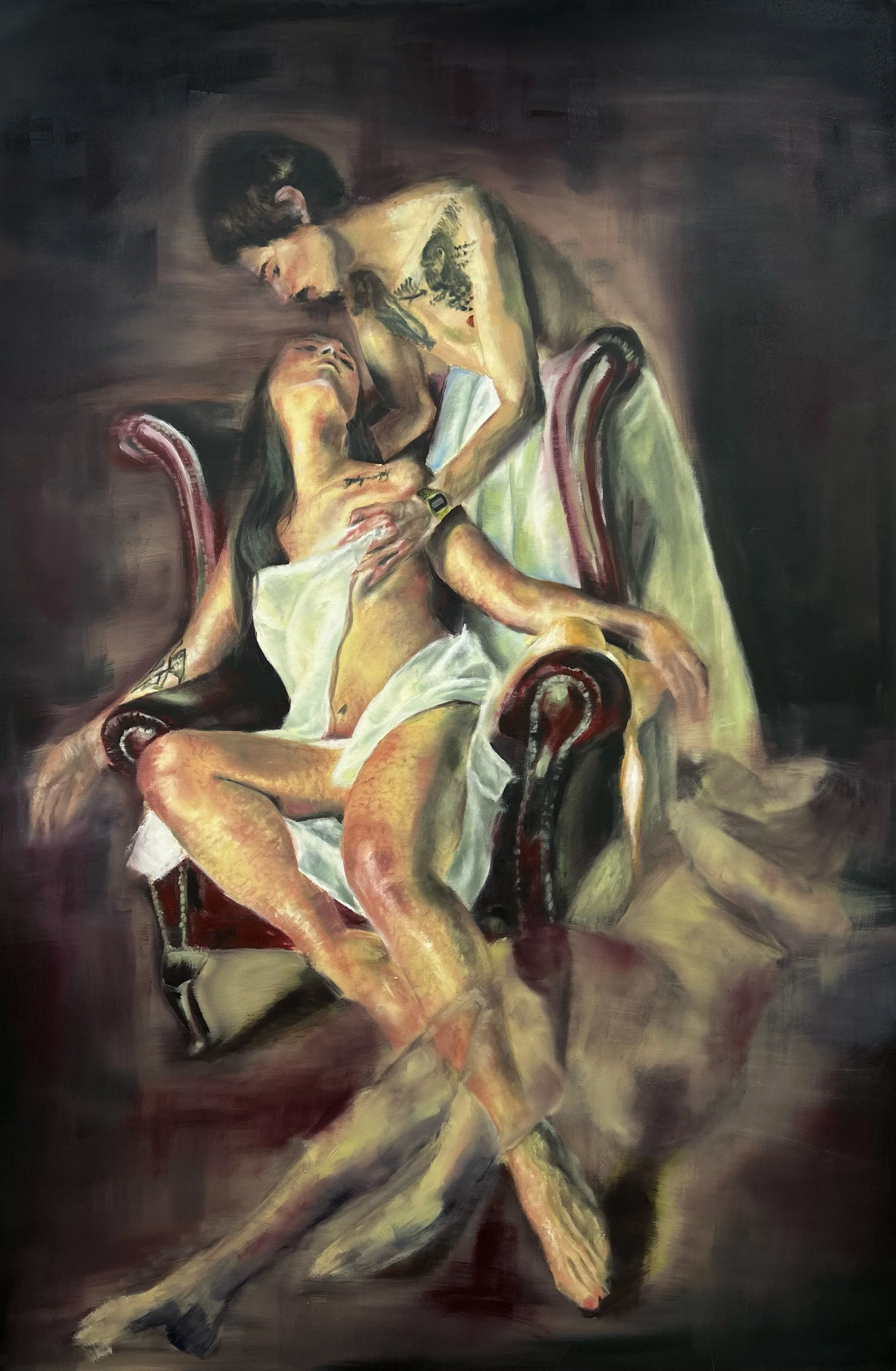
I like to consider my work as confessional as I use my own personal experiences and private life as the driving force behind it therefore my latest piece ‘Please, please, please, let me get what I want’ differs a lot from my previous work as I am in a different place in my life, I am currently exploring a new relationship with a new person, allowing myself to be emotionally vulnerable and allowing the possibility of having my heart broken by the person I love. The process behind creating it was very personal as I used a person who is very significant to me and is responsible for this new chapter in my life (therefore my work) as a model to pose with me to create reference photographs for this piece. After editing the image and playing around with colour balancing, I painted it with the emotions I wanted it to portray, which are vulnerability, love and uncertainty.
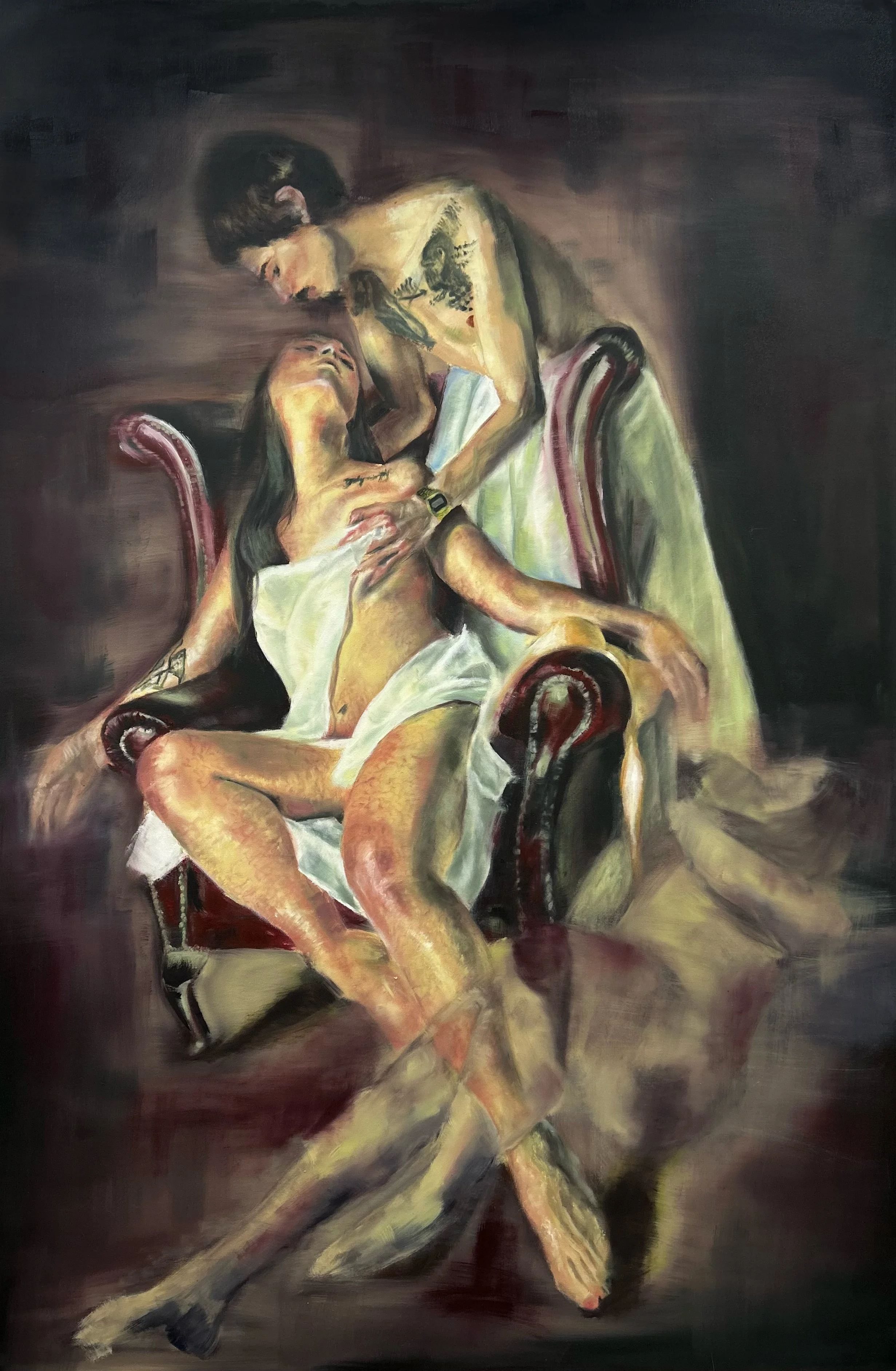
Please, Please, Please, let me get what I want
If you could spend a day with any artist; dead or alive, who would it be, and why?
If I could spend a day with an artist it would be Odd Nerdrum as I would like to personally ask him about his rejection of modernism and his position as an outsider of the art world.
How do you envisage your artwork developing in the future?
Going forward, I envisage my work moving towards abstraction whilst keeping elements of realism, specifically through mannerism and expressionist brushstrokes. I want my work to be more representative of my inner emotions rather than physical objects and places and be even more vulnerable and confessional, blurring the lines between intimate thoughts and public spaces whilst having its own distinctive, visual language.
Why do you think art is important in society?
I think art is important in society as it preserves human experience and emotional history, not just facts. It also makes the invisible visible through showing emotions that are often hidden such as grief, anger and desire. Without Art, many experiences would remain private, dismissed or misunderstood.