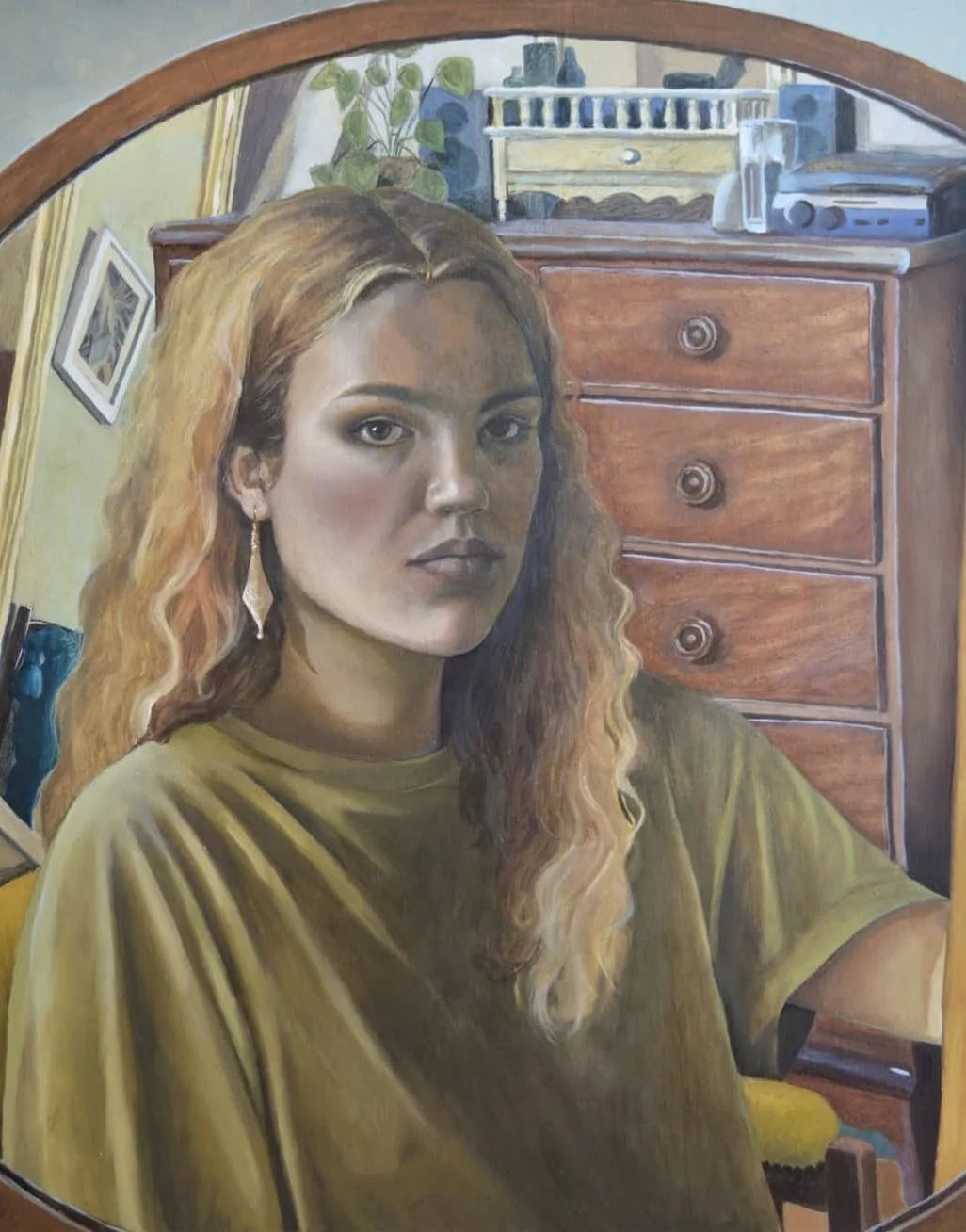
ARTIST INTERVIEW: ROBYN PACKHAM
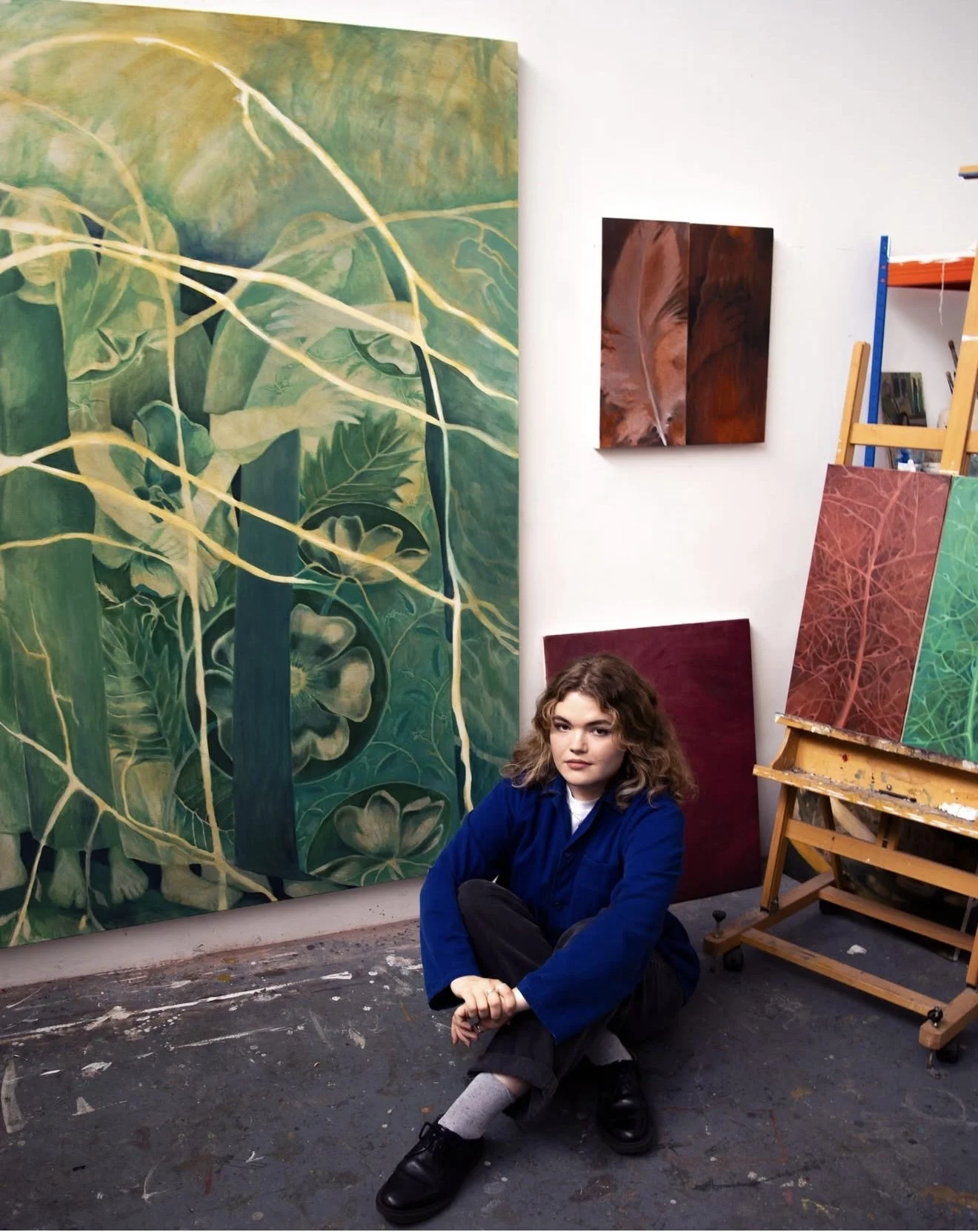
Robyn Packham
Please introduce yourself. What initially sparked your interest in art? How have you developed your passion into a career?
My name is Robyn Packham and I’m a painter currently based in rural Herefordshire, having just moved out of London. Since I could first hold a pencil, I loved to draw and make art. My discovery that it wasn’t just a childhood pastime, and what subsequently gave me that crucial spark, was finding my Mum’s old sketchbooks from when she went to art college at Bretton Hall. The idea of a grown-up school dedicated to visual art was magical to me. So, from about the age of 6 or 7, when asked by teachers “what do you want to be when you grow up?” I’d confidently, and perhaps naively, reply with “artist”. Over the years that confidence and desire has been resolute and consistent, while the naivety has been replaced by a bit of reality and a lot of hard work and dedication - despite the ups and inevitable downs.
Why do you find people interesting to capture? Are you interested in exploring human psychology in your artwork?
My interest in the figure is rooted in history and archaeology. From 50000-year-old cave paintings and Mesopotamian reliefs to ancient Egyptian friezes, the human figure has been used in art to tell stories, to reflect on our place in the world, to immortalise a moment in time and even imagine other worlds. This has much to do with human psychology as well as our interaction with our surroundings and nature.
How do you explore ideas of the Ephemeral world in your paintings?
While my paintings will hopefully last for a long time, they often portray impermanent moments or are suggestive of the ephemeral nature of life. I often explore this through symbolism and have recently been getting into reading about the meaning of different flora as well as folklore inspired by nature and plants. I am fascinated by the passing down of stories, both in relation to shared memories and of fables and transient tales so old that they now belong to the land. It all comes back to the natural world.
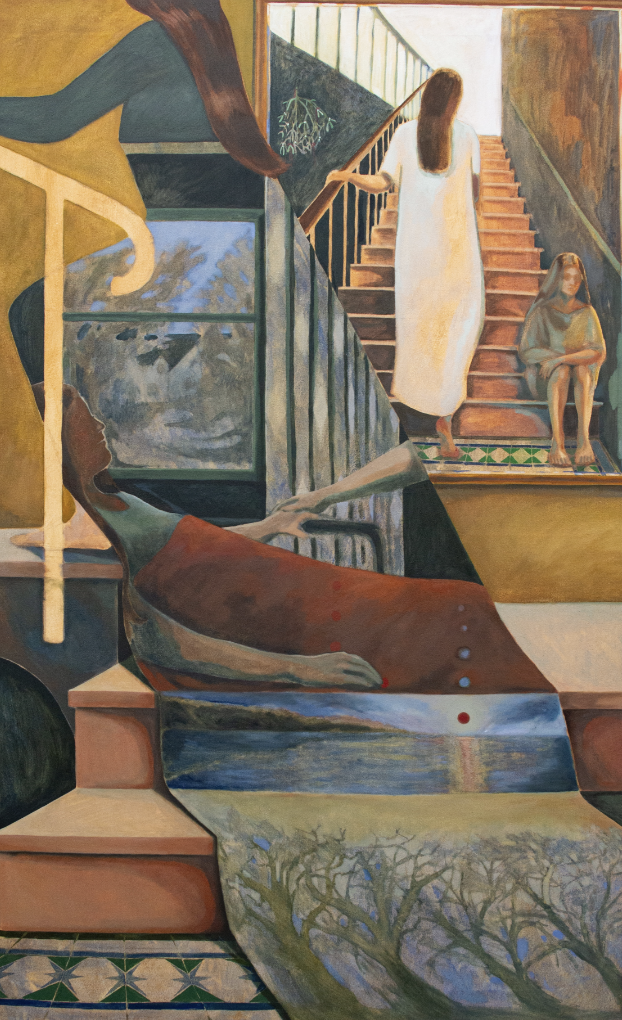
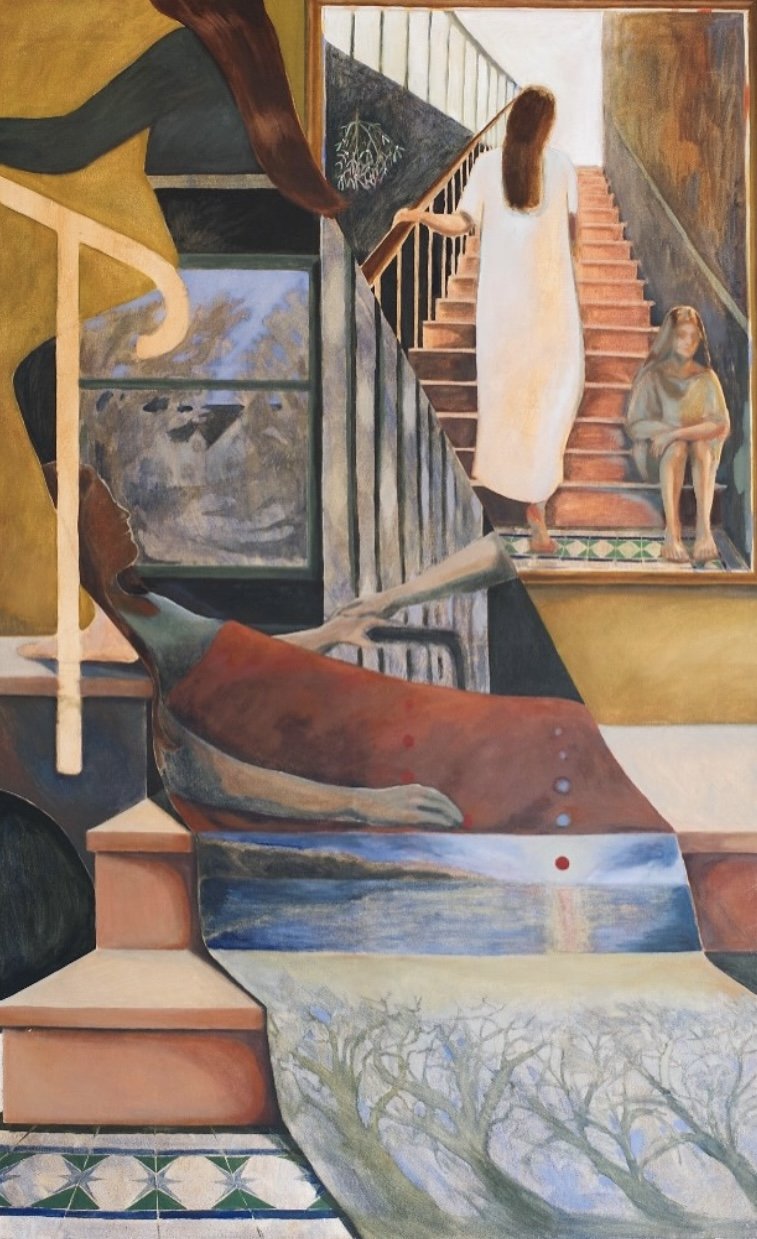
Ascent
What initially inspired your most recent painting? Describe your creative process from start to finish.
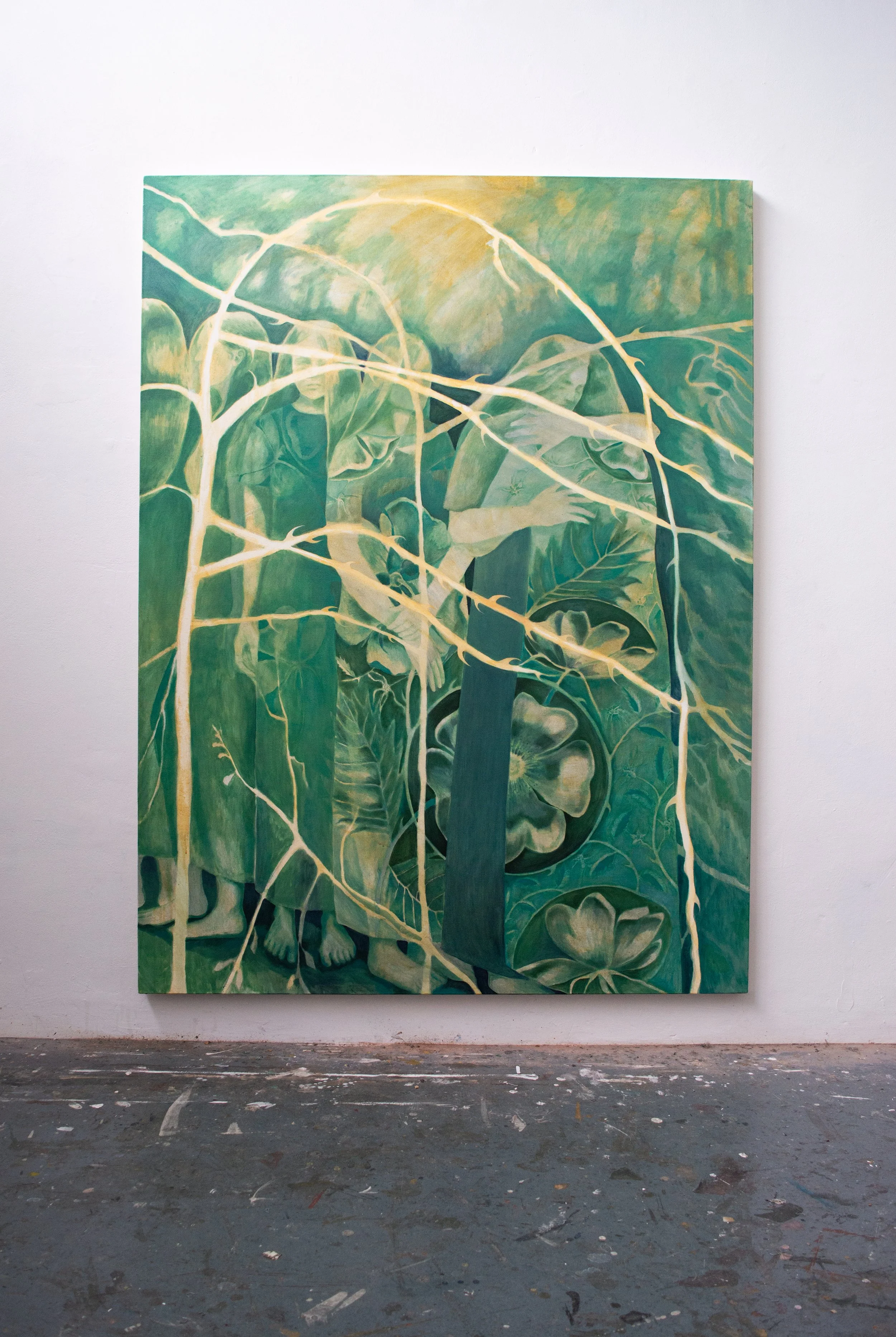
My most recent completed painting is called ‘Dog Rose’. It was inspired by this big, arched, thorny briar I spotted while out on a walk. In my mind It looked like a doorway to some other world or liminal space. It is my largest painting to date; I wanted to fully get across the scale of the arch. It belonged to a wild rose, otherwise known as a Dog Rose. I discovered it is named after a dog due its large thorns resembling pointed teeth, and is symbolic of resilience as well as a struggle between what’s good and bad – among lots of other things. I found it to be particularly poignant as my Mum loved to plant native roses in the garden, and since she died two years ago, they have been a comforting reminder of her as they gracefully and reliably flower each summer.
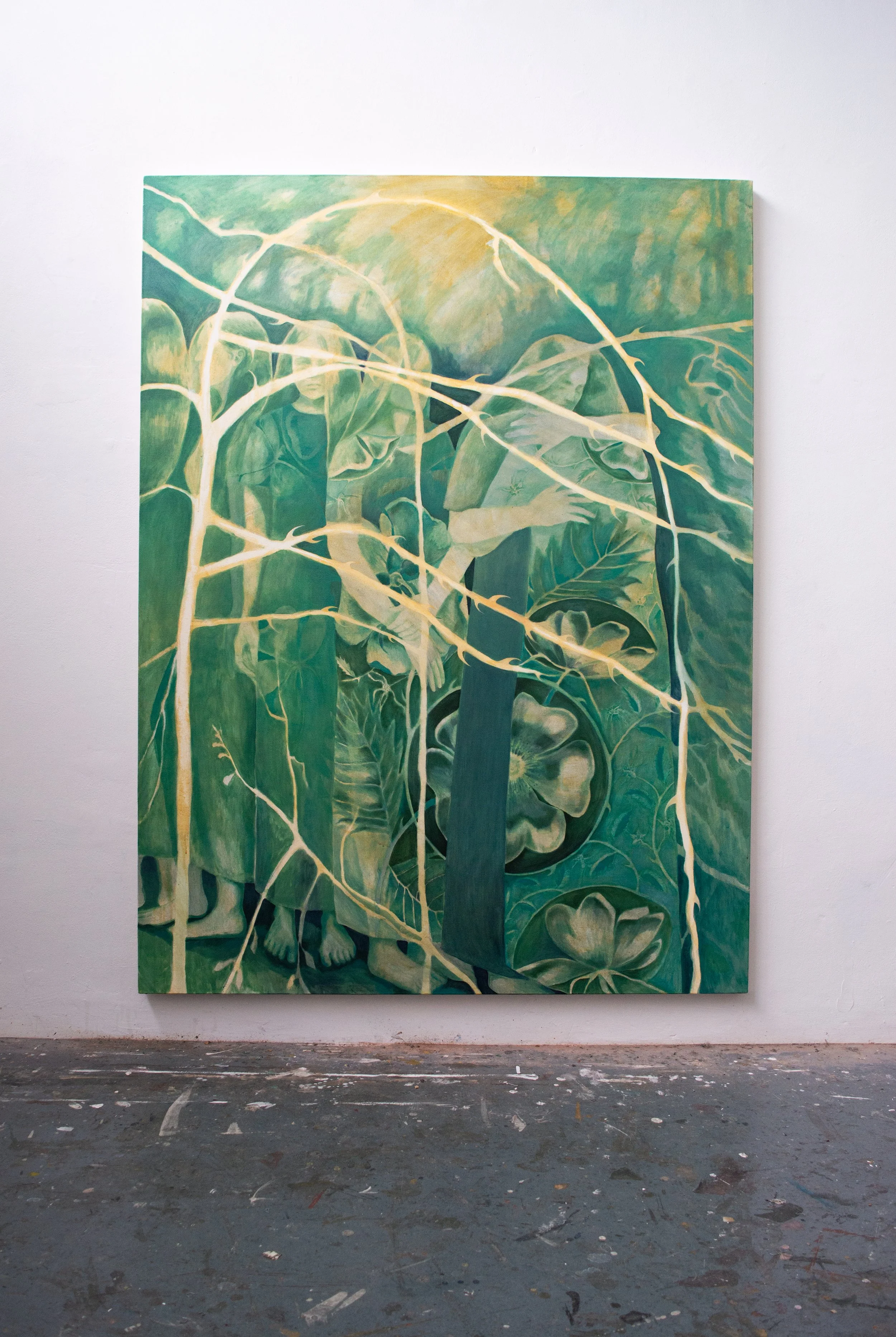
Dog Rose
The composition then came to me quite quickly as I had a lot of imagery and ideas swirling around. I imagined the figures to be walking through the arch and turning away leaving one figure behind. The roses are very enlarged and are housed within round womb-like chambers connecting them together and are misleadingly the fabric worn by the figures as the arched plant is bare and in winter. I enjoy playing with different timeframes like this in one image. I work from my imagination and often make small thumbnail drawings of compositions, but they often change as I go and once colour is introduced.
Which part of your process do you enjoy the most, and why?
Probably the earlier stages, the first layer or so of paint where it still could maybe identify as a drawing. I find drawing much more intuitive and freeing than painting, but both are enjoyable for different reasons. After that, the process involves much more thought and consideration as I paint in thin layers and glazes, building colour that way.
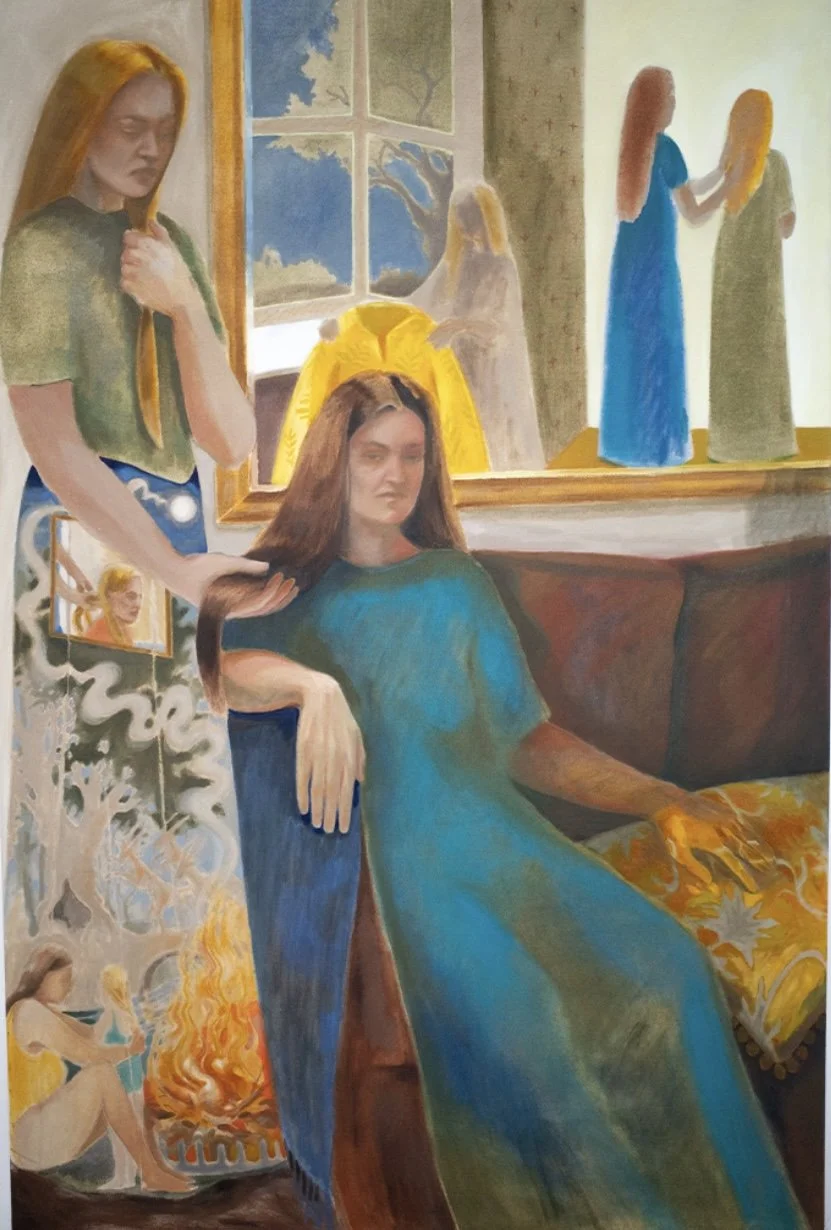
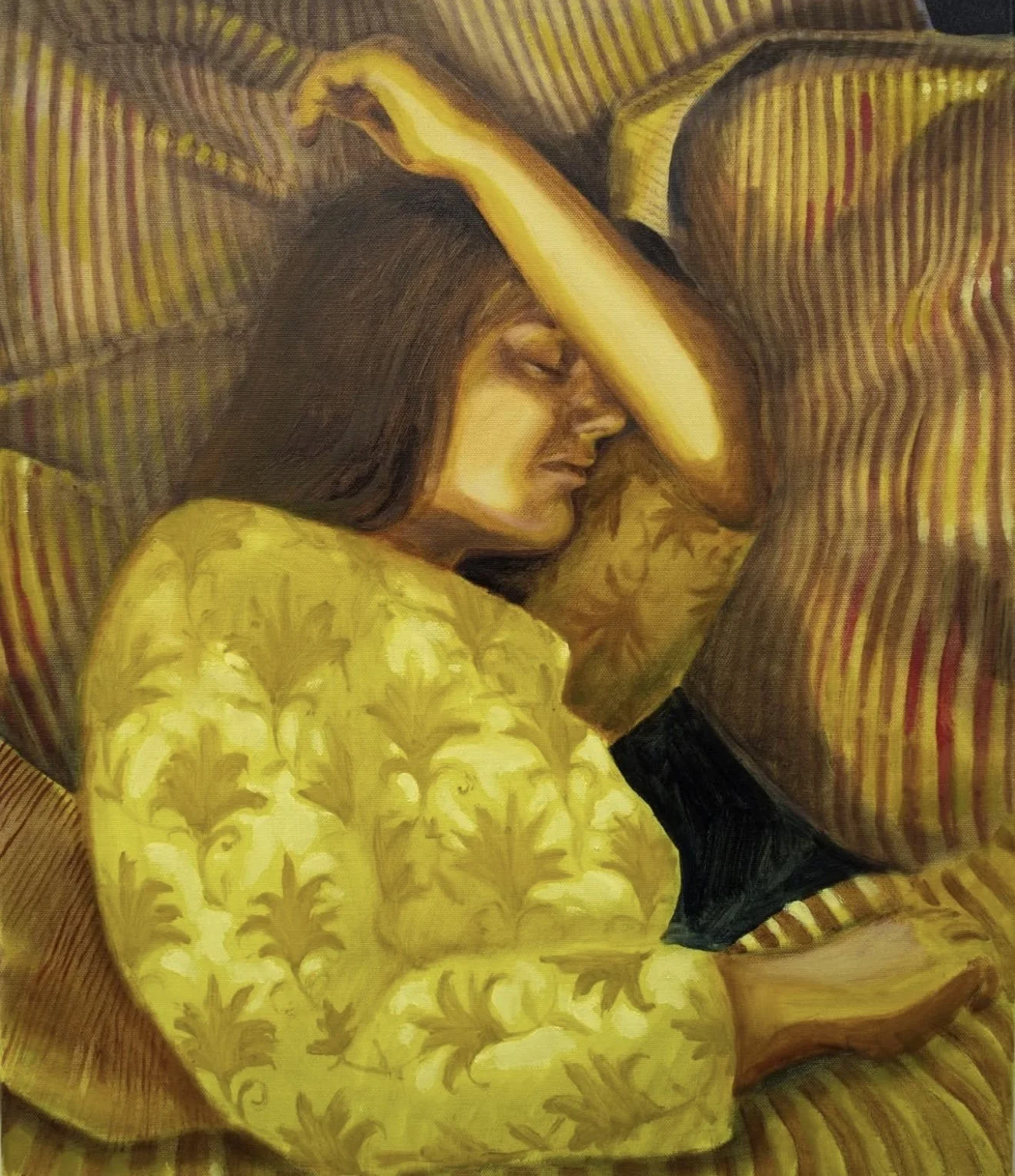
Shroud
You gained a first-class honours degree in Drawing and Print at Bristol University. What is something you learnt during your degree that you have continued to embed in your daily practise as an artist?
Lots of observational drawing has allowed me to be confident in working from memory and my imagination. While my painting process is quite traditional through thinly layering oil paint, it helps me to think of it almost like the process of making a multi layered print and how the layers of colour interact with each other.
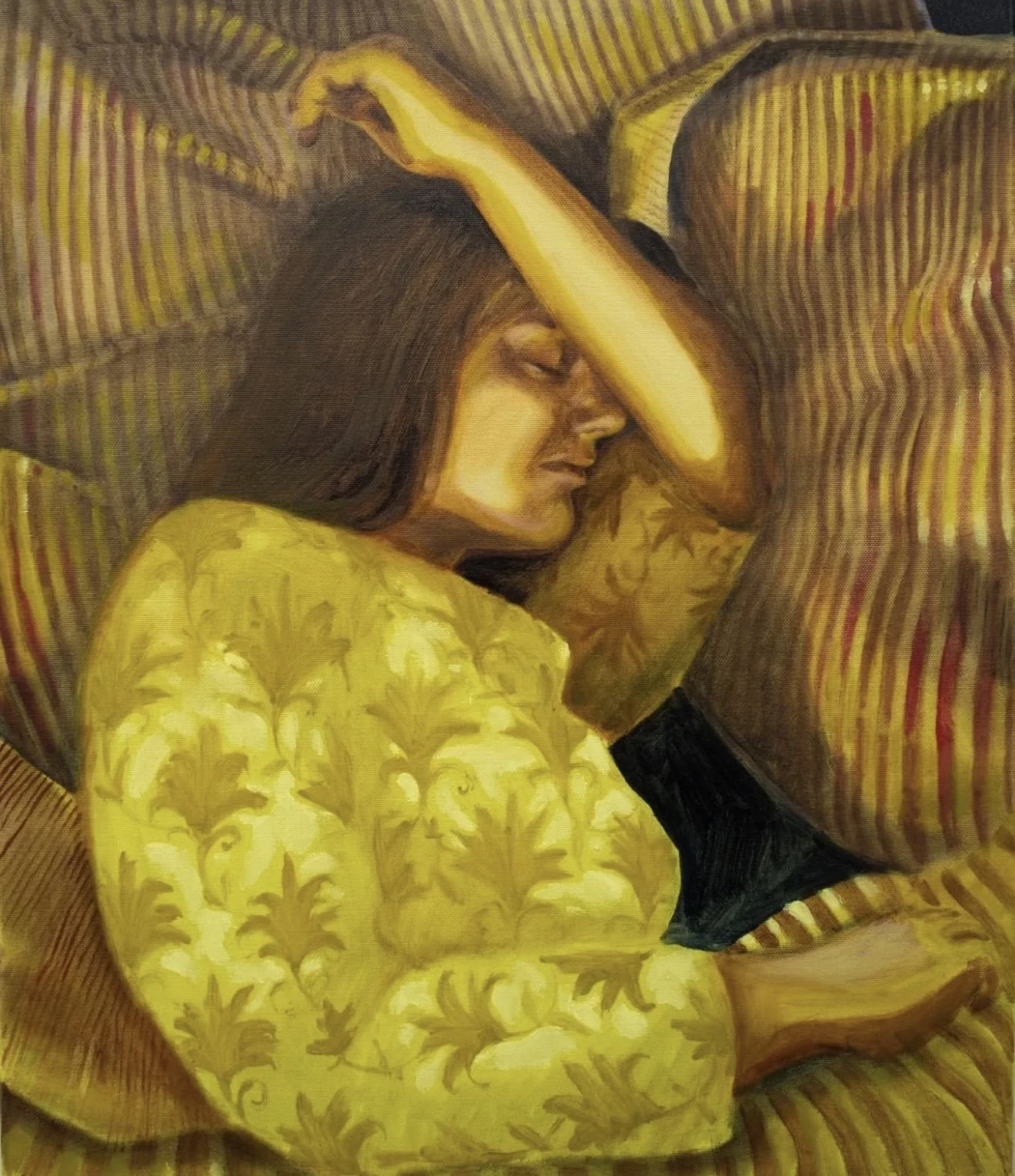
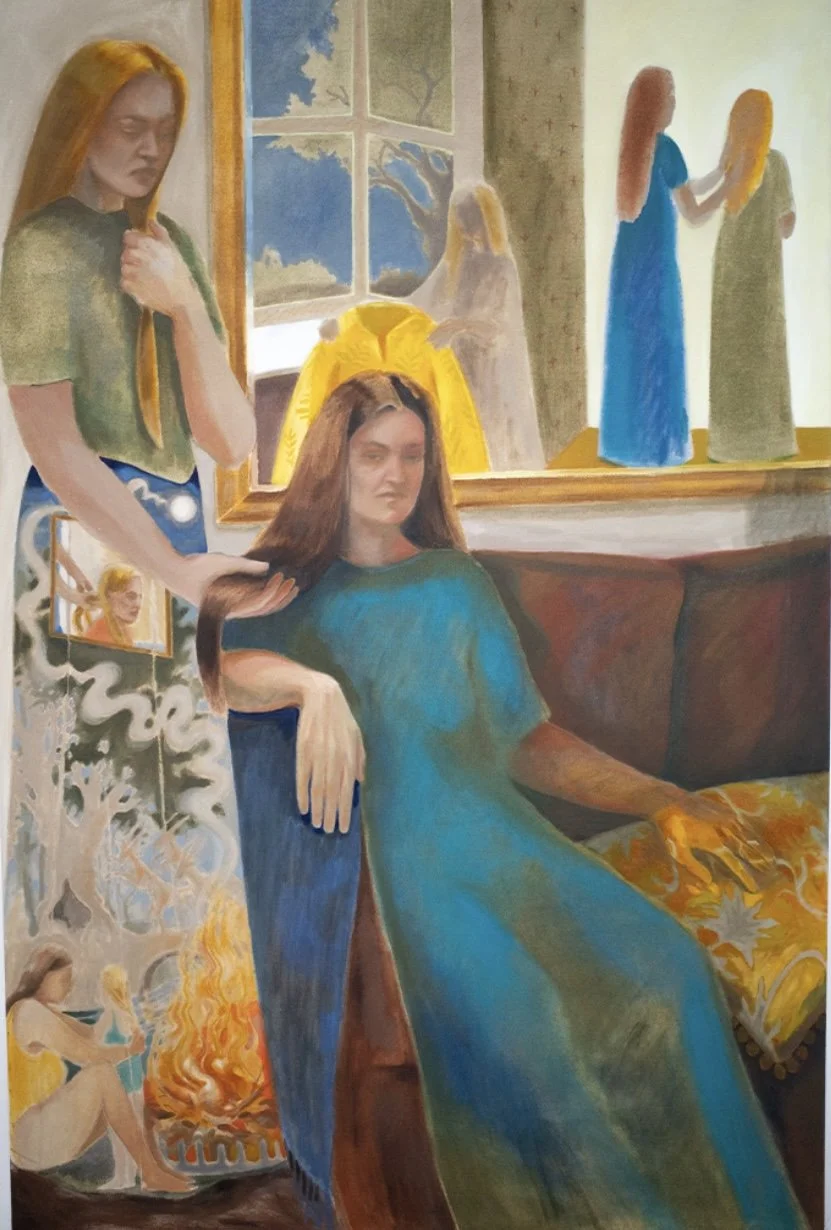
Mother
How would you describe your style of work? What do you believe makes your work unique?
While my work is predominantly figurative, I play with surreal elements and abstract it through compound perspectives and transparent layers. I think it is unique in the way space is portrayed; you get a feeling that it could go on forever.
Out of all your artwork, which piece has had the greatest impact on you?
As mentioned before, ‘Dog Rose’ felt like a pivotal painting. It marked the end of my time on the Turps Studio Programme in London, as well as a new beginning in that it felt like something I always wanted to make but couldn’t, so I regard it as a step up in my practice.
Who is your greatest artist inspiration? If you could ask them one question, what would it be?
Käthe Kollwitz, in a male dominated art world, made such powerful and moving work. I would perhaps ask her about how it affected her career and her subject. I also look at Munch, the Pre Raphaelites, Piero della Francesca etc.
Describe your most memorable moment as an artist. What have been your greatest achievements so far, and what are your aspirations for the future?
Showing work in Paris a couple of years ago with the Derwent art prize was a fun experience. I had a great time on residency at Dumfries House, which was awarded to me by the Royal Drawing School after graduating from University. They also awarded me a free place on their Drawing Intensive course. I recently got longlisted for the John Moore’s painting prize 2025 as well as being in a few group shows in London. My goal is to have a solo show in London and then globally.
Why do you think art is important in society?
It offers new ways of seeing and experiencing the world while teaching us about our past and connects us with other cultures and ways of life. Ultimately it opens our eyes and forces us to be more open and inquisitive.